Unveiling Earth's Deepest Secrets: Volcanic Fire in the Abyssal Dark
- Nishadil
- November 24, 2026
- 0 Comments
- 3 minutes read
- 0 Views
- Save
- Follow Topic
Mind-Blowing Discovery: Volcanic Explosions Rock Earth's Deepest Trench, Challenging Long-Held Beliefs
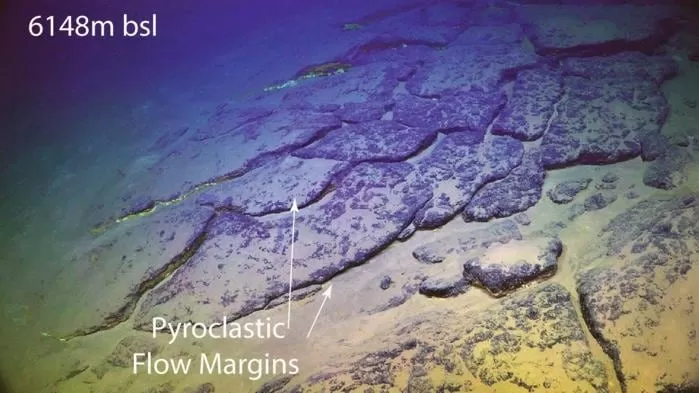
New research reveals astonishing evidence of explosive volcanic eruptions, known as pyroclastic flow, at the Mariana Trench's Challenger Deep, shattering assumptions about deep-sea geology and potentially explaining the trench's extreme depth.
Imagine the most hostile, crushing environment on Earth. You're likely picturing the deepest point of our oceans, a place where sunlight never reaches and the pressure is truly immense. For years, scientists held a firm belief: explosive volcanic activity, the kind that spews ash and rock, simply couldn't happen down there. The sheer weight of the water, it was thought, would suppress any such fiery outbursts. But prepare for a fascinating twist, because new research has just turned that long-held assumption completely on its head.
In a groundbreaking announcement, geologists have unearthed compelling evidence of explosive volcanic eruptions—what we call pyroclastic flow—at an astonishing 6,148 meters below sea level. This isn't just deep; this is truly abyssal. We're talking about the Challenger Deep, nestled within the vast Mariana Trench in the Pacific Ocean, a place that plunges an incredible 6.8 miles beneath the surface. It's a find that, frankly, is nothing short of mind-blowing, and its implications are profound for our understanding of deep-sea geology.
The study, co-authored by Dr. Robert J. Stern, a distinguished geologist from the University of Texas at Dallas, was officially published on November 23, 2026, marking a significant date in oceanographic history. Dr. Stern and his team's work directly challenges the prevailing wisdom that the colossal water pressure at such extreme depths would inevitably prevent any volcanic explosions. Think about it: conventional thought suggested that magma, when it emerges, would just ooze out quietly, unable to build up the kind of explosive energy seen on land or in shallower waters. This discovery begs to differ, suggesting a far more dynamic and volatile geological landscape at the very bottom of the world.
So, how did they manage to peer into this nearly inaccessible realm? The crucial tool in this expedition was a highly specialized deep-sea remotely operated vehicle (ROV) known as Jason/Medea. This remarkable piece of technology is engineered to withstand incredible pressures, capable of diving to depths of up to four miles. While the ROV couldn't quite reach the absolute deepest point of the Challenger Deep itself – a testament to the extreme conditions down there – the evidence it collected was undeniably clear. What’s more, this surprising volcanic activity might just offer a compelling explanation for why the Challenger Deep is so extraordinarily deep in the first place, suggesting these explosive events played a role in shaping its dramatic topography.
This isn't the end of the story, of course; in many ways, it's just the beginning. The fact that even our most advanced deep-sea vehicles couldn't touch the very bottom underscores the significant challenges that remain in exploring Earth's ultimate frontier. This pioneering discovery highlights just how much more there is to learn about our planet's hidden depths and reminds us that even in the most thoroughly studied areas, nature still holds breathtaking surprises. Further research is absolutely vital to fully understand the mechanisms behind these deep-sea explosions and to uncover other geological wonders that surely await discovery in the abyssal plains.
Editorial note: Nishadil may use AI assistance for news drafting and formatting. Readers can report issues from this page, and material corrections are reviewed under our editorial standards.