Opening Day of Congress Looms with Uncertainty and Fear of Disruption
- Nishadil
- October 23, 2026
- 0 Comments
- 5 minutes read
- 9 Views
- Save
- Follow Topic
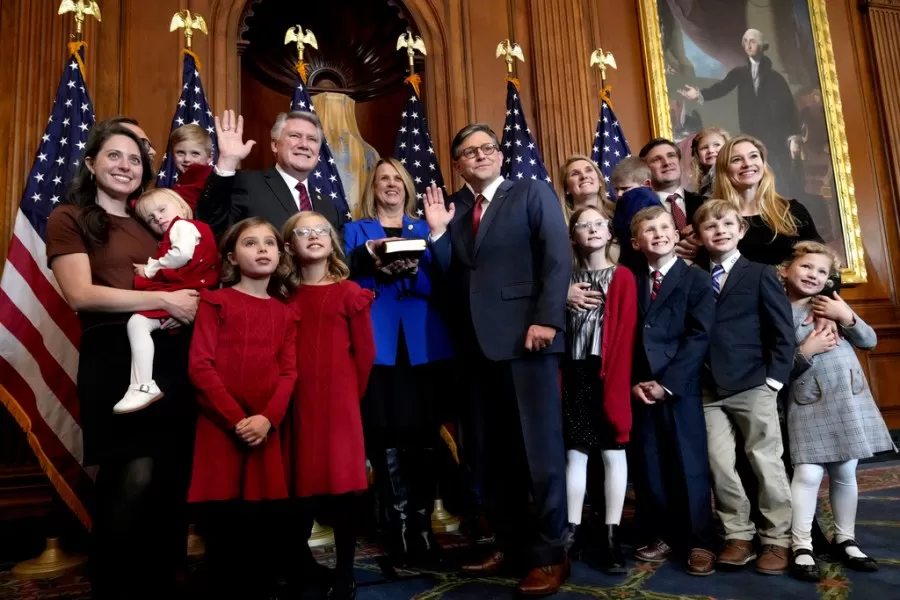
Members‑elect brace for a shaky start as Jan. 3 ceremony faces security and legal challenges
As the new House prepares to convene on Jan. 3, lingering trauma from Jan. 6 and aggressive election‑interference tactics have many members‑elect worrying about possible chaos and contested swearing‑ins.
For most of us, the first day of a new Congress feels like a grand ceremony – families packed into the galleries, new faces beaming, the speaker’s gavel sounding like a promise of fresh starts. This year, however, that image is tinged with a nervous edge. The date on the calendar – Jan. 3 – has already become a source of whispered speculation among members‑elect, staff, and even the Capitol Police.
It’s hard to forget what happened on Jan. 6, 2021. The mob that stormed the Capitol turned what should have been a routine vote‑counting night into a three‑hour nightmare of barricaded rooms, shouts, and shattered glass. Those who were there still describe the scene as “pure terror.” You can almost feel the echo of those memories in the hallway conversations now, as officials promise tighter security protocols, extra barricades, and a larger police presence to make sure history doesn’t repeat itself.
But security isn’t the only thing making people uneasy. There’s a growing sense that President Trump’s relentless campaign to cast doubt on the 2022 midterms could spill over into the very first day the new House meets. The administration’s recent moves – from a Justice Department warning to California election officials about counting ballots from people flagged as “potential non‑citizens,” to attempts at redrawing district maps and even trying to seize voting machines – have left a sour taste.
Most of those heavy‑handed tactics have been blocked by state officials or the courts, but the pattern is clear: if Democrats end up controlling either the House or the Senate, the president’s team appears ready to pull out every lever they can. The fear is that such pressure could morph into a legal scramble on Jan. 3, with challenges hurled at the very process of swearing in new members.
Normally, the opening day is almost procedural. The House Clerk runs an electronic quorum call, reading out the names of members‑elect whose state certifications have arrived. The speaker is elected, then each member‑elect is asked to rise and take the oath. If an opponent has filed a formal contest, the law requires the contested member to sit out while a committee investigates. It’s a tidy system, but it’s not immune to political fireworks.
Recall 2021, when Rep. Chip Roy (R‑TX) tried to block the swearing‑in of all members‑elect from six battleground states, alleging election fraud. House Majority Leader‑elect Steny Hoyer (D‑MD) quickly moved a privileged resolution, and the House voted 371‑2 to swear everyone in – even Roy voted for it. That episode showed how quickly a procedural moment can become a flashpoint.
And then there’s the infamous 1985 Indiana showdown, the McIntyre‑McCloskey race, often called the “bloody eighth.” After a razor‑thin 34‑vote margin, Rep. Rick McIntyre (R‑IN) presented his certificate, only for Majority Leader‑elect Jim Wright (D‑TX) to object, citing “reliable” facts. The House sent the dispute to a bipartisan three‑member task force, and after four months the seat was awarded to Democrat Frank McCloskey by just four votes. That saga helped launch Newt Gingrich’s rise and left a lasting scar on how contested elections are handled on the floor.
Fast‑forward to this week: Reps. Josh Gottheimer (D‑NJ) and Don Bacon (R‑NE) have started circulating a bipartisan letter urging colleagues to pledge to respect the outcome of each election contest, no matter how heated the debate. It’s a modest, almost hopeful gesture in a climate that feels increasingly polarized.
All of this adds up to a palpable sense of unease. Some members‑elect have already requested alternative seating arrangements for their families, fearing that a protest could turn into a blockade. Others are quietly consulting legal counsel about how to respond if a challenge is lodged against them on the very day they’re supposed to take the oath.
Yet, amid the anxiety, there’s also a stubborn optimism. Many veterans of the Capitol’s corridors remind newcomers that the institution has survived far worse. “We’ve been through wars, impeachments, and even a pandemic,” one senior staffer said, shaking his head with a small smile. “If we can keep the doors open tomorrow, we’ll get through this, too.”
So, as Jan. 3 approaches, the House stands at a crossroads between ceremony and contention. Whether security measures and bipartisan goodwill will be enough to keep the day on script remains to be seen. One thing is certain: the eyes of the nation will be on the swearing‑in, waiting to see if the new Congress can start its work without a repeat of the chaos that still haunts the Capitol’s memory.
Editorial note: Nishadil may use AI assistance for news drafting and formatting. Readers can report issues from this page, and material corrections are reviewed under our editorial standards.