Inversion Space and NASA Team Up to Pioneer Interplanetary Aerocapture
- Nishadil
- October 22, 2026
- 0 Comments
- 4 minutes read
- 8 Views
- Save
- Follow Topic
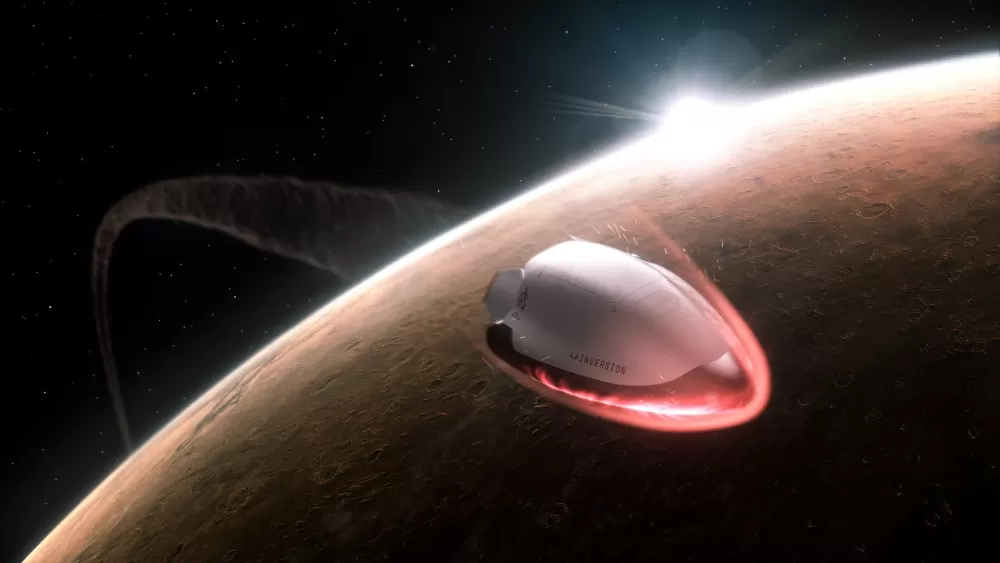
How a California Startup’s Arc Vehicle Could Turn Atmospheric Braking into a Practical Tool for Future Space Missions
NASA has awarded Inversion Space a contract to test aerocapture with its Arc re‑entry vehicle, a breakthrough that could slash propellant needs for journeys to Mars, Venus, Titan and beyond.
Imagine slowing a spacecraft down just by slipping into a planet’s atmosphere, like a car easing into a traffic jam without slamming on the brakes. That’s the promise of aerocapture – a maneuver that lets a vehicle trade precious fuel for a bit of atmospheric drag, then settle into orbit. It sounds elegant, but in practice it’s a high‑stakes dance of heat, thrust and precise timing.
Enter Inversion Space, a California‑based startup founded by former SpaceX and ABL engineers. Their original mission was to build fast‑response re‑entry pods that could haul life‑saving cargo – think vaccines or critical equipment – to remote locations in record time. The idea was simple: launch a small capsule into low Earth orbit, let it swing back down, and land wherever it’s needed, all within hours. The company’s first prototype, a vehicle named Ray, lifted off just four years after Inversion was incorporated, proving that they could move quickly.
Now Inversion is taking that same technology and aiming it at a far more ambitious target: interplanetary aerocapture. Their current vehicle, called Arc, is built around three control stages. First, a conventional chemical propulsion system does the big orbital tweaks. Once the craft is close to the desired path, a cold‑gas thruster network provides fine‑grade positioning. Finally, as the capsule hits the upper reaches of an atmosphere, a set of heat‑shielded control flaps takes over, steering the vehicle while it endures temperatures that would melt ordinary metal.
Arc isn’t meant to be a reusable shuttle. Its heat shield and parachutes are disposable, which, according to CEO Justin Fiaschetti, is perfectly fine for the intended market. The real selling point is how much heat the vehicle can survive – the hotter it can handle, the heavier the payload it can deliver, and the more missions it can support.
The same heat‑management chops make Arc a candidate for aerocapture. Instead of descending all the way to the surface, the vehicle would skim the upper atmosphere, bleed off enough speed, and then settle into a stable orbit around another world. The physics are identical – you still need to manage thermal loads and keep the craft oriented – only the end‑game changes.
NASA saw that overlap and, earlier this year, awarded Inversion a contract to study “mission design, aerodynamics, trajectory analysis, and vehicle definition” for an aerocapture demonstration. The plan isn’t to launch Arc to Mars tomorrow. The first test will happen right here on Earth, where engineers can verify the models in a controlled environment before taking the concept farther afield.
Fiaschetti says the goal is to avoid the drawn‑out, ten‑year development cycles that often accompany early‑stage NASA projects. He wants a flight‑ready demonstrator in the next few years – a timeline that feels tight, but Inversion has already proven they can move fast. If the Earth‑based test succeeds, the next logical step would be a Martian or Venusian aerocapture trial, where the fuel savings could be game‑changing.
Why does it matter? On Earth we can launch into any orbit we like using rockets, and the Moon offers almost no atmosphere to exploit. But for destinations with thick envelopes – Mars, Venus, even the hazy skies of Titan – a successful aerocapture could shave months off travel times and drastically cut launch mass. That, in turn, opens the door to larger payloads, more scientific instruments, and potentially even crewed missions that are less dependent on massive fuel tanks.
It’s still early days. The technology is being demonstrated, the thermal protection systems are being tweaked, and the precise flight software is under development. Yet the partnership between NASA and Inversion Space represents a concrete step toward turning aerocapture from a textbook concept into an operational tool for deep‑space exploration.
Editorial note: Nishadil may use AI assistance for news drafting and formatting. Readers can report issues from this page, and material corrections are reviewed under our editorial standards.