India's Bold Move: Banning Black Mass Exports for a Secure Mineral Future
- Nishadil
- November 19, 2026
- 0 Comments
- 3 minutes read
- 2 Views
- Save
- Follow Topic
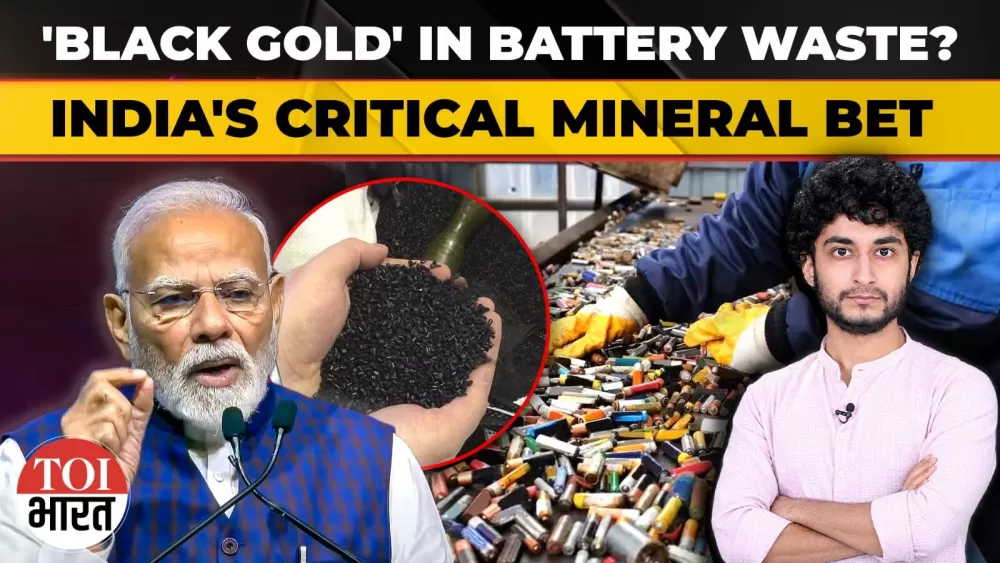
India Curbs Black Mass Exports: A Strategic Push for Critical Mineral Independence
India has taken a significant step by banning the export of lithium-ion battery black mass, a move aimed at bolstering domestic recycling and securing vital minerals like lithium, nickel, and cobalt for its own future.
India, a nation rapidly charting its course towards a greener future, recently made a truly significant — and some might say, strategic — policy decision. As reported on November 18, 2026, the country has officially imposed a ban on the export of lithium-ion battery "black mass." Now, for those unfamiliar, this isn't just some technical jargon; it's a critical move with far-reaching implications for India's mineral security and its ambitions in the global clean energy race.
So, what exactly are we talking about when we say "black mass"? Well, imagine all those spent lithium-ion batteries – from your phone, your laptop, even electric vehicles – once they're shredded down, what's left is this dark, powdery residue. That's the black mass. And here's the kicker: it’s absolutely brimming with precious metals. We're talking about vital elements like lithium, nickel, and cobalt, which are essentially the lifeblood of modern technology and, crucially, the future of electric mobility and renewable energy storage.
The reasoning behind this export ban is pretty straightforward, yet incredibly impactful. India wants to keep these valuable minerals right here at home. The government's clear intention is to bolster domestic recycling efforts significantly. By ensuring that the black mass stays within its borders, India aims to cultivate a robust internal supply chain for these critical resources. Think about it: instead of relying heavily on imports for raw materials, the nation can increasingly source them from its own waste, creating a much more self-sufficient and resilient ecosystem.
This isn't just about saving money, although that's certainly a factor. It's fundamentally about national security and securing a stable supply of materials essential for the country's burgeoning electric vehicle (EV) industry and its ambitious renewable energy goals. Having a reliable, domestic source for lithium, nickel, and cobalt means India is less vulnerable to global supply chain disruptions or price volatility, giving it a stronger hand in shaping its own economic and environmental destiny.
Of course, making such a policy decision is one thing; implementing it effectively is another challenge entirely. India certainly faces its share of hurdles in fully realizing the potential of this ban. For starters, the country needs to ramp up its refining capacity significantly to process this black mass into usable raw materials. There are also practical challenges in establishing comprehensive battery collection networks across such a vast nation. Furthermore, the processing costs can be quite high, and the technologies involved in efficiently extracting and purifying these minerals are still evolving. But, you know, these are challenges that India is now more incentivized than ever to overcome.
Ultimately, this ban on black mass exports marks a pivotal moment. It signals India's serious commitment to building a circular economy for critical minerals and taking control of its own future resource needs. It's an ambitious step, certainly, but one that could very well redefine India's position in the global clean energy landscape for years to come.
- India
- News
- ElectricVehicles
- Science
- ScienceNews
- RenewableEnergy
- NewsVideos
- LithiumIonBatteries
- Recycling
- CriticalMinerals
- MineralSecurity
- CircularEconomy
- BatteryRecycling
- Lithium
- Cobalt
- Nickel
- LithiumIonBattery
- ExportBan
- CobaltRecovery
- NickelRecovery
- BatteryWasteManagement
- BlackMass
- LithiumImports
- IndiaBatteryIndustry
Editorial note: Nishadil may use AI assistance for news drafting and formatting. Readers can report issues from this page, and material corrections are reviewed under our editorial standards.