A Bridge to Nature: The World's Largest Wildlife Crossing Unites Fragmented Habitats Near Los Angeles
- Nishadil
- November 19, 2026
- 0 Comments
- 3 minutes read
- 1 Views
- Save
- Follow Topic
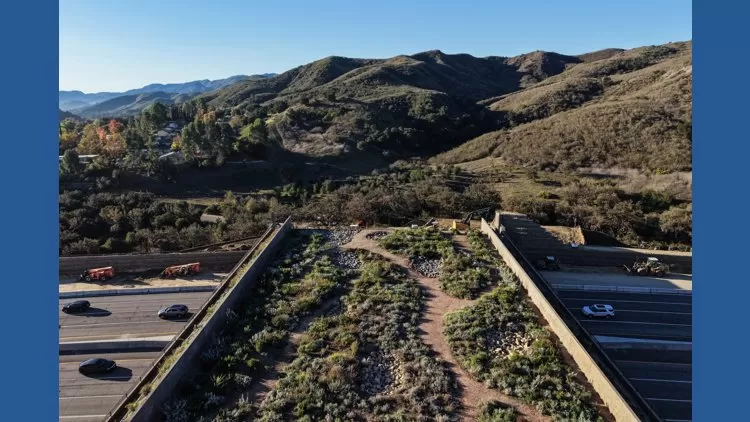
Near Los Angeles, a Sprawling Wildlife Crossing Offers Safe Passage to Nature's Own
Discover the incredible story behind the world's largest wildlife crossing, a monumental effort near Los Angeles that's reconnecting vital animal habitats and offering a beacon of hope for biodiversity in an urbanized world.
Imagine, for a moment, being an animal in a fragmented world. A vast, bustling freeway, an endless river of steel and sound, slices right through what was once your ancestral hunting ground. For generations, these concrete arteries have posed an insurmountable barrier, not just for individual creatures but for entire populations. Near the sprawling metropolis of Los Angeles, however, a truly monumental effort is underway, quite literally building a bridge over this divide – and it’s a game-changer for wildlife.
We’re talking about the world’s largest wildlife crossing, a breathtaking feat of ecological engineering designed to give animals a fighting chance. Spanning an incredibly busy freeway, this ambitious project, often envisioned for the iconic Santa Monica Mountains region, isn't just a simple overpass. Oh no, it's far more profound. It's a vast, vegetated land bridge, meticulously crafted to mimic the natural terrain, ensuring that critters from the smallest lizard to the majestic mountain lion can traverse safely, free from the terrifying threat of speeding vehicles.
The "why" behind such a massive undertaking is deeply rooted in the urgent need for conservation. Our modern infrastructure, while essential for human connectivity, has inadvertently isolated animal populations, turning once contiguous habitats into ecological islands. For species like the mountain lion, a solitary apex predator, this isolation is a death knell. Limited genetic diversity due to inbreeding weakens their populations, making them more susceptible to disease and less resilient overall. This crossing is, quite literally, a lifeline, allowing these magnificent creatures – and countless others – to disperse, find mates, and maintain the genetic vigor essential for long-term survival.
The sheer scale of this endeavor is quite something. Think about it: creating an entirely new landscape over concrete. It involves thoughtful design, planting native vegetation, and even sound walls to minimize the roar of traffic below, making the path above feel as natural and inviting as possible. It's not just about saving individual animals, you see; it's about safeguarding the very fabric of an ecosystem, ensuring that the rich biodiversity of this region can thrive even amidst ever-expanding human development. This isn't just infrastructure; it's an act of reconciliation with nature.
Ultimately, this isn't merely a local project; it's a beacon of hope and a powerful model for conservation worldwide. It demonstrates that with vision, collaboration, and a deep respect for the natural world, we can indeed engineer solutions that allow both humans and wildlife to coexist and flourish. It’s a bold statement, a testament to what’s possible when we choose to prioritize the health of our planet, offering a truly inspiring glimpse into a future where our roads no longer spell doom for our wild neighbors, but rather, connect them to a brighter tomorrow.
Editorial note: Nishadil may use AI assistance for news drafting and formatting. Readers can report issues from this page, and material corrections are reviewed under our editorial standards.