India’s New Outreach Push Helps Farmers and Small Businesses Tap Global Markets via FTAs
- Nishadil
- October 22, 2026
- 0 Comments
- 4 minutes read
- 6 Views
- Save
- Follow Topic
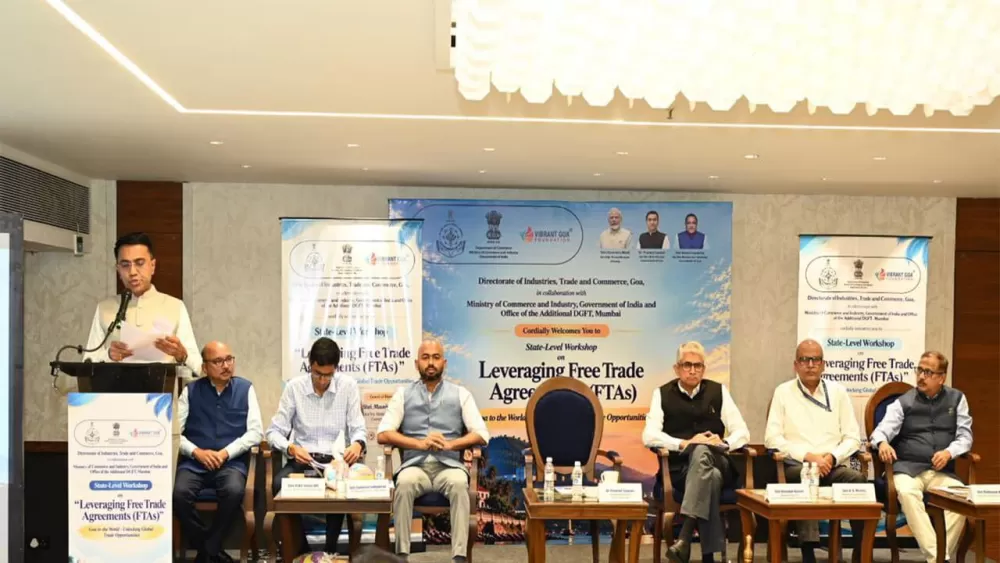
Government teams up with states to guide MSMEs, farmers and startups on using free‑trade agreements for exports
Commerce Minister Piyush Goyal announced a nationwide outreach programme, partnering with state governments to help farmers, women, youth and MSMEs unlock export opportunities under India's expanding FTA network.
In a move that feels part‑policy, part‑grassroots campaign, the central government has kicked off a series of outreach events across the country. The goal? To make sure that the plethora of free‑trade agreements (FTAs) India has signed in recent years actually translate into real‑world orders for farmers, small enterprises and the millions of workers who depend on them.
Speaking on Wednesday, Commerce and Industry Minister Piyush Goyal used his social‑media platform to stress that the “real test of any trade pact is whether it reaches the shop‑floor, the farm‑gate and the small workshop.” He said the Ministry of Commerce would work hand‑in‑hand with state officials, local chambers and farmer‑producer organisations to demystify the paperwork and highlight the most promising markets.
These outreach sessions are being billed as “state‑level FTAs boot camps.” In Goa, for example, Chief Minister Pramod Sawant joined the launch, urging local exporters to look beyond traditional destinations and explore new corridors opened by recent agreements with the UAE, Australia and the European Free Trade Association.
So far, India’s FTA footprint has swelled to nine agreements covering 38 countries. Highlights include the India‑Mauritius pact (2021), the India‑UAE Comprehensive Economic Partnership (2022), the India‑Australia Economic and Trade Agreement (2022), the Trade and Economic Partnership with the European Free Trade Association (effective Oct 1 2025), the India‑UK CET (2025), the India‑Oman partnership (2025), the India‑New Zealand FTA (2025), and the India‑EU deal (signed Jan 2026). An interim framework with the United States was also unveiled earlier this year.
What does all this mean for a wheat farmer in Madhya Pradesh or a hand‑loom weaver in West Bengal? In theory, lower tariffs and smoother customs procedures should shave off costs, making Indian products more competitive abroad. In practice, many small‑scale players remain unaware of which products qualify, how to claim preferential rates, or even which markets have demand for their goods.
That’s where the outreach programme steps in. Workshops will feature case studies – think of a Karnataka spice exporter who landed a contract in the Gulf after tapping the India‑UAE pact – and hands‑on help with documentation, certifications and matching services with overseas buyers.
Women entrepreneurs, youth‑led startups and even informal sector workers are being specifically targeted, Goyal said. “We want every segment of society to feel the upside of these trade partnerships,” he added, noting that inclusive growth is a core pillar of the government’s export‑boosting agenda.
More events are slated for the coming months, spanning from the tea estates of Assam to the fisheries of Kerala. The hope is that by the end of the year, at least a modest bump in export figures can be traced back to these state‑level initiatives, giving fresh momentum to India’s broader export strategy.
Editorial note: Nishadil may use AI assistance for news drafting and formatting. Readers can report issues from this page, and material corrections are reviewed under our editorial standards.