How Horror Movies Trick Your Eyes to Give You the Best Scares
- Nishadil
- October 21, 2026
- 0 Comments
- 5 minutes read
- 10 Views
- Save
- Follow Topic
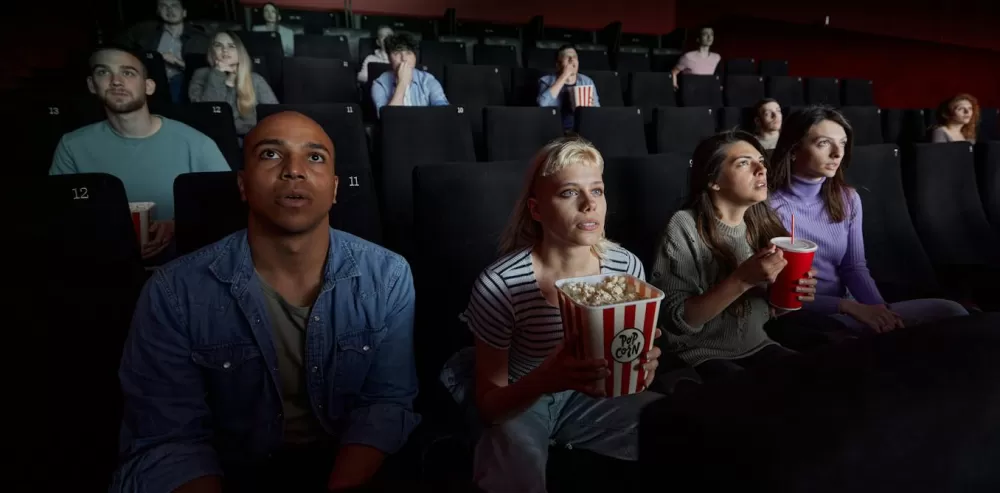
The science behind the shivers: why our vision makes horror films so terrifying
Horror directors aren’t just lucky—they’re using the quirks of human vision. From inattentional blindness to peripheral cues, film‑makers steer what we see and miss, turning ordinary scenes into unforgettable scares.
Picture yourself in a darkened cinema, the room humming with anticipation. The lights dim, the first notes of a low‑drone score creep in, and you feel your pulse quicken. Then, without any overt monster on screen, a few people gasp. You glance around—nothing looks threatening. Yet something has just slipped past your conscious eye.
That uneasy moment is no accident. As a cognitive psychologist who studies visual perception, I’ve learned that horror movies are built on a simple truth: our visual system can only process a tiny slice of what’s actually in front of us at any one time. Directors and cinematographers, whether they realize it or not, act like folk psychologists, nudging our attention exactly where they want it.
One of the most common tricks is inattentional blindness—the tendency to miss an object that’s right there because we’re focused elsewhere. Remember the infamous invisible‑gorilla experiment? About half the participants, busy counting basketball passes, never saw the gorilla strolling across the screen. In film, the effect is just as powerful. In Hereditary, the audience often doesn’t notice Annie perched on the ceiling until the camera finally pulls back. The same principle fuels the ghost boy in Insidious and the swarm of spectral figures in Netflix’s The Haunting of Hill House. The first viewing feels ordinary; the second reveals the hidden menace, making the scene creepier by the second.
Closely related is change blindness—the failure to detect something that has altered right before our eyes. A subtle shift in a character’s shirt colour or a full‑on transformation, like the possessed girl Janet becoming an old man in The Conjuring 2, can slip past us if the camera keeps us focused on another element. Only when the change is dramatically highlighted do we register the horror, and the delayed reaction intensifies the shock.
Filmmakers also use gaze cueing to steer us. When a character’s eyes dart upward, our own eyes follow automatically—a phenomenon known as an eyeline match. In The Conjuring, a girl sits up in bed and stares at an unseen presence; the cut reveals the ghost Bathsheba, and the tension snaps as we finally see what terrified her. The technique mirrors how we instinctively look where others look, turning a simple camera angle into a psychological trap.
Sometimes the opposite tactic is employed: the director deliberately gives us nothing to latch onto. The opening of It Follows is a wide, unbroken shot of a girl sprinting through her house. With no clear eyeline or cut to guide you, you’re forced into a visual scan, hunting for danger that may not yet be visible. That restless searching builds anxiety in the same way a predator’s prowling steps would.
Our eyes themselves are split into two functional zones. The fovea—tiny, cone‑packed, and high‑resolution—captures the fine detail you’re directly looking at. The peripheral field, rich in rods, is superb at spotting motion in low light but poor at identifying specifics. When something flickers in the edge of your vision, your peripheral system flags it instantly, prompting a rapid eye movement, or saccade, to bring the fovea into focus. That split‑second gap—detecting something but not yet knowing what it is—creates a primal sense of unease that horror movies exploit time and again.
Think of the hallway scenes where a character walks forward and a shadow darts just out of frame, or the mirror moments where a reflection lags behind. Those beats are designed to fire your peripheral detectors, making you feel watched even before you can pinpoint the source.
Finally, there’s the human love‑hate relationship with faces, known as pareidolia. Evolution favors a “better‑safe‑than‑sorry” approach: mistaking a pattern for a face is less costly than missing a genuine threat. Movies like Midsommar lean into this bias, placing vague shapes that your brain automatically interprets as eerie visages, heightening dread without any explicit monster.
All these visual quirks—blind spots, motion detection, gaze following, and face‑seeking—are woven into horror storytelling. By understanding how we see, filmmakers craft scares that feel inevitable, even when we can’t explain why our skin crawls. The next time you sit in a dark theater and feel a chill before anything happens on screen, remember: it’s not magic. It’s science, expertly weaponized for a good fright.
Editorial note: Nishadil may use AI assistance for news drafting and formatting. Readers can report issues from this page, and material corrections are reviewed under our editorial standards.