Delhi-NCR's Battle for Breath: Supreme Court Blames Vehicular Emissions, Demands Urgent, Holistic Action
- Nishadil
- November 07, 2026
- 0 Comments
- 3 minutes read
- 7 Views
- Save
- Follow Topic
Supreme Court Decries Vehicular Emissions as Major Pollution Driver in Delhi-NCR, Calls for Behavioral Shift
On November 6, 2026, the Supreme Court unequivocally identified vehicular emissions as a primary cause of Delhi-NCR's alarming air pollution, urging immediate, long-term solutions and behavioral changes beyond mere restrictions.
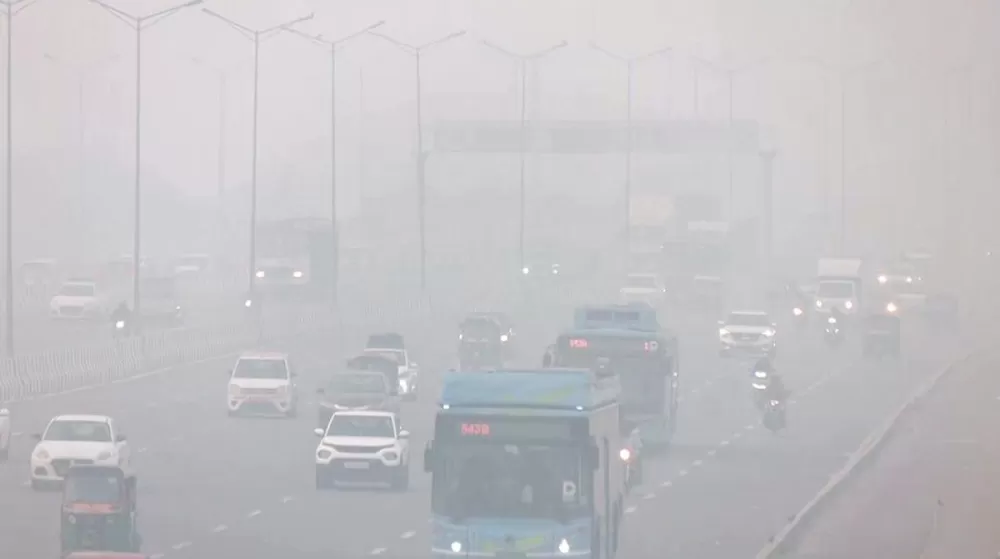
The air over Delhi and its surrounding National Capital Region, let's be frank, often feels heavy, laden with something unseen yet deeply felt. And just recently, on a brisk Friday, November 6, 2026, the Supreme Court of India didn't mince words, squarely pointing to vehicular emissions as a — perhaps the major — contributor to this pervasive air pollution. It was a stark reminder of a persistent problem, one that, frankly, leaves many of us gasping for clean air.
You see, the bench, comprising the venerable Chief Justice of India Surya Kant, alongside Justice Joymalya Bagchi and Justice V. Mohana, was visibly concerned. The Air Quality Index (AQI) was once again flirting with the alarming 400-mark, a number that signifies severe health risks for just about everyone. Their observations weren't merely academic; they were born from the undeniable reality of bumper-to-bumper traffic snaking its way across critical arteries connecting Delhi to Ghaziabad, Greater Noida, Gurugram, and Faridabad. Anyone who’s driven these routes knows precisely what they mean – it's a constant stream of vehicles, each one contributing to the exhaust fumes that blanket our cities.
It's interesting, isn't it, how the Court also highlighted the irony? They noted that while poor people often suffer the most from pollution's devastating effects, a significant chunk of the problem stems from those who can afford expensive vehicles. This isn't to demonize car ownership, of course, but it does prompt a moment of reflection on personal responsibility. Indeed, senior advocate Aparajita Singh, who assists the court, presented data from various monitoring stations across Delhi-NCR—places like IIT Delhi, Rohini, Punjabi Bagh, ITO, and even IGI Airport Terminal 3—underscoring the widespread nature of this vehicular impact.
But here’s the crucial bit: the Court made it abundantly clear that merely imposing restrictions or issuing judicial orders isn't going to cut it anymore. "Why does this keep happening?" seemed to be the underlying question, a sentiment many citizens share. They called for a far more holistic approach, urging immediate, medium-term, and long-term strategies. This isn't just about band-aid solutions; it's about fostering genuine behavioral change and significantly greater awareness among the public. Frankly, as the judges noted, when restrictions are the sole recourse, they often lead to more violations, creating a frustrating cycle.
The conversation wasn't confined solely to vehicles, either. The bench also delved into the perennial issue of stubble burning, acknowledging its contribution. Their suggestion? Educate farmers, provide them with alternative methods, maybe even offer machines and economic incentives to move away from practices that, while perhaps traditional, have devastating consequences for air quality. It's about finding sustainable solutions that work for everyone, especially those whose livelihoods are at stake.
And on the topic of schools, which often bear the brunt of pollution-related closures, the Court expressed its reservations. They seemed to prefer a measured approach, one guided by the expert advice from the Graded Response Action Plan (GRAP), rather than quick, potentially disruptive decisions like moving students to online classes. It’s a complex dance, balancing immediate health concerns with the long-term impacts on education.
Ultimately, what emerged from the Supreme Court's observations on November 6, 2026, was a powerful message: Delhi-NCR's air pollution crisis demands more than just piecemeal efforts. It requires a profound societal shift, governmental resolve for sustainable infrastructure, and a collective commitment from every individual. The health of millions, after all, quite literally hangs in the balance.
Editorial note: Nishadil may use AI assistance for news drafting and formatting. Readers can report issues from this page, and material corrections are reviewed under our editorial standards.