Crypto Super‑PAC Turns on Trump, Funnels Money to Democratic Candidates via Former Adviser
- Nishadil
- October 24, 2026
- 0 Comments
- 3 minutes read
- 6 Views
- Save
- Follow Topic
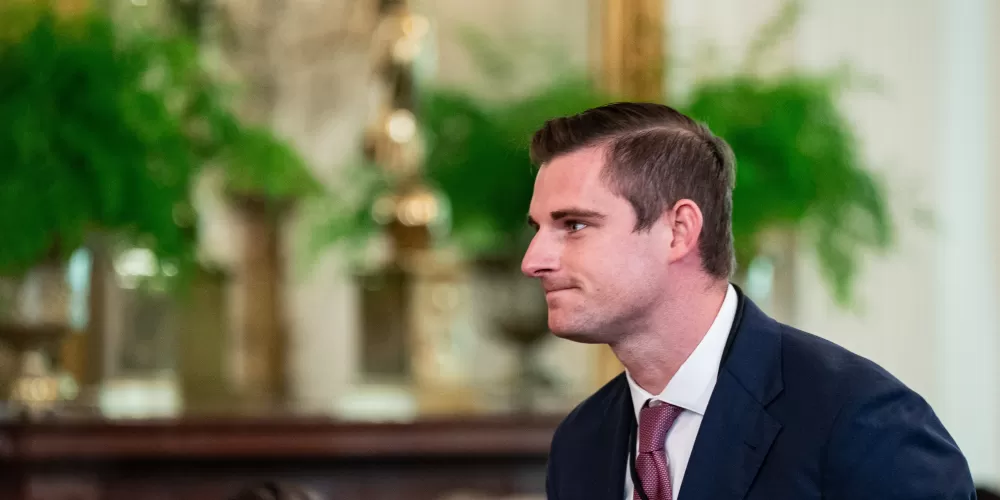
Fellowship PAC redirects half‑million dollars through Bo Hines’ firm to help Democrats in the 2026 midterms
The Fellowship PAC, once a loudmouth for the crypto‑pro‑Trump crowd, has quietly shifted its spending to Democratic incumbents, routing $600,000 through the Nxum Group, a firm co‑founded by ex‑Trump aide Bo Hines.
The crypto‑heavy Fellowship PAC was launched just a year ago with a fanfare that screamed “Republican‑friendly.” Early press releases boasted that the super PAC would back Trump‑aligned candidates and push a pro‑crypto agenda in Washington.
Fast forward to the summer of 2026, and the narrative looks very different. Since June, the PAC’s filing records show it has spent exclusively on Democrats – Rep. Ritchie Torres (NY), Rep. Maggie Goodlander (NH) and Sen. Mark Warner (VA) – all of whom are considered friendly to the digital‑currency industry.
The money didn’t flow directly from Fellowship’s coffers. Instead, roughly $600,000 was routed through Nxum Group, a marketing and consulting firm that Bo Hines co‑founded after his stint as the Trump administration’s chief adviser on digital assets. Hines, a former congressional candidate who once touted himself as a “MAGA acolyte,” has not replied to requests for comment, and it remains unclear how hands‑on he was with the Nxum‑Fellowship transactions.
What complicates the picture is the tangled web that connects Hines, the PAC and one of crypto’s biggest players: Tether. Before Trump’s 2020 victory, Hines helped promote a Trump‑themed meme coin that made a few early investors rich before the price nosedived. Once in the White House, he chaired the Council of Advisers on Digital Assets and helped shepherd stable‑coin regulations that many say favored Tether.
During that period, Tether was reportedly paying Nxum Group for services, though the firm says Hines was not involved. In a June 2025 ethics filing, Hines described his stake in Nxum as a “passive investment.” He left the administration in August 2025 and, a month later, was tapped to run Tether’s U.S. operations.
The financial ties don’t end there. In January, Fellowship PAC received a $10 million contribution from Cantor Fitzgerald, the banking arm that handles Tether’s U.S. transactions. By April, Tether’s vice‑president of regulatory affairs had been named chair of the PAC. Despite early claims of a $100 million war chest, the PAC’s most recent disclosures show cash on hand dwindling to about $250,000.
Why the sudden pivot? Analysts note that internal polls in June signaled a bleak outlook for Republicans in the upcoming midterms. The timing of the first Democratic spend – a $150,000 digital‑ad buy for Torres – lines up almost exactly with that data point. Since then, the PAC has kept its dollars away from GOP contenders, focusing instead on races that are not truly competitive.
Both Torres’s and Warner’s campaigns declined to comment. Goodlander’s team said the $150,000 ad spend “was not coordinated with the campaign,” and stressed that any outside money is strictly prohibited from influencing strategy.
All three lawmakers rank high on industry scorecards for supporting crypto‑friendly legislation, yet they have each taken shots at Trump’s personal crypto ventures, notably the $TRUMP meme coin that allegedly netted the former president $1.4 billion. Warner even ran an ad accusing Trump of “grifting” rather than governing.
Whether this is a strategic re‑branding of a crypto‑driven super PAC, a calculated move to stay on the right side of a shifting political tide, or simply a case of money following influence, the episode underscores how fluid and opaque the money‑flows between digital‑currency firms, political operatives and elected officials have become.
Editorial note: Nishadil may use AI assistance for news drafting and formatting. Readers can report issues from this page, and material corrections are reviewed under our editorial standards.