Beyond the Odds: Unpacking the Future of Forecasting with Prediction Markets and Sports Betting
- Nishadil
- January 07, 2026
- 0 Comments
- 4 minutes read
- 63 Views
- Save
- Follow Topic
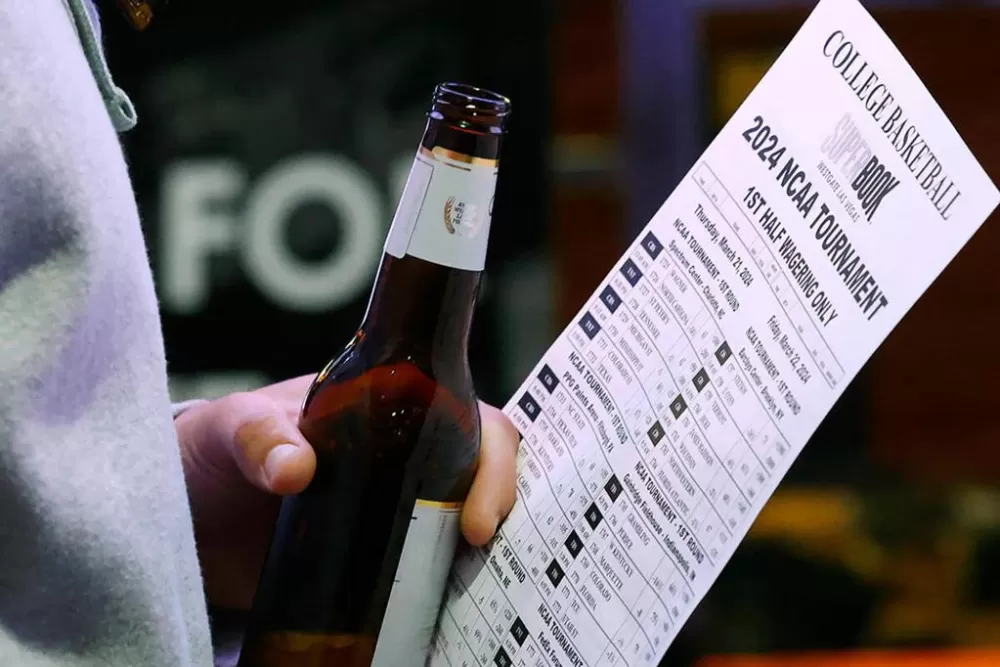
Why Prediction Markets Are More Than Just Betting: A Deep Dive into Their Unseen Power
A fascinating report explores how prediction markets are carving out a distinct niche alongside traditional sports betting, offering unique insights into the wisdom of crowds and potential future events.
Ever paused to think about what makes a market tick, especially those tied to future events? It’s fascinating, isn't it? We’re talking about prediction markets and the ever-popular realm of sports betting. On the surface, they might seem like two sides of the same coin – after all, both involve putting something on the line in anticipation of an outcome. But a recent report really pulls back the curtain, suggesting these aren't just similar cousins; they're quite distinct, each offering a unique lens through which we can view the future.
Here’s the fundamental difference, and it’s not just splitting hairs, you know. Traditional sports betting, for all its excitement, typically revolves around specific results: who wins the game, the exact score, or perhaps a particular player's performance. It’s about predicting a defined sporting outcome. Prediction markets, however, are often far broader and, dare I say, more insightful. They invite participants to wager on the probability of virtually any future event – think election results, a company’s stock performance, the launch date of a new product, or even the likelihood of a major global development. They’re less about 'who' and more about 'what' and 'when,' giving us a peek into collective human belief about impending realities.
What truly sets prediction markets apart is their incredible ability to tap into what’s often called "the wisdom of crowds." Imagine thousands, or even millions, of individuals each bringing their own unique bits of information, analysis, and gut feelings to the table. When these individual judgments are aggregated, the market price can often become an astonishingly accurate forecast. It’s a phenomenon that regularly outperforms even seasoned experts or traditional polling methods. For instance, in political races, these markets have historically offered incredibly sharp predictions, often revealing sentiment that traditional surveys might miss entirely. They don't just tell you who people want to win; they tell you how likely people believe that outcome truly is.
The appeal, of course, is undeniable. For many, it's the thrill of competition, the chance to prove their foresight, and yes, the potential for financial gain. But there's also a deeper intellectual curiosity at play – a desire to understand the forces shaping our world and to test one's own analytical skills against the collective intelligence. This dual allure has fueled a significant boom in both sectors, with these platforms increasingly woven into our financial and entertainment landscapes. It’s a dynamic space, evolving at a rapid clip, and it certainly feels like we're just scratching the surface of their full potential.
Navigating the legalities of all this, though, is quite a tightrope walk. While sports betting generally falls under established gambling regulations (albeit varying wildly from state to state or country to country), prediction markets often find themselves in a fascinating grey area. Are they pure gambling? Or are they, as some argue, a form of economic forecasting, a sophisticated data collection tool, or even a novel type of financial derivative? This regulatory ambiguity is a huge part of their story, creating both challenges and opportunities for innovation as authorities try to figure out where exactly they fit in the grand scheme of things.
Ultimately, what these markets offer goes beyond mere entertainment or profit. They provide an intriguing, real-time barometer of public sentiment and future probabilities across an astonishing array of topics. As technology advances and more people participate, prediction markets could become an even more indispensable tool for businesses making strategic decisions, policymakers assessing risks, and even individuals trying to make sense of an uncertain world. They represent a powerful, if sometimes overlooked, mechanism for collective discovery, hinting at futures yet unwritten.
Editorial note: Nishadil may use AI assistance for news drafting and formatting. Readers can report issues from this page, and material corrections are reviewed under our editorial standards.