Unmasking Hidden Heart Pain: Apollo Hospitals Pioneers Advanced Microvascular Assessment in India
- Nishadil
- January 07, 2026
- 0 Comments
- 3 minutes read
- 48 Views
- Save
- Follow Topic
A New Hope for Chronic Chest Pain: Apollo Hospitals Tackles Elusive Heart Conditions with Cutting-Edge Diagnostics
Apollo Hospitals in Chennai is revolutionizing cardiac care by introducing an advanced microvascular assessment technique, offering a lifeline to patients suffering from complex, unexplained chest pain that traditional tests often miss.
Imagine enduring chronic, debilitating chest pain, the kind that steals your breath and your peace of mind. You visit countless doctors, undergo a battery of tests – ECGs, angiograms, stress tests – only to be told, again and again, that everything looks 'normal.' Yet, the pain persists, leaving you frustrated, scared, and without answers. This isn't just a hypothetical scenario; it's a harsh reality for countless individuals whose heart issues simply don't show up on conventional scans.
Well, there's finally a beacon of hope emerging from Apollo Hospitals in Chennai. They've recently taken a monumental step forward in cardiac care, pioneering an advanced microvascular heart assessment right here in India. This isn't just another incremental improvement; it's a game-changer for those suffering from complex, elusive chest pain that, until now, has often been misdiagnosed or completely missed.
What we're talking about here isn't blockages in the big, well-known coronary arteries – those are typically what an angiogram looks for. No, this breakthrough focuses on the heart's tiny, intricate network of blood vessels, known as the microvasculature. Think of it like this: your main highways might be perfectly clear, but if all the smaller, local roads are congested or damaged, traffic (blood flow) still can't get where it needs to go effectively. This condition, often termed Microvascular Angina (MVA) or Coronary Microvascular Dysfunction (CMD), is a silent culprit behind a significant portion of unexplained chest pain.
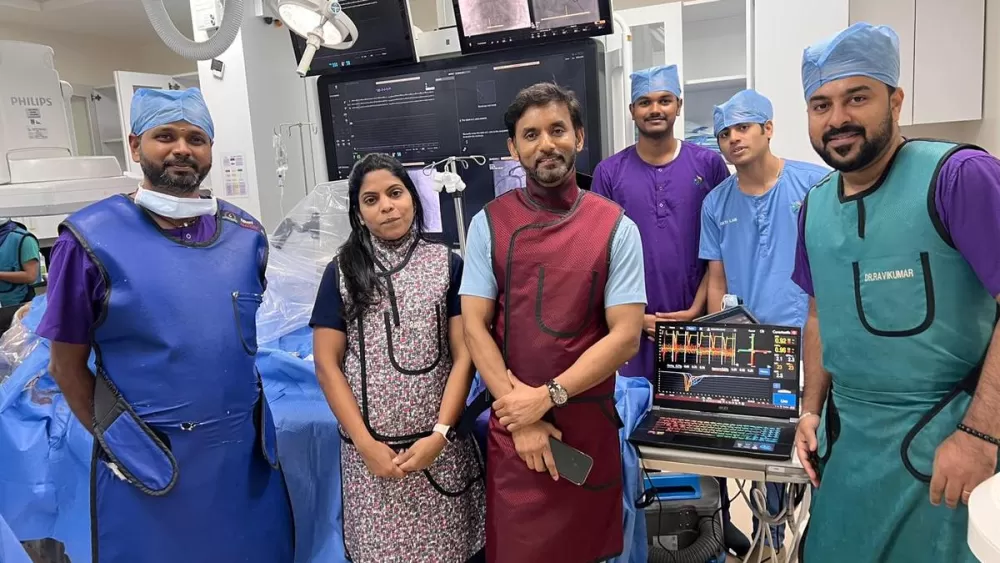
To truly understand what’s happening at this microscopic level, Apollo Hospitals is utilizing some seriously cutting-edge technology. They’re employing the Coroventis CoroFlow Cardiovascular System, which works in conjunction with the innovative PressureWire X Guidewire. This sophisticated setup allows specialists to precisely measure blood flow and pressure within these tiny vessels. Essentially, it helps them assess the 'Microvascular Endothelial Function (MEF)' – that’s a fancy way of saying, 'How well are these tiny vessels actually working?' It’s an incredibly precise way to pinpoint the exact problem.
This pioneering effort is being spearheaded by brilliant minds like Dr. Sai Satish, a Senior Consultant Interventional Cardiologist, and Dr. Madhura Kulkarni, a Consultant Cardiologist, both from Apollo Hospitals, Chennai. Their dedication to bringing such advanced diagnostics to patients in India is truly commendable. It means that for the first time, or certainly among the very first, patients here have access to a diagnostic tool that can accurately identify the root cause of their baffling symptoms, opening doors to targeted and effective treatment plans.
The impact on patients is, frankly, life-altering. For those who've been living with chronic chest pain and the emotional toll of uncertainty, this assessment offers not just a diagnosis, but also immense relief and a path forward. It’s about alleviating persistent symptoms, significantly improving their quality of life, and, importantly, potentially preventing more serious cardiac events down the line. It transforms a journey of despair into one of hope and recovery.
It’s fascinating, isn’t it, how medical science continues to push boundaries, often looking at the smallest details to solve the biggest problems. Apollo Hospitals' initiative with this advanced microvascular assessment truly underscores their commitment to patient-centric care and their position at the forefront of cardiac innovation. For anyone who knows someone grappling with persistent chest pain, this news offers a genuine glimmer of hope – a testament to the fact that sometimes, the answers lie not in the obvious, but in the unseen.
Editorial note: Nishadil may use AI assistance for news drafting and formatting. Readers can report issues from this page, and material corrections are reviewed under our editorial standards.