
Political Firestorm: Pollution Clashes Dominate Delhi Assembly's Second Day
- Nishadil
- January 07, 2026
- 0 Comments
- 4 minutes read
- 63 Views
- Save
- Follow Topic
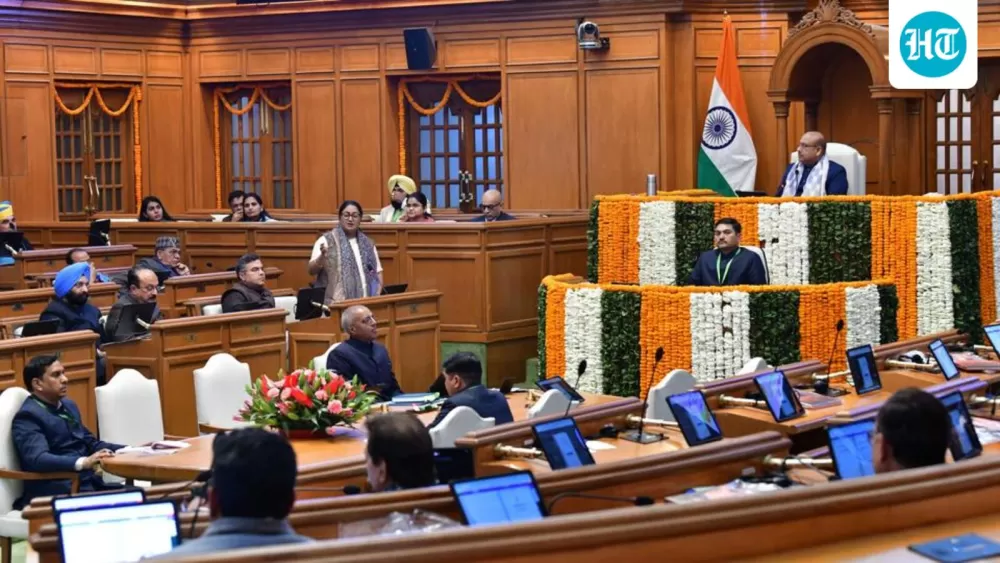
Day Two of Delhi Assembly Sees Heated Pollution Debates, BJP Walkouts Amidst Guru Tegh Bahadur Celebrations
The second day of the Delhi Assembly session was a whirlwind of political clashes, with the city's crippling pollution taking center stage. Amidst fiery debates and walkouts, a solemn commemoration for Guru Tegh Bahadur offered a brief respite from the parliamentary chaos.
Well, day two of the Delhi Assembly session certainly didn't disappoint if you're into political fireworks. The atmosphere inside the house was, to put it mildly, charged – almost as thick with tension as Delhi's infamous winter air, frankly. Lawmakers gathered, but instead of serene policy discussions, we witnessed a full-blown verbal showdown, particularly concerning the capital's ongoing battle with pollution. It felt like everyone had their gloves off, ready to spar over everything from air quality to who was truly responsible for the city's woes.
Unsurprisingly, the suffocating issue of air pollution quickly became the main event. The Aam Aadmi Party (AAP), the ruling party, kicked things off, bringing up the much-talked-about odd-even scheme, designed to curb vehicular emissions. Speaker Ram Niwas Goel even emphasized the critical need for a collective approach, suggesting perhaps a more unified front could actually tackle this pervasive problem. They highlighted their government's multi-pronged strategy to combat pollution, including the odd-even plan and efforts to reduce dust. The sentiment was clear: Delhi's air quality is a public health emergency, and urgent action, they argued, was indeed being taken.
But hold on, the opposition wasn't having any of it. The Bharatiya Janata Party (BJP) MLAs, never ones to shy away from a confrontation, wasted no time in creating a ruckus. They stormed into the well of the house, shouting slogans, absolutely convinced that the AAP government was simply not doing enough. Their protests grew so intense, in fact, that a staggering eight BJP members were eventually suspended from the day's proceedings. You could almost feel the Speaker's frustration mounting as he repeatedly asked them to maintain decorum. It was a dramatic scene, punctuated by their eventual walkout, a clear statement of their dissatisfaction and their unwavering belief that the AAP was mismanaging the city's environmental crisis, along with other critical public health issues like dengue and chikungunya.
Amidst all this political theater, there was a moment of solemn reflection. The Assembly paused to commemorate the 400th Prakash Parv, the birth anniversary, of Guru Tegh Bahadur, the ninth Sikh Guru. It was a poignant reminder of heritage and sacrifice, a brief, respectful interlude in what was otherwise a rather chaotic day. Members across the political spectrum stood together, paying homage to his invaluable contributions, almost as if to momentarily acknowledge something larger and more unifying than their daily squabbles.
Of course, the AAP wasn't just going to sit back and take the criticism. They quickly turned the tables, accusing the BJP-led municipal corporations of, frankly, making the pollution problem worse through sheer inaction and alleged corruption. They pointed fingers at issues like rampant open burning of garbage and inadequate sanitation, suggesting that the very bodies controlled by the BJP were failing the city on basic environmental fronts. It became a tit-for-tat exchange, with each side eager to lay blame at the other's doorstep, a classic political maneuver, really.
Beyond the smog, the session also briefly touched upon other pressing public health concerns, specifically the troubling rise in dengue and chikungunya cases. These issues, alongside the pollution debate, painted a picture of a city grappling with significant challenges, and a legislative body struggling to find common ground. In essence, day two of the Delhi Assembly was a whirlwind of accusations, heated exchanges, and a stark reminder that when it comes to the capital's future, agreement often feels like a distant dream, even when facing shared adversaries like poor air and public health crises. It was contentious, it was loud, and it certainly wasn't boring.
Editorial note: Nishadil may use AI assistance for news drafting and formatting. Readers can report issues from this page, and material corrections are reviewed under our editorial standards.


