Bengaluru: India’s Most Linguistically Diverse City
- Nishadil
- October 22, 2026
- 0 Comments
- 2 minutes read
- 1 Views
- Save
- Follow Topic
Why Bengaluru Beats All Indian Cities in the Number of Languages Heard on Its Streets
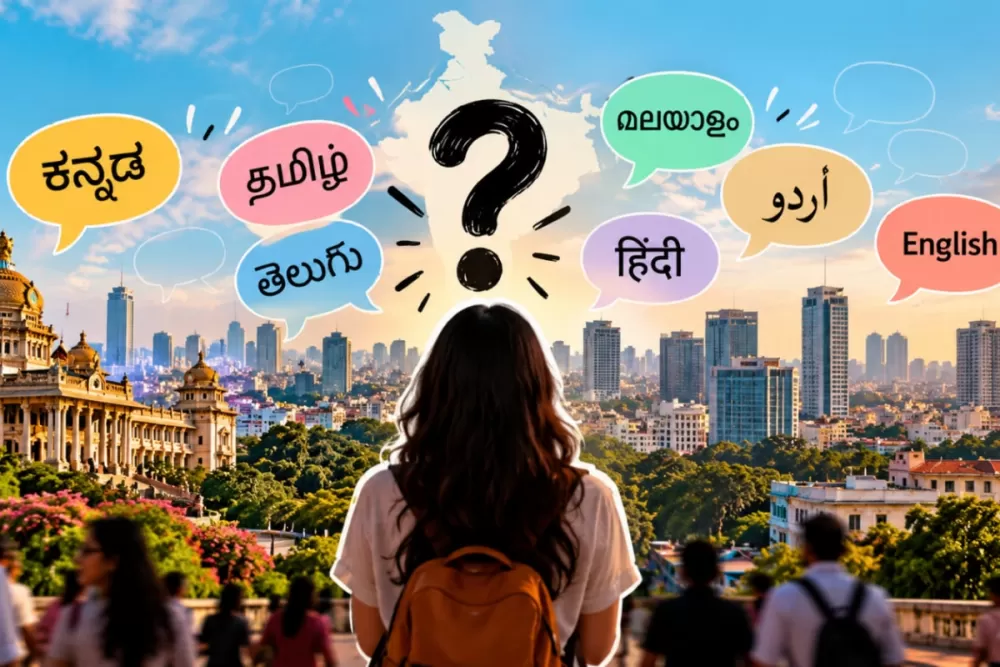
Bengaluru, the Silicon Valley of India, hosts the widest mix of languages—from Kannada and Tamil to Hindi and English—thanks to its booming tech scene and vibrant migrant influx.
India is a tapestry of tongues, each state adding its own hue to the national picture. Yet, if you wander through one Indian city and listen closely, you’ll hear a chorus of languages that rivals the country’s entire linguistic spectrum. That city is Bengaluru.
Often dubbed the “Silicon Valley of India,” Bengaluru’s rise as an IT and educational hub has drawn people from every corner of the sub‑continent. While Kannada remains the heart‑beat language, you’ll equally hear Tamil, Telugu, Hindi, Malayalam, Urdu and English peppered through cafés, office corridors and market stalls.
The story begins with the city’s economic magnetism. Multinational tech firms, start‑ups, and research institutions set up shop here, offering high‑skill jobs that attract professionals from Maharashtra, Punjab, Uttar Pradesh, Bihar, and beyond. Simultaneously, its universities pull thousands of students each year, each bringing the language of their home state.
When these newcomers settle, they don’t leave their words behind. Families converse in their mother tongues at home, neighbors share recipes in regional slang, and workplaces become melting pots where a Tamil speaker might explain a code snippet in English to a Telugu colleague, while a Hindi‑speaking manager nods along.
Despite this rich mix, Kannada still commands the public sphere—government offices, transport announcements, and street signage are primarily in the state language. Its prominence is a reminder that Bengaluru’s linguistic diversity is built atop, not in place of, its local identity.
Hindi and English, however, serve as the city’s lingua francas. Hindi bridges communication among migrants from the north, while English dominates corporate meetings, classroom lectures, and tech‑driven conversations. The dual role of these languages helps keep the city’s daily rhythm fluid and inclusive.
Other Indian metropolises also boast impressive language mosaics, but each has its own flavor. Mumbai hums with Marathi, Gujarati and Hindi; Delhi’s soundscape is a blend of Hindi, Punjabi and Urdu; Hyderabad mixes Telugu, Urdu and Hindi; Chennai is dominated by Tamil with a sprinkling of English and Telugu. Yet none combine the breadth of South‑Indian, North‑Indian and global tongues quite like Bengaluru.
In the end, Bengaluru’s linguistic tableau mirrors its evolution—from a quiet regional capital to a bustling, cosmopolitan hub. Walking its streets feels like flipping through a living atlas of India, where every conversation adds a new layer to the city’s ever‑changing story.
Editorial note: Nishadil may use AI assistance for news drafting and formatting. Readers can report issues from this page, and material corrections are reviewed under our editorial standards.