A Night in the Pacific: How 24‑Year‑Old Coast Guard Swimmer Josh Law Battled Waves and Darkness to Save 16 Lives
- Nishadil
- October 24, 2026
- 0 Comments
- 4 minutes read
- 11 Views
- Save
- Follow Topic
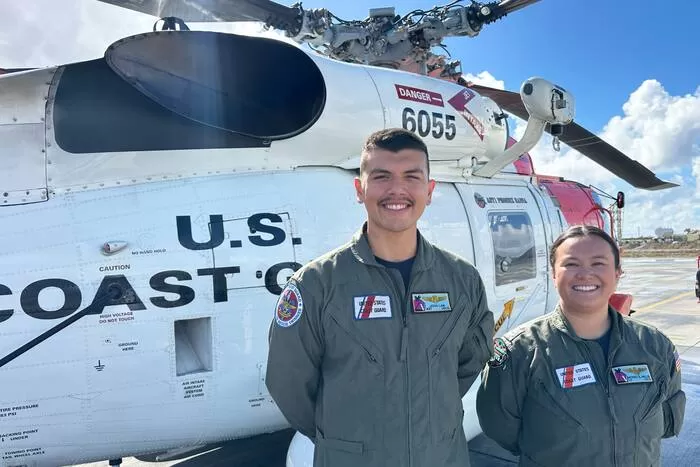
Coast Guard rescue swimmer braves black‑out sea, rescues 16 people off Baja
Josh Law was lowered from a helicopter into a pitch‑black, rough Pacific. In two grueling hours he pulled 16 migrants from the water, fighting 6‑8‑foot waves and near‑total darkness.
It was the middle of the night, the kind of black that seems to swallow sound as well as sight. A Coast Guard helicopter hovered over the swaying Pacific, its blades thundering like a storm. Below, 24‑year‑old rescue swimmer Josh Law was strapped into a harness, ready to be dropped into the chaos.
At roughly 1 a.m. a desperate mayday crackled through the radio – a small boat was sinking somewhere off Ensenada, Mexico. Within minutes the alarm jolted the crew at the Ventura Air Station awake. Pilot Lt. Miyako Miller, eyes glued to night‑vision goggles, plotted a course using nothing but stars and a dim searchlight.
When the chopper finally reached the reported spot, the ocean was a sea of darkness, punctuated only by the faint glow of life‑vest lights bobbing on the surface. The helicopter lowered Law on a cable to a water column that was anything but calm – waves ranged from six to eight feet, and the spray slapped his face like cold knives.
“I was exhausted,” Law later told reporters, his voice hoarse from the effort. “We’d barely slept, but that didn’t compare to what they were feeling out there.” He could barely hear the rotors over the roar of the sea, and he couldn’t see more than the searchlight dancing ahead of him.
He followed that beam, hunting for the scattered survivors – men and women clutching onto each other, buoys, and broken pieces of a capsized vessel. Some wore life‑vests that blinked like tiny fireflies, the very signals Miller had spotted from the air.
Using the “buddy‑tow” technique, Law swam up to a victim, flipped them onto their back, looped his arm around their waist, and hauled them toward the hovering chopper. One hand gripped the survivor, the other signaled the flight mechanic to lower a rescue basket.
He repeated the process over and over, each trip sucking the cold deeper into his dry suit until water seeped up to his knees, making his legs feel like they were weighted with lead. Still, he kept moving – sixteen people in total made it aboard, their faces a mix of shock and relief.
Meanwhile, Miller kept the helicopter steady, her night‑vision lenses scanning the horizon for any sign of danger – including the infamous great‑white sharks that frequent nearby Guadalupe Island. She never once mentioned seeing a shark, but the crew treated three of the rescued with wounds that looked like bite marks, applying first‑aid on the fly.
Fuel was low, the basket was full, and the helicopter turned south toward San Diego. On the short flight, Law tended to the wounded, staunching bleeding and keeping spirits up with a few jokes about “just another night at the office.”
By sunrise the rescued migrants – all Mexican nationals according to the consulate – were handed over to Customs and Border Protection officials, who began processing them at a local hospital.
The operation ended with a somber note: eleven other people who had been on the same boat were never found, and the Coast Guard called off the search later that Sunday. The exact cause of the boat’s distress – whether a mechanical failure, a smuggling mishap, or simple misnavigation – remains under federal investigation.
For Josh Law, the experience was a stark reminder of why he chose the rescue swimmer path. “You train for moments like this,” he said, shaking his head slightly, “but you never really know how dark it can get, or how hard the waves will hit you.”
Editorial note: Nishadil may use AI assistance for news drafting and formatting. Readers can report issues from this page, and material corrections are reviewed under our editorial standards.