A Glimpse of the Moon: November 1, 2026, and Its Third Quarter Charm
- Nishadil
- November 02, 2026
- 0 Comments
- 3 minutes read
- 2 Views
- Save
- Follow Topic
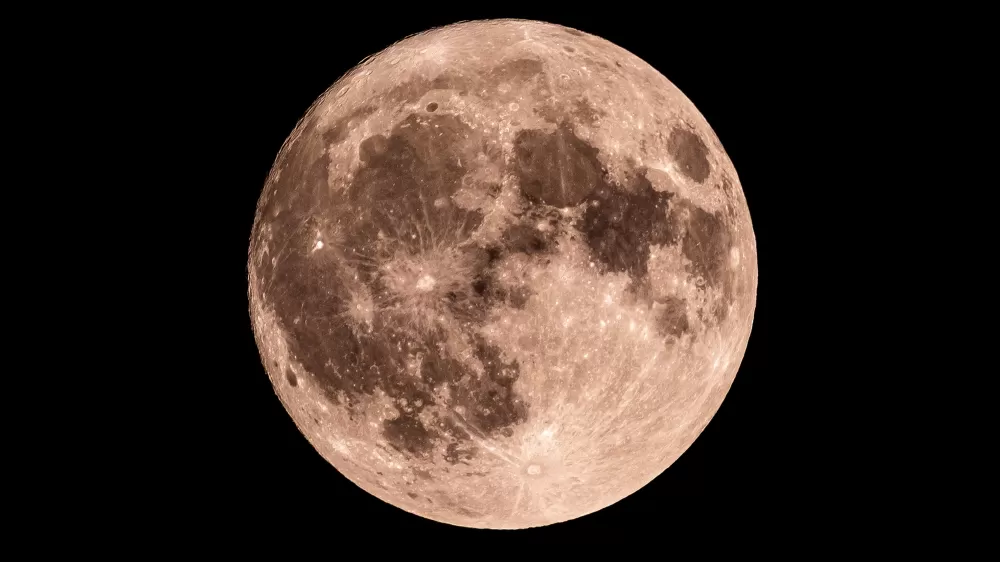
What the Moon Reveals on November 1, 2026: Your Guide to the Third Quarter Phase
Curious about the moon's appearance on November 1, 2026? It's the captivating Third Quarter phase, with 56% illumination. Discover what craters and lunar seas you can spot, from naked-eye wonders to telescopic marvels, in this guide inspired by NASA's daily tracker.
Ever find yourself gazing up at the night sky, wondering what face our faithful lunar companion is showing us? On November 1, 2026, the moon presents a truly distinctive view. We'll be catching it in its Third Quarter phase, a moment of transition that offers a unique perspective on its ever-changing surface.
For those eager stargazers, about 56% of the moon’s surface will be beautifully illuminated, a figure confirmed by none other than NASA's reliable Daily Moon Guide. It’s a fantastic opportunity to observe our nearest celestial neighbor, whether you're equipped with high-tech gear or just your own two eyes.
Even without any special equipment, our naked eyes can pick out some truly remarkable features. Try to locate the prominent Tycho Crater, often identifiable by its bright ray system stretching across the surface. Then there's Kepler Crater, another significant impact scar, and of course, the expansive, darker plains of Mare Imbrium, often called the "Sea of Rains" – a misnomer, of course, as these are ancient volcanic lava flows.
If you happen to have a pair of binoculars handy, a whole new world of detail suddenly snaps into focus. With their aid, you might discover the Alphonsus Crater, a fascinating structure with a central peak, or the truly immense Clavius Crater, which looks almost like a complex of smaller craters nestled within its vast walls. Don't forget to seek out Mare Humorum, the "Sea of Moisture," another one of those intriguing, dark lunar seas.
For the more dedicated observer with a telescope, the intricate details become even more profound. With a bit of patience and a good scope, you could even pinpoint the historic landing sites of Apollo 14 and Apollo 15 – a humbling reminder of human ingenuity. Keep an eye out too for the uniquely elongated Schiller Crater, a distinctive formation that stands out from its more circular neighbors.
It’s quite fascinating, isn't it, how our moon cycles through its various phases? It takes approximately 29.5 days to complete one full orbit around Earth, giving us that constant, ever-evolving celestial show. The cycle begins with the invisible New Moon, then transitions through a delicate Waxing Crescent, to the First Quarter, followed by a glowing Waxing Gibbous, culminating in that glorious Full Moon. From there, it begins to wane, moving through the Waning Gibbous, into our current Third Quarter, and finally back to a slender Waning Crescent before starting the whole cosmic dance anew. And speaking of cycles, mark your calendars: the next Full Moon is slated for November 24th.
So, whether you're just stepping outside for a quick, appreciative glance or settling in for a dedicated observation session, take a moment to connect with our celestial neighbor. It’s always there, offering a different face, a different story, each night.
Editorial note: Nishadil may use AI assistance for news drafting and formatting. Readers can report issues from this page, and material corrections are reviewed under our editorial standards.