
A Crucial Compass: Navigating the Complexities of Healthcare Management in India
- Nishadil
- April 05, 2026
- 0 Comments
- 3 minutes read
- 25 Views
- Save
- Follow Topic
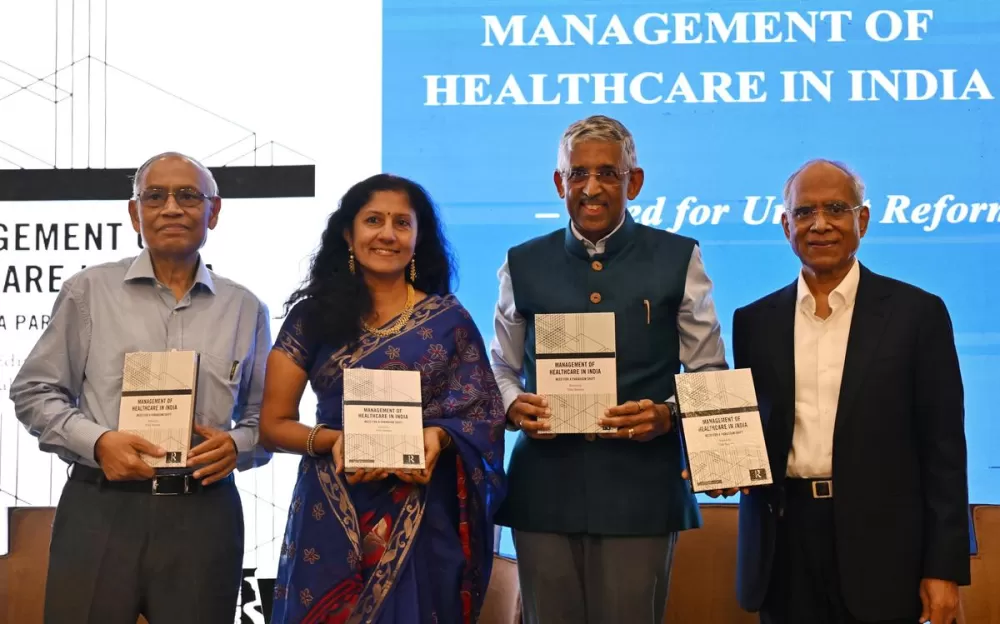
New Book Offers Essential Insights for Indian Healthcare Providers
A vital new book, 'Healthcare Management: Concepts, Principles, and Cases,' co-authored by Dr. P. Raghava Prasad and Dr. S. Kameswari, has been launched to equip healthcare professionals across India with practical, context-specific management wisdom. It's designed to bridge the gap between theory and the everyday realities of running medical institutions in our diverse nation.
In a world where healthcare systems are constantly evolving, and perhaps nowhere more dynamically than in India, a new resource has emerged that promises to be incredibly timely and, frankly, indispensable. We're talking about the recently launched book, 'Healthcare Management: Concepts, Principles, and Cases.' It's a thoughtful collaboration by Dr. P. Raghava Prasad and Dr. S. Kameswari, and published by the respected Sage Publications, aiming to be a veritable guide for anyone involved in delivering healthcare across our vast country.
Think about it: managing a hospital, a clinic, or even a public health initiative here in India isn't just about medicine anymore. It's a intricate dance involving finances, human resources, ethical dilemmas, cutting-edge technology, and, of course, the ever-present need to ensure quality care is accessible to all. And that's precisely where this book steps in. It's been crafted specifically to address these very real, very Indian challenges, offering not just theoretical frameworks but also practical insights drawn from local contexts and presented through engaging case studies.
The book's launch event, held recently in Chennai, was quite a significant affair. Jointly organized by Sri Balaji Vidyapeeth and Meenakshi Academy of Higher Education and Research, it brought together some eminent personalities who underscored the profound importance of effective healthcare management. Dr. P. K. R. Warrier, for instance, delivered an insightful inaugural address, while Dr. S. Sriram graced the occasion as the guest of honour, sharing his valuable perspective.
During the discussions, a clear theme emerged: the absolute necessity of integrating robust management principles into the very fabric of our healthcare delivery. Speakers passionately emphasized how crucial it is to uphold quality and ethical standards, especially as our healthcare sector grows and faces new pressures. They touched upon a whole spectrum of issues – from the cost of care and ensuring equitable access, to maintaining impeccable quality, navigating complex ethical considerations, and even harnessing technology effectively. And let's not forget the ever-present challenge of managing human resources; it’s a big one.
What's truly exciting is the book's broad appeal. It isn't just for seasoned hospital administrators, though they'll certainly find a treasure trove of wisdom within its pages. It's also a vital resource for doctors who are increasingly taking on managerial roles, nursing staff, public health managers, students aspiring to careers in healthcare administration, and even policymakers who shape the very landscape of our health system. Basically, if you're working to make healthcare better in India, this book is probably for you.
With contributions from speakers like Dr. V. M. Ganesan and Dr. A. V. Suresh, the launch really solidified the book's position as a crucial step forward. It aims to bridge that often-tricky gap between what we learn in textbooks and the gritty realities of day-to-day operations in an Indian healthcare setting. In essence, 'Healthcare Management: Concepts, Principles, and Cases' isn't just another book; it's a dedicated effort to empower our healthcare providers to deliver better, more efficient, and truly compassionate care for everyone.
- India
- Health
- News
- HealthNews
- ChennaiNews
- MedicalEthicsIndia
- HealthcareTamilNadu
- ChennaiBookLaunchEvent
- DrVMohanDiabetes
- HealthcareManagementIndia
- MedicalAdministrationBook
- HospitalOperationsIndia
- DrPRaghavaPrasad
- DrSKameswari
- SagePublications
- ChennaiBookLaunch
- HealthcareQualityManagement
- PublicHealthManagement
Editorial note: Nishadil may use AI assistance for news drafting and formatting. Readers can report issues from this page, and material corrections are reviewed under our editorial standards.


