The Grand Illusion: Unpacking How Our Brains Are Fooled
- Nishadil
- November 16, 2026
- 0 Comments
- 4 minutes read
- 21 Views
- Save
- Follow Topic
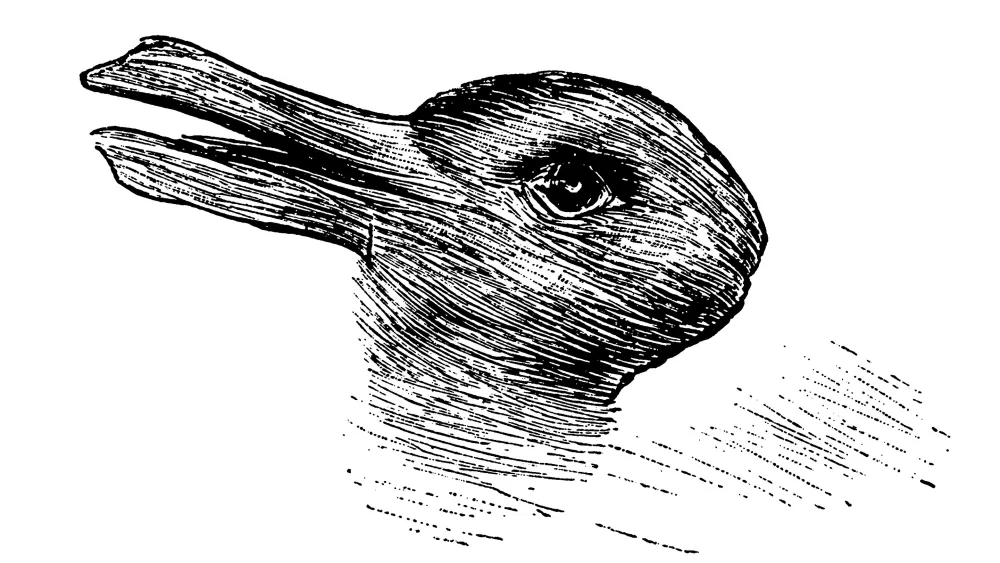
Optical Illusions: A Deep Dive Into How They Trick Your Eyes and Bend Your Brain
From ancient cave art to modern psychology, optical illusions have fascinated humanity for millennia. Explore the rich history and clever techniques behind these mind-bending visual tricks that challenge our perception and reveal how our brains interpret the world.
Ever found yourself staring at an image, absolutely convinced of one thing, only for someone to point out something entirely different? Or perhaps you've seen two objects that look different in size, only to discover they're identical? That, my friend, is the magic—or perhaps the mischief—of optical illusions. These captivating visual tricks don't just mess with your eyes; they actually challenge your brain's fundamental way of processing information, inviting us to question the very reality we perceive. It's a truly fascinating dance between what we see and what our minds tell us.
Interestingly, our fascination with these visual puzzles isn't a new phenomenon at all. Far from it, actually. Take a moment to think back, way back, to around 30,000 BCE. Even then, in the flickering light of ancient caves, our ancestors were already dabbling in what we might call the very first optical illusions. They'd use simple crossed lines and strokes in their remarkable cave art, subtly suggesting movement or dynamism, hinting at a world beyond static representation. Then, fast forward to about 500 BCE, and the ancient Greeks, with their incredible ingenuity, began incorporating these clever visual deceptions into their monumental architecture. Think about it: they crafted incredibly detailed mosaic designs and even the iconic columns of the Parthenon in ways that subtly corrected for how the human eye perceives perspective, making buildings appear perfectly proportioned even when they weren't, technically speaking. It’s an early testament to their deep understanding of perception.
But perhaps the true golden age for developing these sophisticated visual tricks really blossomed during the Renaissance, spanning roughly from the 1300s to the 1600s. This was a period when artists truly began to master the art of perspective and started experimenting with something truly mind-bending called anamorphic art. And who better to exemplify this than the legendary Leonardo da Vinci? A true polymath, he wasn't just painting pretty pictures; he was a scientist of perception. Da Vinci famously employed depth techniques to conjure up incredible dimensional effects on flat canvases. Just consider his masterpieces like The Last Supper or, of course, the enigmatic Mona Lisa, painted between 1503 and 1506. He intentionally manipulated the viewer's eye, drawing it into his compositions in specific ways. It’s often said, for instance, that the Mona Lisa's famous smile seems to subtly disappear and reappear depending on the angle from which you view her – a testament to his ingenious understanding of visual ambiguity. And then there's anamorphic art, where artists like Hans Holbein would cleverly hide objects within their paintings, only revealing them in distorted reflections or when viewed from a very specific, often acute, angle. Talk about a hidden Easter egg!
As centuries rolled on, the interest in optical illusions took on a more scientific flavor, particularly by the 1870s, coinciding with a burgeoning field of psychology. Psychologists, keen to unravel the mysteries of the human mind, realized these visual paradoxes offered a unique window into how our brains actually work. They began crafting their own illusions to deliberately demonstrate discrepancies in perceived size, contrast, or brightness. Their goal was simple yet profound: to better understand how our brains interpret conflicting visual signals, essentially trying to figure out why our eyes tell us one thing and our minds confirm another. This exploration helped pave the way for a deeper understanding of human perception itself. Even in more recent times, we've seen brilliant new examples emerge, such as Professor Edward H. Adelson's famous checker shadow illusion from 1995, which still fools nearly everyone who sees it.
So, from ancient cave walls to the canvases of Renaissance masters and the sophisticated laboratories of modern psychology, optical illusions continue to captivate us. They serve as playful reminders that what we perceive isn't always the full picture, and that our brains are constantly working behind the scenes to make sense of a world brimming with visual data. It’s a wonderful, often humbling, demonstration of the sheer complexity and occasional fallibility of our own visual systems. Next time you encounter one, take a moment to truly appreciate the ingenious dance happening between your eyes and your brain. It's truly astonishing, isn't it?
Editorial note: Nishadil may use AI assistance for news drafting and formatting. Readers can report issues from this page, and material corrections are reviewed under our editorial standards.