
The Golden Knights' Cassidy Firing: Untangling Emotion from Executive Strategy
- Nishadil
- April 05, 2026
- 0 Comments
- 3 minutes read
- 27 Views
- Save
- Follow Topic
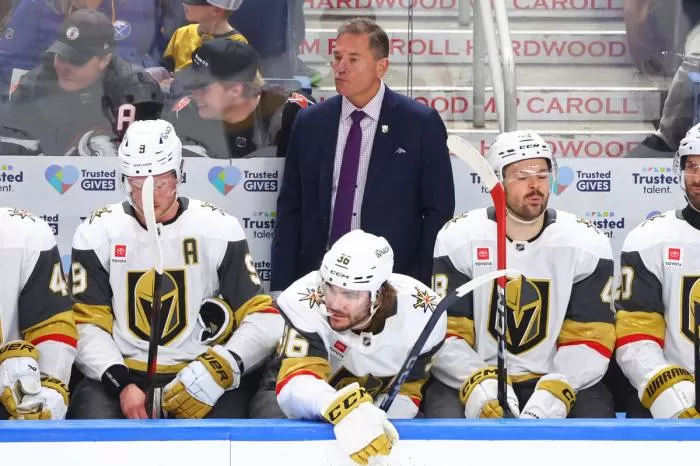
Beyond the Outcry: Was Emotion Guiding Reactions to the Knights' Coaching Change?
Adam Hill suggests that the immediate, often fiery, reactions to the Vegas Golden Knights' decision to let go of Stanley Cup-winning coach Bruce Cassidy might have been more driven by understandable human emotion than a cool, detached analysis of team strategy. It's a compelling look at how sentimentality clashes with the harsh realities of professional sports management.
Let's be honest, the news hit like a gut punch, didn't it? When word broke that the Vegas Golden Knights were parting ways with Bruce Cassidy, the very coach who had just guided them to a glorious Stanley Cup victory, a collective gasp of disbelief echoed across the hockey world. I mean, really? Fire a Cup-winning coach? It just felt… wrong. Unjust. Almost sacrilegious, especially to those of us who had ridden every emotional wave of that championship season.
It’s a tough pill to swallow, truly, and it’s entirely understandable why so many reacted with such immediate, visceral shock. We invest so much of ourselves into our teams, our players, and yes, our coaches. We build narratives of loyalty and deserved success. So, when a beloved figure, particularly one who just delivered the ultimate prize, is suddenly cast aside, our emotional circuits naturally short-circuit. It feels like a betrayal, a misunderstanding of what makes sports special.
However, as Adam Hill wisely points out in his column, there's often a colder, more pragmatic reality at play behind the scenes of professional sports. While our hearts scream 'loyalty!' and 'deserved respect!', the executive suites are often operating on a different wavelength entirely. This isn't just about winning the last game; it's about the next five years, the organizational 'fit,' the perceived trajectory, and sometimes, simply the desire for a different voice or direction.
It’s a harsh truth, but sports at the highest level is, first and foremost, a business. A very high-stakes, cutthroat business. General managers and ownership groups are constantly evaluating, not just results, but potential, chemistry, and long-term sustainability. A Stanley Cup win, while monumental, doesn't always guarantee immunity from change if management believes a different path, or a different leader, is necessary for continued success or even just a refreshed approach. Perhaps they felt they had 'climbed the mountain' with Cassidy and a new ascent required a different guide.
So, while our initial reactions were perfectly human and entirely valid from an emotional standpoint, it’s worth taking a moment to step back. To consider that perhaps the decision, however jarring, wasn't a sudden, capricious act, but rather a calculated, albeit controversial, move rooted in a strategic vision that extends beyond the immediate glow of a championship. It forces us to reconcile the passion we feel for the game with the often-unfeeling machinations of top-tier sports management. Maybe, just maybe, the Knights saw something we didn't, and time will ultimately tell if their colder assessment was the correct one.
Editorial note: Nishadil may use AI assistance for news drafting and formatting. Readers can report issues from this page, and material corrections are reviewed under our editorial standards.


