
The Fiery Gate: Why Coming Home from the Moon is Space Travel's Toughest Test
- Nishadil
- April 11, 2026
- 0 Comments
- 5 minutes read
- 40 Views
- Save
- Follow Topic
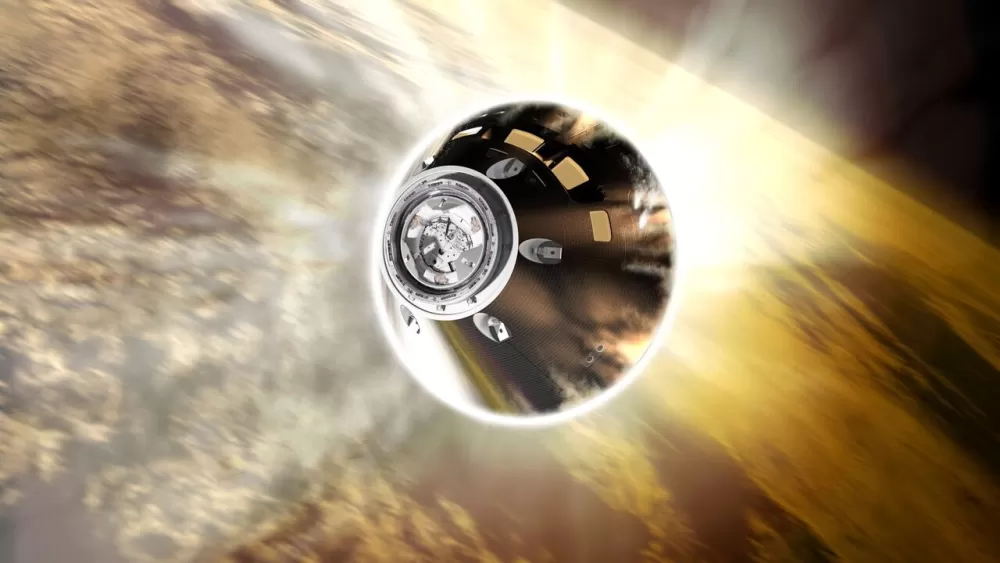
Beyond the Launch: The Unseen Peril of Deep Space Reentry for Artemis Missions
Discover why the most dangerous part of returning from the Moon isn't the journey out, but the incredibly precise and fiery atmospheric reentry, a critical proving ground for Artemis missions.
For as long as we’ve looked up, the Moon has been this silent, silvery guardian in the night sky, a constant source of wonder and aspiration. For what felt like forever, actually reaching it seemed like pure fantasy, then it became a breathtaking testament to human ingenuity. And now, thanks to NASA’s incredibly ambitious Artemis program, it’s back on the agenda – our next great adventure. But here’s the thing: while we’re all understandably captivated by the sheer spectacle of a rocket launch, that thunderous roar tearing free from Earth’s gravity, the real, heart-stopping challenge for our deep space dreams isn’t actually the trip out. Oh no, the truly dangerous, mind-bogglingly precise, and utterly non-negotiable part is the journey back home.
Just pause and think about that for a second. We’re talking about sending human beings to the Moon, perhaps even building a little outpost there, and eventually, Mars! These are absolutely monumental endeavors, truly. But honestly, all that incredible effort, every single scientific dream we have, means absolutely nothing, and I mean nothing, if we can’t safely bring our brave explorers back to their families and their home planet. That’s precisely why the uncrewed Artemis I mission, which you might remember sent the Orion capsule on an amazing journey around the Moon and then back again, wasn’t just a simple flight test. No, it was the absolutely critical trial run, the proving ground, for what is arguably the single most hazardous and unforgiving phase of any deep space mission: coming screaming back through Earth’s atmosphere.
Try to picture this in your mind: the Orion capsule, after its long, quiet voyage back from the Moon, doesn't just gently drift home. Oh no. It slams into Earth’s atmosphere, not merely fast, but at a truly mind-boggling speed — over 25,000 miles per hour! That’s faster than any bullet, just to put it into perspective. This insane velocity creates unimaginable friction, literally compressing and superheating the air around the capsule into a scorching plasma, temperatures hotter than the very surface of the sun itself, peaking at around 5,000 degrees Fahrenheit. It’s a fiery, brutal crucible, a baptism by inferno that demands nothing short of absolute engineering perfection, especially from Orion's massive, dinner-plate-sized heat shield.
Now, surviving that intense heat is absolutely job number one, no question. But it's so much more than just enduring the inferno. It’s an intricate, almost impossibly delicate ballet of physics and precise engineering. The capsule has to hit that atmospheric sweet spot at just the right angle. Imagine skimming a stone on water: too shallow, and Orion could simply skip off, tumbling back into the void of deep space, lost forever. Too steep, and the brutal G-forces could quite literally crush the crew inside, or the sheer, immense drag could cause the whole thing to simply disintegrate. And then, once it’s slowed sufficiently, a meticulously choreographed sequence of giant parachutes has to unfurl and deploy perfectly, one after another, all designed to bring the capsule down for a gentle splashdown in the ocean. Seriously, there is zero room for error here. None. At all.
So, the successful reentry of Artemis I was, frankly, a colossal sigh of relief for everyone involved, a truly monumental leap forward for human spaceflight. It proved, beyond a shadow of a doubt, that the Orion capsule — with its incredibly advanced heat shield and that meticulously designed, complex parachute system — can absolutely withstand the punishing, fiery ordeal of returning from the incredible velocities achieved when coming back from the Moon. This one achievement, this single successful descent, has effectively unlocked the door for the next vital stages: Artemis II, which will see astronauts themselves undertaking a lunar flyby, and then, the grand finale, Artemis III, the mission that will finally return human bootprints to the lunar surface. Without that absolutely flawless reentry test, I mean, the entire ambitious timeline, the entire grand dream, would have been cast into very serious, disheartening doubt.
And looking even further into the cosmic horizon, the invaluable lessons we're learning from these lunar reentries are going to be absolutely critical for our ultimate, audacious goal of reaching Mars. Martian returns, you see, will present an entirely new set of challenges – different atmospheric conditions, even higher speeds to contend with. So, each successful reentry we accomplish isn't just a triumphant closing act for a single mission; it’s a crucial, irreplaceable piece of the puzzle, a fundamental building block in accumulating the expertise and perfecting the technology we’ll need for humanity's true multi-planetary future. So, the very next time you catch news about the Artemis program, take a moment to really appreciate the incredible, fiery ordeal of simply coming home. Because when it comes to venturing into space, that finish line, making it back safely, is every bit as important – and arguably, even more so – than the spectacular starting line.
- UnitedStatesOfAmerica
- News
- Space
- NASA
- Science
- ScienceNews
- HumanSpaceflight
- Artemis
- SpaceExploration
- Moon
- MoonLanding
- ArtemisProgram
- DeepSpace
- Spacecraft
- LunarMissions
- MarsMission
- MoonMission
- DeepSpaceExploration
- OrionCapsule
- SpaceEngineering
- FutureOfSpace
- AtmosphericReentry
- HeatShield
- SpaceTravelSafety
- Splitscreenimagerightinset
- DigitalSyndication
- AffiliateDisclaimerDisable
Editorial note: Nishadil may use AI assistance for news drafting and formatting. Readers can report issues from this page, and material corrections are reviewed under our editorial standards.


