
The AI Tsunami: Elon Musk's Startling Proposal for a Universal High Income and the Economists Left Scratching Their Heads
- Nishadil
- April 18, 2026
- 0 Comments
- 3 minutes read
- 42 Views
- Save
- Follow Topic
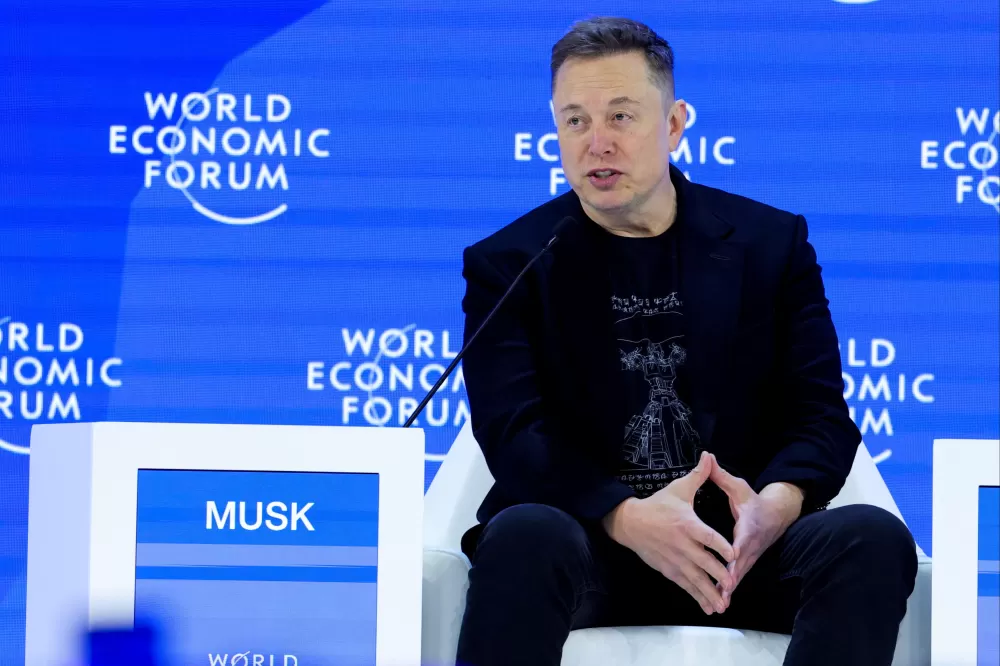
Elon Musk Throws a Curveball: "Universal High Income" for an AI Future, Leaving Economists Utterly Perplexed
Elon Musk, ever the provocateur, has floated a truly radical idea: a "Universal High Income" to offset AI-driven job displacement. It's a vision that has economists worldwide doing a double-take, wondering if it's genius, madness, or just plain impossible.
So, the robots are coming for our jobs, right? It’s a fear that’s been simmering for years, a sci-fi nightmare inching closer to reality. And who better to weigh in on the future of humanity and work than Elon Musk, the visionary behind Tesla and SpaceX? Well, he's certainly got a take, and it's a doozy.
Forget Universal Basic Income, the safety net concept often tossed around; Musk is thinking much, much bigger. He’s talking about 'Universal High Income' (UHI), a financial floor so generous it would ensure everyone enjoys a comfortable, even prosperous, life, even if AI takes over nearly every human role. Sounds pretty utopian, doesn't it?
But if you're an economist, you're likely reading that and doing a serious double-take. In fact, many are simply baffled, scratching their heads in collective bewilderment. The very notion of a 'high' income universally distributed, especially compared to the more modest 'basic' income usually discussed, raises immediate red flags. It’s not just a subtle difference; it's a fundamentally different scale of economic intervention.
Think about it: UBI aims to cover essentials – food, shelter, maybe a little extra. It's about preventing poverty and ensuring basic dignity. UHI, on the other hand, suggests a lifestyle far beyond mere subsistence. How on earth would you fund that without sending the global economy into a hyperinflationary spiral? Most economists would argue that wealth isn't just conjured into existence; it's produced. And if AI is producing everything, how does that wealth translate into spendable income for everyone without a dramatic shift in how value is created and distributed?
Musk's proponents, and perhaps Musk himself, envision a future where AI's productivity is so astronomical that it generates unfathomable wealth, making UHI not just feasible but necessary. He seems to believe that the sheer abundance created by advanced AI will fundamentally redefine scarcity and, consequently, our economic paradigms. It's a future where human purpose shifts from labor to leisure, creativity, and exploration – a compelling thought, admittedly.
Yet, the academic world remains largely unconvinced by the 'it will just happen' argument. They point out that even if AI generates immense wealth, the distribution mechanism is absolutely key. You can't just wave a magic wand and declare everyone rich; the money has to come from somewhere, and it needs to reflect real value in a way that doesn't devalue the entire currency. Without a clear plan for funding and managing the inevitable economic upheaval, such a proposal risks creating more problems than it solves, potentially sparking social unrest rather than alleviating it.
So, is Musk a prophet or just provocateur? His UHI idea certainly forces us to confront uncomfortable questions about our economic future, human dignity, and what happens when machines truly do it all. It's a bold vision for a potentially unsettling future, one that demands far more rigorous economic blueprints than a mere catchy acronym. Until then, most economists will likely remain utterly perplexed, wondering how exactly we'd pay for everyone's 'high income' without turning our wallets into worthless paper.
Editorial note: Nishadil may use AI assistance for news drafting and formatting. Readers can report issues from this page, and material corrections are reviewed under our editorial standards.


