
Europe’s Innovation Gap: From Lab to Marketplace
- Nishadil
- July 08, 2026
- 0 Comments
- 3 minutes read
- 30 Views
- Save
- Follow Topic
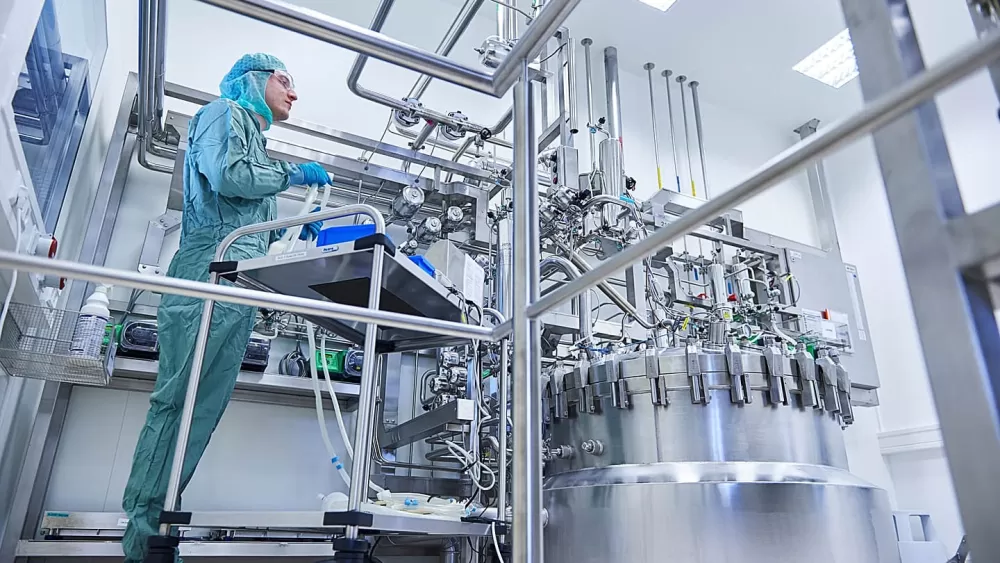
Why Europe’s world‑class science still rarely sparks thriving businesses
Europe produces top‑tier research, yet turning that brilliance into booming companies remains a puzzling challenge. We explore the structural, financial and cultural hurdles.
Europe can boast Nobel laureates, cutting‑edge labs and a steady stream of breakthrough papers. On paper, the continent looks like a goldmine for the next big tech unicorn. In practice, though, many of those scientific gems stay locked behind university doors, never becoming the start‑ups or industry leaders they could be.
One of the biggest roadblocks is the fragmented market. Unlike the United States, where a single regulatory framework covers the whole country, Europe is a patchwork of 27 different legal regimes. A drug that clears the German agency may still have to jump through hoops in France or Spain, and that uncertainty slows investors down. It’s a bit like trying to sell the same car in 27 different showrooms, each with its own set of rules.
Money matters, too. Venture‑capital pools in Europe are growing, but they still lag behind the US by a comfortable margin. Early‑stage funding often dries up after the first grant, and many researchers find themselves juggling grants, university budgets, and the endless search for private investors. The result? Brilliant ideas stall at the prototype stage, waiting for the next check that never arrives.
There’s also a cultural dimension. Academic success in Europe is still measured largely by publications and citations, not by market impact. Professors, rightly proud of their papers, may not feel incentivised—or even equipped—to chase a commercial partner. Meanwhile, entrepreneurs who do try to bridge the gap sometimes hit a wall of bureaucracy that feels, frankly, a bit archaic.
Another subtle but real factor is risk aversion. Public funds, which form a large chunk of European research financing, tend to be earmarked for low‑risk, incremental projects. When a high‑risk, high‑reward idea pops up, the usual safety nets can feel too stiff to bend. Investors, in turn, mirror that caution, preferring safer bets over the wildcards that could change an industry.
Talent migration compounds the problem. Bright scientists and engineers often look beyond the continent for more dynamic ecosystems—think Silicon Valley, Singapore or Tel Aviv—where funding, mentorship and market access are more fluid. This brain drain leaves European labs with fewer hands to translate ideas into products.
Policy initiatives are trying to catch up. The EU’s Horizon Europe program, new innovation funds and tax‑relief schemes aim to inject life into the pipeline from research to market. Yet implementation can be slow, and aligning the interests of universities, industry, and governments remains a delicate juggling act.
What could help? A few practical steps: creating pan‑European “one‑stop‑shop” agencies that streamline approvals, boosting cross‑border venture funds, and redesigning academic reward systems to value spin‑offs and patents. Simple, perhaps, but they require political will and a shift in mindset.
In the end, Europe’s scientific muscle is undeniable; the challenge is turning that muscle into market‑moving power. If the continent can untangle the bureaucratic knots, seed more risk‑tolerant capital, and celebrate commercial success alongside scholarly prestige, the world may finally see Europe’s labs fueling the next generation of global businesses.
- Health
- News
- Technology
- UnitedKingdom
- Science
- ScienceNews
- Ukraine
- France
- Russia
- Usa
- Ireland
- Iceland
- Denmark
- Sweden
- Germany
- Switzerland
- Belgium
- Italy
- Spain
- Poland
- Romania
- Greece
- Slovenia
- IndustrialPolicy
- Montenegro
- BosniaAndHerzegovina
- Cyprus
- Albania
- Malta
- Macedonia
- Moldova
- SanMarino
- Netherland
- Hungary
- Austria
- Norway
- Portugal
- Serbia
- Bulgaria
- CzechRepublic
- Latvia
- Lithuania
- Slovakia
- Andorra
- Kosovo
- Liechtenstein
- Finland
- Monaco
- Vatican
- Belarus
- Estonia
- Luxembourg
- Croatia
- Startup
- BrainDrain
- ResearchFunding
- Euroviews
- TechnologyTransfer
- VentureCapitalEurope
- EuropeInnovation
- ScienceCommercialization
- EuStartupEcosystem
- RegulationEurope
- EuropeanResearchChallenges
Editorial note: Nishadil may use AI assistance for news drafting and formatting. Readers can report issues from this page, and material corrections are reviewed under our editorial standards.


