Ebola's Persistent Shadow: Six Months On, DRC Outbreak Still Rages Uncontrolled
- Nishadil
- November 17, 2026
- 0 Comments
- 5 minutes read
- 6 Views
- Save
- Follow Topic
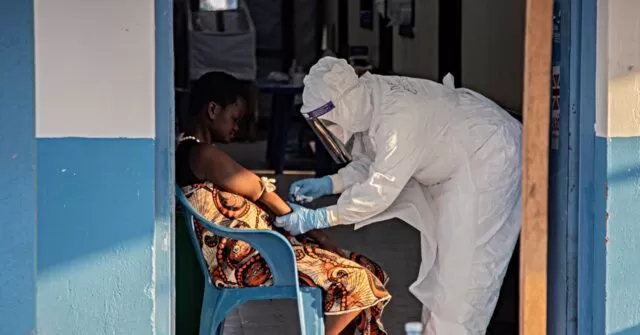
A Relentless Foe: DR Congo's Unprecedented Ebola Outbreak Continues to Surge Six Months After Declaration
Six months after its declaration, the Ebola outbreak in the Democratic Republic of Congo, driven by the rare Bundibugyo strain, remains out of control, spreading geographically and claiming thousands of lives amidst critical challenges.
The Democratic Republic of Congo (DRC) finds itself gripped by a relentless public health crisis, as an Ebola outbreak, now six months old, continues to surge "out of control." Declared officially on May 15, 2026, in the northeastern Ituri Province, this isn't just another regional health scare; it's a truly unprecedented event, pushing global health organizations to their limits. Initial cases, we now believe, may have quietly begun appearing as early as January or February that year in Mongbwalu, setting the stage for the immense challenge unfolding before us.
Indeed, the situation remains alarmingly grave. Jean Kaseya, the Director-General of the Africa Centres for Disease Control and Prevention (Africa CDC), didn't mince words in a recent Reuters interview, cautioning that this outbreak could well become "the worst Ebola outbreak that the world will ever have." Just a day after the official declaration, the World Health Organization (WHO) recognized its severity by declaring it a Public Health Emergency of International Concern (PHEIC) on May 16, 2026. The Africa CDC followed suit, declaring it a Public Health Emergency of Continental Security soon after.
What makes this particular outbreak so profoundly concerning, you see, is its truly staggering geographical reach. Unlike previous outbreaks, this one has managed to leap across borders, marking it as the most geographically widespread Ebola outbreak on record. While the primary focus remains the eastern DRC, with eight provinces grappling with the virus, cases have also been confirmed in neighboring Uganda, Kenya, and Nigeria. Although Uganda commendably declared an end to its outbreak in late July, Kenya and Nigeria reported cases in October. Even Europe hasn't been untouched, with four cases linked to the DRC outbreak requiring medical evacuation or being imported into the EU/EEA, specifically to Germany, the Netherlands, and France. The United Kingdom has also seen two such instances of medical evacuation due to exposure or confirmed infection.
Adding to the complexity, this particular surge is driven by the Bundibugyo ebolavirus (BDBV). And here's where it gets tricky: unlike the more commonly known Zaire ebolavirus, for which we do have licensed vaccines and specific treatments, the Bundibugyo strain currently lacks these critical countermeasures. This absence significantly complicates containment efforts, leaving medical professionals with fewer tools in their arsenal to combat the disease effectively.
The human toll, frankly, is heartbreaking. As of mid-November 2026, government data, frequently cited by Reuters, paints a grim picture: over 11,200 infections and more than 5,500 deaths have been reported. The Democratic Republic of Congo alone, as of November 11th, recorded 11,197 confirmed cases and 5,471 deaths, translating to a crude case fatality ratio nearing 49%. What's particularly devastating is the disproportionate impact on the youngest among us; children account for over a quarter of confirmed cases and, even more tragically, a third of all deaths.
It's a stark reminder of the challenges that 80% of new cases are emerging outside of established contact lists, and over 65% of deaths are occurring within communities, not in controlled health centers. This suggests the virus is circulating far more freely than health authorities can track, making containment incredibly difficult. To put its scale into perspective, this is now the second-largest Ebola outbreak ever recorded, trailing only the devastating West African outbreak of 2014-2016. What’s more, it quickly became the fastest-growing Ebola outbreak on record by early August 2026.
The battle against Ebola is, regrettably, hampered by a myriad of compounding factors. Healthcare workers, those brave souls on the front lines, have faced deadly attacks, a shocking reality that disrupts critical aid delivery. Then there's the disheartening issue of unpaid staff, leading to demoralization and, understandably, reduced effectiveness. Jean Kaseya openly admitted that the coordination between the Congolese government and international donors leaves much to be desired. Furthermore, a serious call for transparency emerged regarding Ebola response funds, with over $700 million in donor money for aid organizations reportedly unaccounted for as of mid-October. Despite generous aid pledges – some $2.9 billion promised – organizations like Médecins Sans Frontières report that the assistance simply isn't reaching the hotspots where it's desperately needed, citing issues like untrained staff, ambulances lacking fuel, and insufficient surveillance teams.
The overall environment of insecurity, coupled with massive population displacement and frequent cross-border travel – especially in mining-rich areas – creates fertile ground for the virus to spread further. These are not merely logistical hurdles; they are deeply entrenched societal challenges that tragically fuel the ongoing crisis, making the task of containing this virulent disease even more arduous.
Editorial note: Nishadil may use AI assistance for news drafting and formatting. Readers can report issues from this page, and material corrections are reviewed under our editorial standards.