
When Art and Politics Collide: The Kennedy Center's Opera Cancellation
- Nishadil
- December 27, 2025
- 0 Comments
- 3 minutes read
- 48 Views
- Save
- Follow Topic
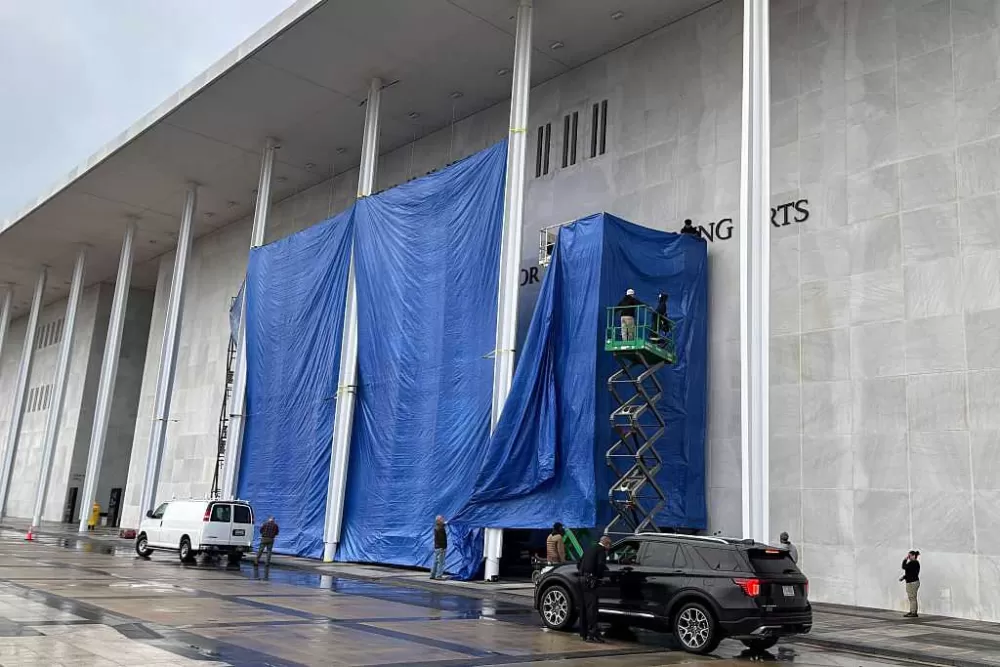
A Washington National Opera Performance Featuring Trump Imagery Gets Abruptly Canceled at the Kennedy Center
A highly anticipated Washington National Opera performance at the Kennedy Center, featuring projections of Donald Trump as part of its artistic vision, was suddenly called off due to significant concerns about political neutrality.
Imagine gearing up for a night at the opera, expecting a beautiful rendition of a classical piece, only to find the performance abruptly pulled. That's exactly what happened recently at the iconic Kennedy Center in Washington, D.C., when a planned showing by the Washington National Opera was canceled. The reason? A rather heated controversy surrounding the inclusion of former President Donald Trump's image in the staging.
The opera in question was Jean-Baptiste Lully’s “Acis and Galatea,” presented as a semi-staged concert. It was part of the Kennedy Center's 'DIRECT CURRENT' series, which, funnily enough, is known for works that tackle contemporary and politically relevant themes. Peter Sellars, a director renowned for his often provocative and socially charged interpretations, was at the helm. And, true to his style, he reportedly incorporated projections of various populist leaders, including Donald Trump, alongside figures like Vladimir Putin and Kim Jong Un, as a commentary on the abuse of power in our modern world.
Now, you can probably guess what happened next. The idea of Trump's image appearing in a Kennedy Center performance, even in a critical context, didn't sit well with everyone, to put it mildly. The backlash was swift and, frankly, quite intense. Concerns immediately arose about the perceived politicization of the performance and how it might impact the Kennedy Center and the Washington National Opera's carefully maintained non-partisan image. After all, these are institutions that strive to offer a broad cultural experience without alienating any segment of their audience.
Ultimately, the decision was made to cancel the performance. Both the Kennedy Center and the Washington National Opera issued statements, making it clear that the cancellation stemmed from a desire to uphold their commitment to being non-partisan institutions. They articulated concerns that the performance, as conceived, might cross a line, potentially compromising their neutral stance and inadvertently alienating parts of their diverse community. It's a tricky tightrope walk, isn't it? Balancing artistic freedom with institutional responsibility.
This whole episode, naturally, has sparked a fascinating and somewhat vexing debate. On one side, you have the argument for artistic expression – the right of a director like Sellars to use his art to comment on pressing societal and political issues, even if it makes people uncomfortable. Art, many would argue, is supposed to provoke thought and challenge perceptions. But then, on the other side, there's the equally valid point about the role of a major cultural institution. Should a publicly funded venue, dedicated to presenting a wide array of arts, be perceived as taking a political stance, even indirectly through a commissioned work?
It's not an easy question to answer, and there are compelling arguments on both sides. This incident serves as a poignant reminder of the delicate balance between artistic liberty and the need for major cultural venues to maintain a broad appeal, especially in an increasingly polarized world. Sometimes, the most thought-provoking art isn't seen on stage at all, but rather in the conversations and controversies it ignites.
- UnitedStatesOfAmerica
- News
- DonaldTrump
- Top
- TopNews
- WhiteHouse
- Law
- Musician
- Trump
- President
- KennedyCenter
- AssociatedPress
- Concert
- Ldnd
- PoliticalArt
- Building
- PresidentDonaldTrump
- ArtisticFreedom
- RichardGrenell
- Venue
- CulturalControversy
- Redd
- OperaCancellation
- TrumpKennedyCenter
- ChristmasEvePerformance
- TrumpName
- ChuckRedd
- RecentRenaming
- HandpickedBoard
- WashingtonNationalOpera
- PeterSellars
- InstitutionalNeutrality
- AcisAndGalatea
Editorial note: Nishadil may use AI assistance for news drafting and formatting. Readers can report issues from this page, and material corrections are reviewed under our editorial standards.













