Trump’s Push to Undo the Chagos Deal Plays Right Into Beijing’s Hands
- Nishadil
- October 22, 2026
- 0 Comments
- 4 minutes read
- 11 Views
- Save
- Follow Topic
Why the Former President’s Obsession with Diego Garcia Could Strengthen China’s Grip on the Indian Ocean
Trump’s attempts to reverse the 2025 Chagos Islands treaty risk handing Beijing a strategic win in the Indian Ocean, as the US‑UK base on Diego Garcia becomes a bargaining chip.
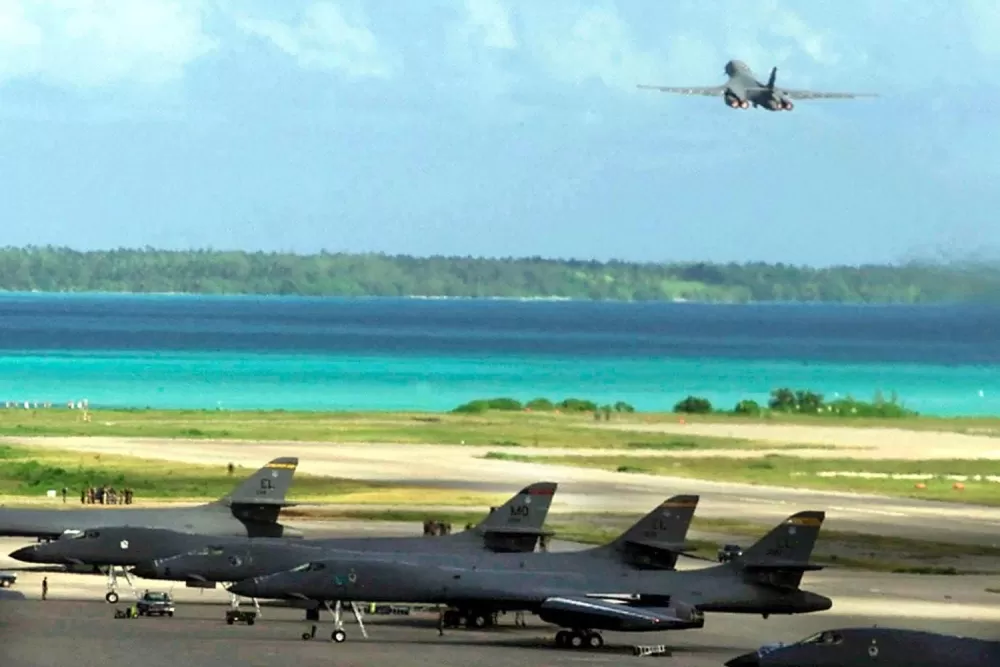
It sounds almost like a bad sitcom plot: a tiny, uninhabited atoll in the middle of the Indian Ocean suddenly becomes the centerpiece of a geopolitical tug‑of‑war. Yet that’s exactly what’s happening with Diego Garcia, the British‑run, U.S.-British military hub that has, for decades, been the quiet workhorse of Western power projection.
Located in the Chagos archipelago, Diego Garcia is officially British territory, but Mauritius has long claimed sovereignty over the whole chain. After a marathon two‑year negotiation, London finally signed off on a hand‑over in 2024, sealing the deal in May 2025. The treaty says the United Kingdom and the United States can keep using the base for a 99‑year lease—extendable for another 40 years—while legal ownership slides to Mauritius.
All that sounds neat on paper, but the reality on the ground is messier. The Chagossians, the island’s displaced people, were barely consulted, and their hopes for a return home remain tangled. Meanwhile, the strategic value of Diego Garcia has not faded. It hosts everything from naval squadrons and bomber runways to satellite uplinks and logistics hubs, making it a linchpin for operations from Afghanistan to the Horn of Africa.
Enter Donald Trump, fresh off a second term that has been marked by an almost nostalgic yearning for Cold‑War style dominance. Trump has repeatedly jabbed at the Chagos treaty, calling it a “sell‑out” and hinting at ways to reassert full British (and by extension, American) control. He’s even floated the idea of a unilateral “re‑lease” that would sidestep Mauritian ownership.
On the surface, that sounds like a bold move to keep the base firmly in Western hands. In practice, though, it throws a wrench into the delicate diplomatic balance that keeps the United Kingdom, the United States, and Mauritius on speaking terms. More importantly, it hands a very welcome gift to Beijing.
China has been quietly expanding its footprint across the Indian Ocean for years—think Gwadar in Pakistan, Hambantota in Sri Lanka, and the newer “String of Pearls” ports. A destabilised Diego Garcia, or at the very least a perception that the West is wavering, feeds into Beijing’s narrative that the region is up for grabs. If the U.S. and U.K. look like they might renege on a treaty, China can step in with diplomatic overtures, infrastructure loans, or even a military‑to‑civilian partnership that would tilt the balance.
There’s also a more subtle, but no less dangerous, ripple effect. The treaty was a rare example of a Western power voluntarily relinquishing colonial claims in exchange for long‑term security access. Undermining that precedent could make other former colonies skeptical about future deals, nudging them toward Chinese investment instead. It’s a classic “lose‑lose” scenario: the West tries to hold on tighter, and the very act of doing so makes partners look elsewhere.
And let’s not forget the optics. Trump’s rhetoric—painted in bold, populist strokes—resonates with a segment of the American electorate that loves the idea of a strong, unapologetic foreign policy. Yet the reality is far more nuanced. Behind the headlines, the strategic calculus involves treaties, lease agreements, and a fragile network of trust that, if broken, could be costly for all parties involved.
So, while the image of a U.S. bomber roaring off a pristine atoll may conjure romantic notions of power, the geopolitical chessboard tells a different story. Trump’s flirtation with undoing the Chagos deal may feel like a win for “American sovereignty,” but in the end, it could simply hand Beijing a new lever in the Indian Ocean—a lever the West may find harder to push back against than it first imagined.
Editorial note: Nishadil may use AI assistance for news drafting and formatting. Readers can report issues from this page, and material corrections are reviewed under our editorial standards.