
The Tale of Two Generals: How Western Media Paints a 'Man of Peace' in Pakistan
- Nishadil
- April 22, 2026
- 0 Comments
- 3 minutes read
- 30 Views
- Save
- Follow Topic
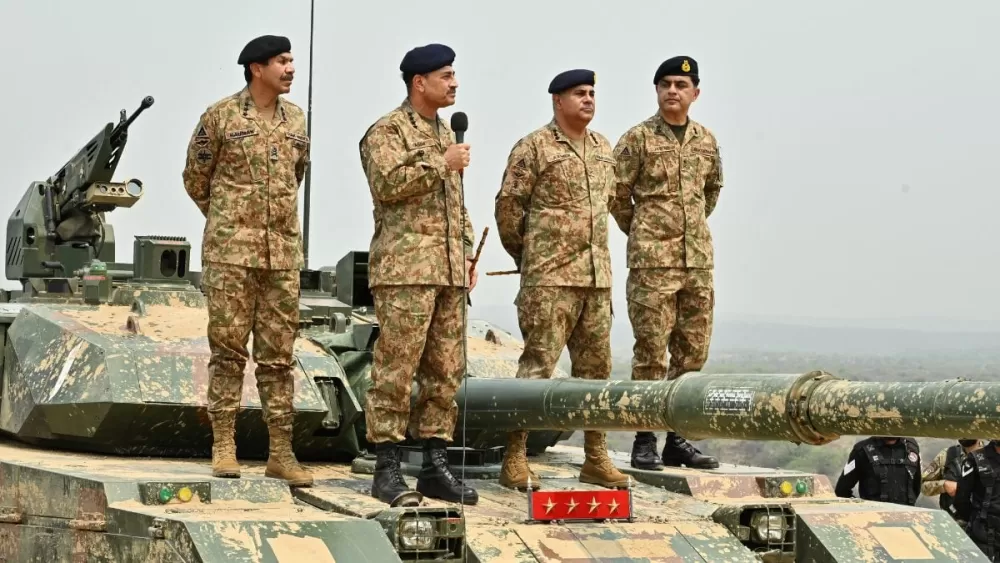
Whitewashing Reality? Western Media's Curious Portrayal of Pakistan's Army Chief
Explore the perplexing narrative crafted by some Western media outlets, portraying Pakistan's Chief of Army Staff, General Asim Munir, as a stabilizing force and a 'man of peace,' a stark contrast to the human rights concerns and political crackdown alleged within Pakistan's borders.
It’s quite fascinating, isn't it? How narratives can shift, how perceptions are meticulously sculpted, especially when it comes to powerful figures on the global stage. Recently, a rather intriguing picture has begun to emerge from certain corners of the Western media, painting Pakistan’s Chief of Army Staff, General Asim Munir, in a surprisingly gentle light. We're talking about portrayals that laud him as a 'man of peace,' a stabilizing influence, or even a technocrat dedicated to economic revival.
You see, outlets like Bloomberg and the Financial Times, among others, have recently featured stories that, in essence, seem to be 'dry-cleaning' an image, presenting a leader who, fresh off a significant visit to the United States, is positioned as a reliable partner. The underlying message? Here's a pragmatic general, a calm hand steering a sometimes-turbulent nation. It's an image that, frankly, raises a few eyebrows, especially for those of us watching events unfold on the ground in Pakistan.
Because, let's be absolutely clear, this glowing external narrative stands in stark contrast to a very different reality reported by human rights organizations, local media, and, indeed, many ordinary citizens within Pakistan. The period under General Munir’s leadership has been marked by what many describe as an unprecedented crackdown on political dissent, particularly against a major political party and its supporters following the intense incidents of May 9th. We’re talking about allegations of widespread arrests, enforced disappearances, and a palpable atmosphere of fear that has settled across the nation.
It makes one wonder, doesn’t it? How can the same individual be hailed as a beacon of stability and peace in one breath, while simultaneously facing accusations of overseeing a period rife with human rights concerns and significant political upheaval? It's a disconnect that’s genuinely hard to reconcile. One might argue that the 'peace' being referenced is perhaps a peace achieved through suppression, a quiet enforced rather than organically embraced by a truly democratic society.
This isn't just about semantics; it has real-world implications. Pakistan, after all, has a long and complex history with military intervention in its political landscape. Generals have often played a pivotal role, for better or worse, in shaping the nation’s trajectory. To ignore the domestic context, to overlook the voices of dissent and the documented reports of abuses, while simultaneously championing a leader as a stabilizing force, feels, well, a little disingenuous, doesn't it?
Perhaps the rationale lies in geopolitical convenience. Western powers often prioritize stability, even if it comes at the cost of democratic norms or human rights, especially in strategically important regions. But shouldn’t media, as the fourth estate, be challenging these convenient narratives rather than amplifying them? Shouldn't their role be to dig deeper, to present a comprehensive, nuanced picture, rather than seemingly endorsing a potentially problematic status quo?
So, when we read headlines that speak of General Munir as a 'man of peace,' one can’t help but pause. Is this a genuine assessment, or is it a carefully constructed narrative designed to serve specific interests, smoothing over the rough edges of a complex reality? The uniform, in this telling, appears to be getting a thorough, if somewhat superficial, dry cleaning by some corners of the international press. And for those seeking a full, unvarnished truth, the smell of fresh linen just isn't quite enough to mask what truly lies beneath.
Editorial note: Nishadil may use AI assistance for news drafting and formatting. Readers can report issues from this page, and material corrections are reviewed under our editorial standards.


