
The Shifting Sands of Education: Texas's Contentious Curriculum Overhaul
- Nishadil
- February 27, 2026
- 0 Comments
- 3 minutes read
- 32 Views
- Save
- Follow Topic
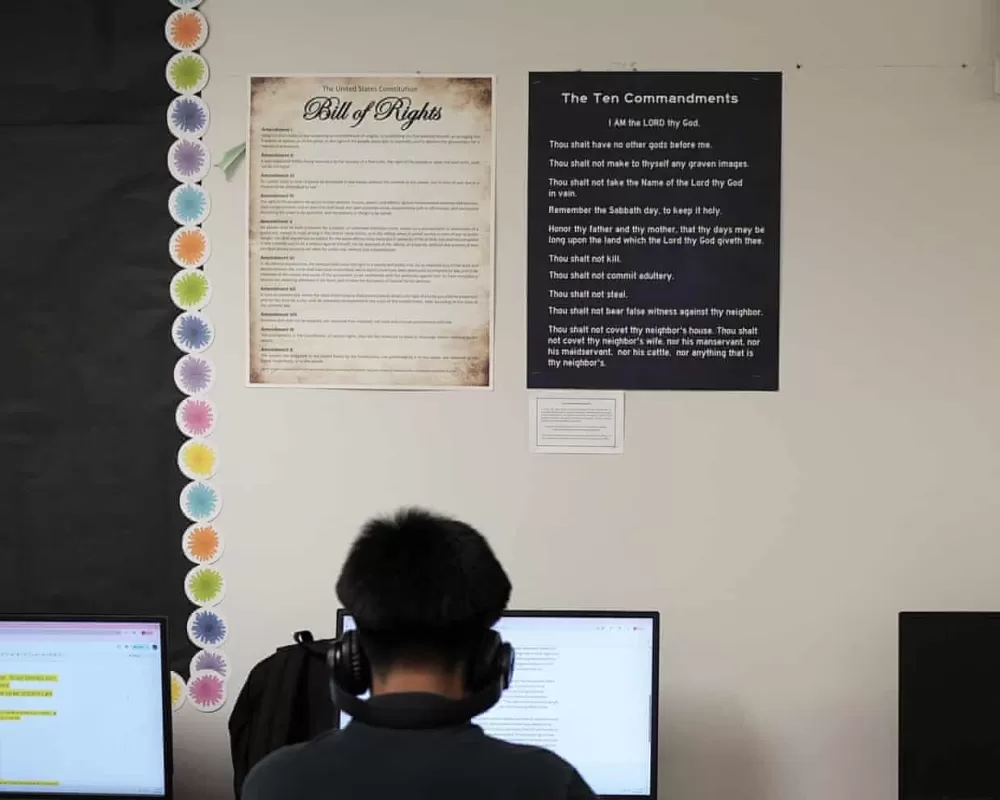
Texas Public Schools Brace for Sweeping Curriculum 'Corrections'
Texas is once again at the heart of a national debate, this time over significant changes to its public school curriculum. From history to social studies, these state-mandated 'corrections' are sparking fierce discussions among educators, parents, and policymakers, raising questions about historical accuracy, political influence, and the future of public education.
Ah, Texas. You know, it's always felt like a crucible for some of the biggest debates shaping America, and right now, the spotlight's squarely on its public school classrooms. There's been a real buzz, and frankly, a good deal of contention, over what the state is calling 'corrections' to its public school curriculum. These aren't just minor tweaks; we're talking about substantial revisions that could fundamentally alter how millions of students learn about their state, their country, and indeed, the world.
For quite some time now, the Lone Star State has been a battleground for educational philosophy. On one side, you have voices calling for a return to what they perceive as traditional American values, emphasizing patriotism and a more 'positive' portrayal of history. On the other, a chorus of educators, historians, and concerned parents argues for a comprehensive, unvarnished look at the past, acknowledging complexities and sometimes uncomfortable truths. These latest 'corrections' seem to lean heavily into the former camp, sparking widespread concern.
So, what exactly are we seeing? Well, the proposals touch a variety of subjects, but the most intense scrutiny is undoubtedly falling on history and civics. Imagine, for instance, a renewed emphasis on certain founding figures, perhaps with less focus on the often-challenging aspects of early American history, such as the full scope of slavery or the treatment of Indigenous populations. There's also talk of redefining what constitutes 'American exceptionalism' and how civil rights movements are taught, often leading to worries about downplaying systemic inequalities or the very real struggles involved in achieving progress.
Proponents, and you hear this quite a bit, argue these revisions are simply about instilling a stronger sense of patriotism, getting back to what they consider foundational American values, and perhaps, just perhaps, ensuring a more 'balanced' view of history. They often speak of 'parental rights' and the need to protect children from what they term 'divisive concepts' or 'critical race theory' – phrases that have become potent political flashpoints, even if the actual classroom content often bears little resemblance to the academic theories themselves. Their aim, they'd say, is clarity and a unified narrative.
But, of course, where there's a push, there's often a shove, and critics — a formidable coalition of educators, historians, and parents — are sounding alarm bells. They contend, with no small amount of passion, that these 'corrections' look less like academic fine-tuning and more like a deliberate, politically charged reshaping of narratives, especially when it comes to history and social studies. Many worry that such changes risk whitewashing crucial historical moments, presenting a sanitized version of events that fails to prepare students for a complex, diverse world. It’s about intellectual honesty, they argue, and fostering critical thinking, not simply memorization.
The implications of these changes, should they fully take root, are significant, stretching far beyond the classroom walls. For students, it could mean a less nuanced understanding of historical events and societal forces. For teachers, it raises questions about academic freedom and the ability to present diverse perspectives without fear of reprisal. And for the state as a whole, it highlights a deep ideological divide about the very purpose of public education. Indeed, as Texas continues to grow and diversify, these curriculum debates will likely only intensify, keeping the future of learning a vibrant, if sometimes fractious, conversation.
Editorial note: Nishadil may use AI assistance for news drafting and formatting. Readers can report issues from this page, and material corrections are reviewed under our editorial standards.












