The F-104 Starfighter: From Cold War Icon to Hypersonic Testbed
- Nishadil
- November 17, 2026
- 0 Comments
- 5 minutes read
- 28 Views
- Save
- Follow Topic
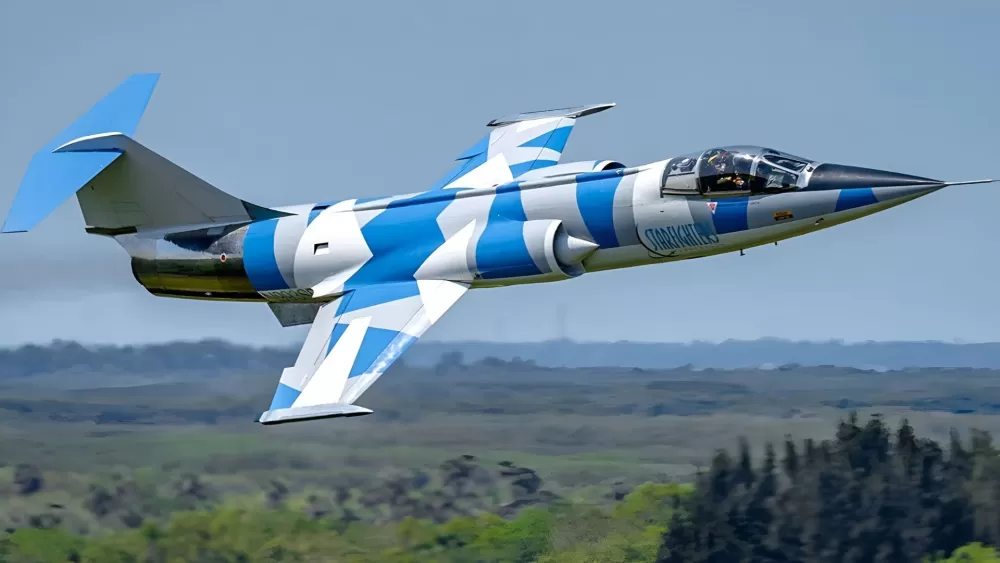
Old Dog, New Tricks: Cold War F-104 Jets Repurposed for Hypersonic Interceptor Trials
Discover how the legendary F-104 Starfighter, a Cold War speed demon, is being brought back to life by Starfighters Space and Horizon Apogee to test next-generation hypersonic interceptor technology.
Imagine a true legend of the Cold War, a jet so sleek and fast it earned nicknames like "missile with a man in it." Now, picture that same aircraft, decades after its prime service, not just flying in airshows, but actively participating in the cutting-edge development of future hypersonic defense technology. Sounds like something out of a sci-fi novel, doesn't it? Well, it's very much real. The venerable Lockheed F-104 Starfighter, a true icon of speed and high-altitude prowess, is indeed making a rather astonishing comeback, proving that sometimes, the best tools for tomorrow’s challenges might just be found in yesterday’s hangars.
Let's talk about the F-104 for a moment. This single-engine, supersonic interceptor, first introduced by the United States Air Force back in 1958, was an absolute marvel of its time. Designed initially as a day fighter, it quickly evolved into a versatile multirole aircraft, serving numerous air forces worldwide, from Germany and Turkey to Italy and, of course, the U.S. It was fast. Incredibly fast, hitting top speeds around Mach 2.1 – that's roughly 1,550 miles per hour at 35,000 feet! And altitude? It set world records, soaring well over 100,000 feet. Powered by its General Electric J79 turbojet, armed with a 20-millimeter cannon and Sidewinder missiles, the Starfighter was a force to be reckoned with, a testament to raw power and aerodynamic efficiency. Though the USAF retired its F-104s in 1969, and most others followed by the late 70s, Italy kept them flying until 2004, a remarkable run for any aircraft.
So, why bring back this Cold War warrior for something as futuristic as hypersonic interceptor testing? It’s a brilliant move, really. The F-104, despite its age, offers a unique blend of proven supersonic capability, high-altitude performance, and a robust airframe, making it an ideal, and likely cost-effective, platform for carrying experimental payloads. It’s a fantastic way to test the aerodynamic integration and performance of new designs without having to develop a completely new launch platform from scratch. This isn't just about dusting off a museum piece; it's a strategic move to leverage a platform renowned for its high-speed capabilities and robust design in a whole new context.
The companies spearheading this exciting endeavor are Starfighters Space, Inc. (you might recognize their ticker, FJET, on the NYSE American) and Horizon Apogee LLC. They formally solidified their intentions with a non-binding Memorandum of Understanding (MOU) on November 16, 2026. Their ambitious goal? To conduct a series of supersonic test flights throughout 2027. These flights are designed to meticulously assess the aerodynamic design of Horizon Apogee's cutting-edge Reaver™ hypersonic interceptor and its innovative Orthrus™ combined-cycle air-breathing propulsion system. It's a true collaboration, bringing together the legacy of an aerospace giant with the pioneering spirit of a modern innovator.
The upcoming test campaign, slated for 2027, is structured into several critical phases. It'll begin with rigorous aerodynamic integration analysis and meticulous aircraft fit checks – essentially making sure everything aligns perfectly. Following that, there will be extensive flight readiness preparations, leaving no stone unturned. The real action kicks off with captive-carry flights, planned for the second quarter of 2027, where the Reaver prototype will ride underneath the F-104, collecting vital data. Later in the year, specifically in the third quarter, the program anticipates moving to actual drop tests. These crucial flights will primarily operate out of Starfighters Space’s facilities at the historic Kennedy Space Center in Florida and the forward-thinking Midland International Air & Space Port in Texas, locations perfectly suited for such advanced aerospace activities.
Beyond the classic aircraft itself, Horizon Apogee’s work on the Reaver is genuinely impressive. This hypersonic interceptor is being developed under a prestigious xTech|Search 10 competition, with crucial funding from the US Army, underscoring its strategic importance. They're clearly making strides; in June 2026, the company successfully completed a subscale hot-fire test of its Orthrus propulsion system – a significant milestone! And looking ahead, early in 2027, Horizon Apogee also plans a separate vertical launch test of a Reaver prototype at the Army's White Sands Missile Range in New Mexico. These independent tests, alongside the F-104 integration, paint a picture of comprehensive and rapid development.
It’s important to remember that while the MOU is a fantastic start, the exact pricing and terms for these flight phases are still being ironed out and will be formalized in a definitive agreement before those captive-carry flights actually commence. Nevertheless, this partnership represents a truly fascinating intersection of aviation history and future technology. It’s a testament to ingenuity, proving that sometimes, the best way forward involves looking back, leveraging the proven capabilities of a Cold War legend to push the boundaries of hypersonic flight. The sight of an F-104 Starfighter, a true speed demon of its era, carrying the torch for the next generation of hypersonic interceptors? That's just incredibly cool, wouldn't you agree?
- UnitedStatesOfAmerica
- News
- Top
- TopNews
- SupersonicAircraft
- MilitaryTechnology
- USArmy
- KennedySpaceCenter
- HypersonicWeapons
- MilitaryAircraft
- PropulsionSystem
- HypersonicTechnology
- StarfightersSpace
- AerospaceTesting
- WhiteSandsMissileRange
- ReaverHypersonicInterceptor
- LockheedF104
- F104Starfighter
- HypersonicInterceptor
- Mach2Aircraft
- HorizonApogee
- Reaver
- Orthrus
- ColdWarJets
- SupersonicFlights
Editorial note: Nishadil may use AI assistance for news drafting and formatting. Readers can report issues from this page, and material corrections are reviewed under our editorial standards.