
The Enduring Enigma of Trump and NATO: Why He Keeps Questioning the Alliance
- Nishadil
- April 05, 2026
- 0 Comments
- 4 minutes read
- 34 Views
- Save
- Follow Topic
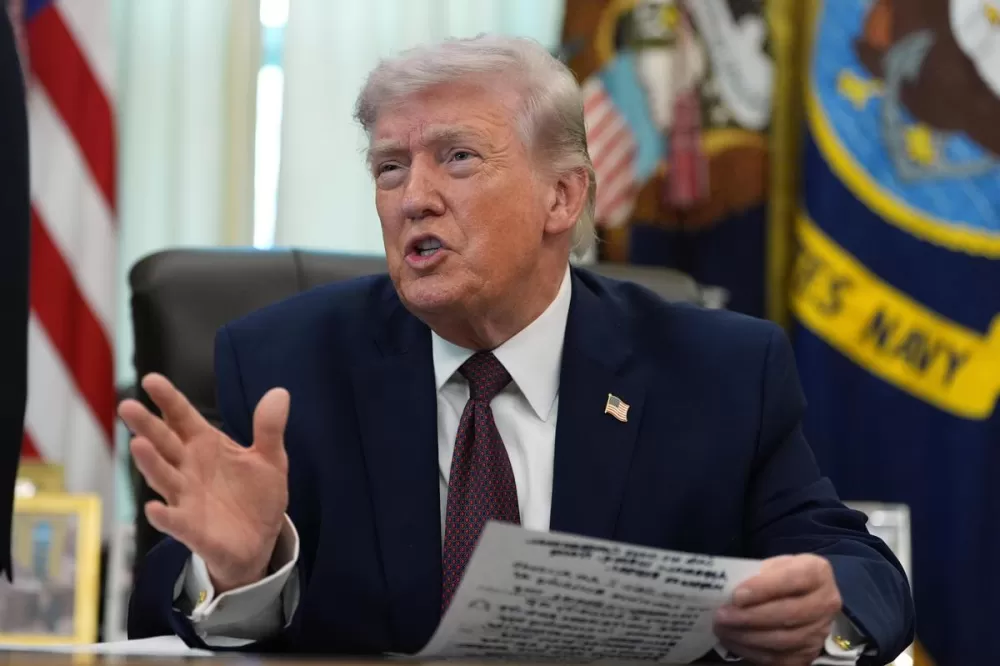
Unpacking Donald Trump's Deep-Seated Discontent with NATO and the Tremors it Sends Across the Globe
Explore Donald Trump's persistent criticisms of NATO, from financial burdens to questioning Article 5, and the far-reaching implications his stance could have on global security and American leadership.
When we talk about Donald Trump's foreign policy, one issue consistently bubbles to the surface: his deep-seated skepticism, if not outright disdain, for NATO. It's a stance that has, for years, sent shivers down the spines of allies and delighted adversaries. But why exactly does this particular alliance draw so much of his ire? Well, it's a mix of fiscal philosophy, an 'America First' worldview, and a fundamental questioning of how global security should operate.
At the heart of Trump's grievances is a very specific complaint: money. He's been incredibly vocal, practically from day one of his political ascent, about what he perceives as an unfair financial burden on the United States. His argument, often repeated, is that too many NATO members aren't pulling their weight, failing to meet the alliance's agreed-upon target of spending at least 2% of their Gross Domestic Product (GDP) on defense. He views this as other nations essentially 'free-riding' on American military might, and frankly, he doesn't like it one bit.
Beyond the spreadsheets and defense budgets, there's also the thorny issue of Article 5. This is the cornerstone of NATO, you see – the 'an attack on one is an attack on all' clause. It's the ultimate promise of collective defense. But Trump has, at times, cast doubt on America's willingness to automatically come to the aid of allies, particularly those he feels haven't met their financial obligations. Imagine the ripple effect of that kind of uncertainty! It fundamentally shakes the very foundation of trust and deterrence that NATO was built upon.
This perspective isn't just about money or military pacts; it's intrinsically linked to his broader 'America First' philosophy. From his vantage point, international alliances, while perhaps having served their purpose in the past, now often place undue demands on American resources without a clear, proportional benefit to the U.S. He views these commitments through a transactional lens, questioning whether the trade-offs are truly advantageous for the American taxpayer and soldier. It’s a very different way of looking at global leadership, one that prioritizes national self-interest above traditional multilateralism.
Now, let's take a quick step back. NATO, the North Atlantic Treaty Organization, wasn't just pulled out of thin air. It was forged in the crucible of the Cold War, a direct response to the looming threat of Soviet expansion in post-World War II Europe. Its primary goal was, and arguably still is, to deter aggression and ensure the collective security of its members. For decades, it's been seen as one of the most successful military alliances in history, effectively maintaining peace and stability across the Euro-Atlantic area. Think about that for a moment – it's a huge deal.
So, what happens if the U.S. actually pulls out? The potential ramifications are, frankly, enormous and deeply concerning. Such a move could critically weaken the alliance, perhaps even leading to its collapse. Without American leadership, its immense military resources, and its political gravitas, NATO would be a very different, much less formidable entity. This, in turn, could embolden adversaries, especially Russia, which has long sought to sow discord within the alliance and undermine European unity. It would create a dangerous vacuum, leading to greater global instability and potentially leaving individual European nations far more vulnerable.
Recognizing this profound risk, the U.S. Congress has actually taken steps to try and prevent a unilateral withdrawal. They've passed legislation requiring presidential consultation and congressional approval before any President can simply pull the plug on NATO membership. It’s a clear sign of the broad, bipartisan understanding in Washington of just how vital this alliance remains to American national security and global stability. The world is a complex place, and alliances, imperfect as they may be, often serve as crucial bulwarks against chaos.
Editorial note: Nishadil may use AI assistance for news drafting and formatting. Readers can report issues from this page, and material corrections are reviewed under our editorial standards.









