The End of an Era? Link's Iconic Green Tunic Officially Redefined in Zelda Lore
- Nishadil
- July 04, 2026
- 0 Comments
- 4 minutes read
- 33 Views
- Save
- Follow Topic
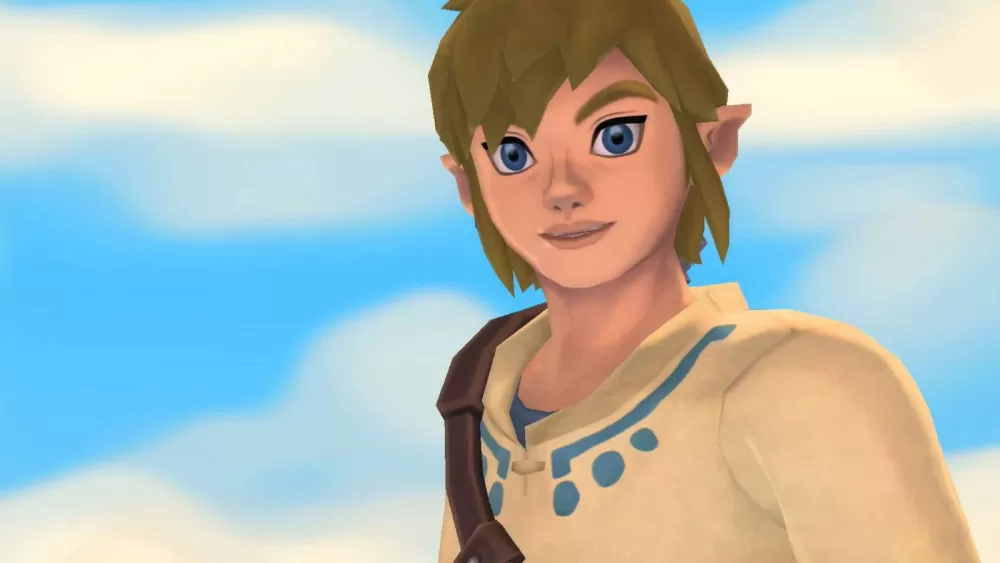
Link's Green Tunic: No Longer the Default, A New Era for Zelda's Hero?
Nintendo has officially clarified that Link's classic green tunic is no longer his standard attire, shifting its status to a 'traditional outfit' or 'ancient hero's aspect.' This marks a significant evolution for the series, moving beyond the long-held visual identity of the Hero of Hyrule.
For decades, when you pictured Link, what instantly came to mind? Chances are, it was that unmistakable green tunic, right? It was his signature, an almost inseparable part of his identity. But hold onto your Master Swords, folks, because it seems Nintendo has been quietly, subtly, but now quite officially, nudging that iconic green look into the realm of 'special occasion wear' rather than his everyday default. It's a pretty significant shift, if you ask me, truly redefining how we see the Hero of Hyrule.
Now, this isn't exactly brand new news, mind you. If you've been paying close attention, the seeds for this change were sown way back in 2017. Eiji Aonuma, the series producer, and Hidemaro Fujibayashi, the director, actually brought it up in an interview around the time Breath of the Wild launched. They pretty clearly stated back then that the blue Champion's Tunic was Link's new 'standard' look. And honestly, it made a lot of sense at the time; BotW was all about breaking conventions, so why not extend that to Link's wardrobe too?
But just in case anyone was still holding onto hope that green was merely taking a temporary break, the recently released Making of The Legend of Zelda: Tears of the Kingdom book pretty much seals the deal. We're talking concept art here, folks, and in that art, Link's classic green garb is explicitly labeled as a 'traditional outfit' or, even more tellingly, the 'ancient hero's aspect.' Think about that for a second. It's not 'Link's tunic' anymore; it's a historical outfit, something from the past, worn for a specific, almost ceremonial purpose.
And Tears of the Kingdom itself truly drove this home, didn't it? Our journey through Hyrule begins with Link sporting a totally different, rather understated blue tunic – a practical, everyday sort of garment. It's only much later, through specific narrative progression and exploration, that we can even acquire a green tunic, often referred to as the 'Tunic of the Wild' or that 'Ancient Hero's Aspect.' It's no longer just his outfit by default; it's a piece of legendary gear, something to be earned or discovered, steeped in history and a connection to heroes long past.
So, what's the big takeaway from all this? Well, it seems the days of Link being instantly recognizable solely by his green threads are, perhaps, behind us for good. And you know, this opens up so many possibilities for the series! We could see Link in a much wider array of default outfits tailored to specific settings or the unique narrative needs of a game, right from the very beginning. It allows for more creativity in his character design and perhaps even a stronger, more personal connection between his appearance and the particular story being told. It makes his journey feel less about a static uniform and more about a hero who truly evolves with each new adventure.
It's a bittersweet kind of change, isn't it? On one hand, a little piece of our nostalgic hearts might miss that ever-present green. It was, after all, the look. On the other hand, it's a clear sign of Nintendo's unwavering willingness to evolve, to keep the Zelda series fresh and exciting, even when it comes to something as fundamental as the hero's attire. The spirit of Link, the hero who constantly adapts and rises to the occasion, remains vibrant. He'll just be doing it in a few more stylish, narratively significant ensembles, I guess!
Editorial note: Nishadil may use AI assistance for news drafting and formatting. Readers can report issues from this page, and material corrections are reviewed under our editorial standards.