The $1,700 Question: Ro Khanna's Iran War Refund Proposal Sparks Debate
- Nishadil
- November 18, 2026
- 0 Comments
- 4 minutes read
- 16 Views
- Save
- Follow Topic
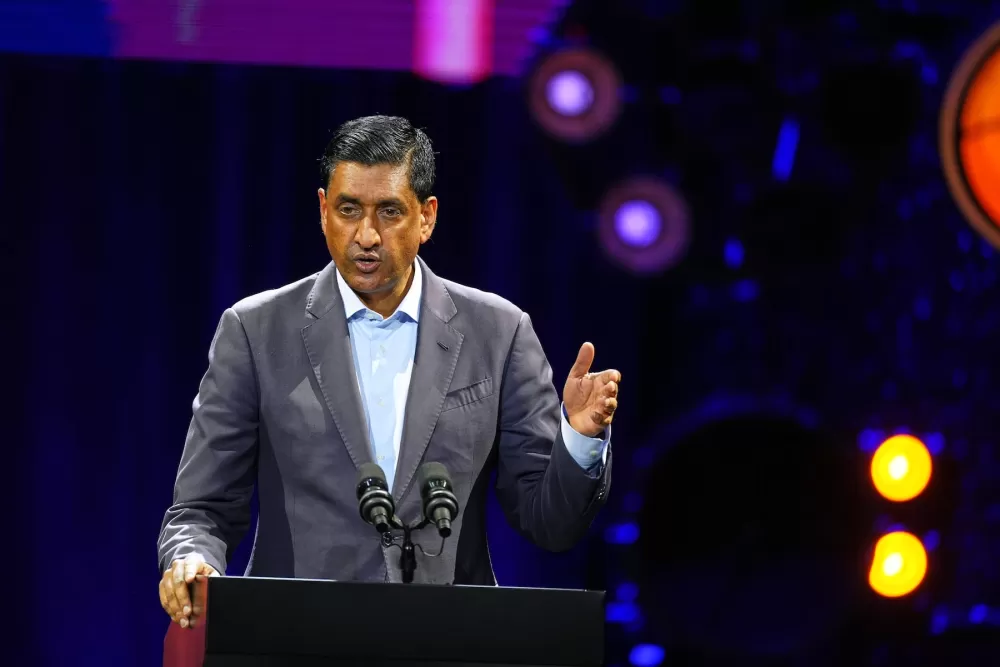
Silicon Valley Rep Ro Khanna Pitches $1,700 Checks to Offset Iran War Costs, Taking a Direct Jab at Trump
U.S. Representative Ro Khanna has proposed $1,700 checks for Americans, framed as a refund for the costly Iran war, directly contrasting former President Trump's earlier promise of larger stimulus payments.
It’s not every day you hear a proposal for direct payments to citizens tied to the cost of a military conflict, is it? But that’s exactly what U.S. Representative Ro Khanna, a Democrat from California’s bustling Silicon Valley, has put on the table. He’s advocating for a substantial $1,700 check for every American, framing it as a crucial 'refund' for the financial burden of the ongoing war in Iran. This isn't just about economic relief, though; it's also a pretty clear political jab at former President Donald Trump, who, you might recall, had his own ideas about large checks just a couple of months prior.
Khanna isn't just floating an idea; he's got a legislative vehicle for it. His proposal, known as the 'Illegal War Refund Act,' suggests a rather straightforward approach: calculate the total economic impact of the Iran war on American taxpayers, then slice that exact amount from the Department of Defense budget. The savings, theoretically, would then be disbursed directly to citizens. He’s not alone in this, either; fellow Democratic Representatives Chuy García from Illinois, Bonnie Watson Coleman of New Jersey, Val Hoyle from Oregon, and Washington’s Pramila Jayapal are all on board as cosponsors, lending a good deal of congressional weight to the initiative.
The timing and framing of Khanna's initiative are, let's be honest, quite strategic. It comes on the heels of President Trump's earlier promise of a much larger, roughly $5,000 check, made just a couple of months back. Khanna's team is openly challenging Trump, saying, 'Let’s put it on Donald Trump’s desk,' implying a direct challenge to see if the former president would support giving Americans money back from a war initiated under his watch. This certainly feels like a calculated move to highlight the financial consequences of military actions, particularly those that spark public contention.
Now, let's talk numbers. The Pentagon, in an estimate from October, put the cost of the Iran war to American taxpayers at a staggering $47.1 billion. That's a huge sum, no doubt. But what does that mean for the average household? Mark Zandi, the chief economist at Moody's Analytics, has actually crunched those figures, estimating that the war has already cost American families, on average, about $2,000. It’s interesting to note the slight difference between Zandi’s $2,000 estimate and Khanna's proposed $1,700, which, while not a massive gap, does leave a little room for discussion about the precise calculation of these 'refunds.'
Of course, any proposal involving direct payments of this magnitude faces its share of hurdles. Economists, for instance, are voicing concerns that injecting such a significant amount of money into the economy could potentially stoke inflation – something many Americans are already grappling with. Moreover, while Khanna has garnered support from several colleagues, the idea hasn't exactly shot to the top of the priority list for Democratic leadership in Congress, suggesting a potentially uphill battle for its swift passage. Khanna, ever the optimist, had initially hoped for a quick vote in the House and Senate in the first week of January, aiming to get checks out right after Christmas, but that timeline might be a bit ambitious given the current landscape.
Ultimately, Representative Khanna's proposal isn't just about a check; it's a powerful statement. It's about accountability for military expenditures and a tangible recognition of the economic toll that conflicts, especially those deemed controversial, can take on ordinary citizens. Whether this specific $1,700 refund comes to fruition remains to be seen, but it certainly ignites a crucial conversation about the true cost of war, both human and financial, and how those costs ripple through every American household.
Editorial note: Nishadil may use AI assistance for news drafting and formatting. Readers can report issues from this page, and material corrections are reviewed under our editorial standards.