SteelSeries Sensei Pro Review – A Top‑Tier Wireless Mouse, Almost
- Nishadil
- October 24, 2026
- 0 Comments
- 4 minutes read
- 11 Views
- Save
- Follow Topic
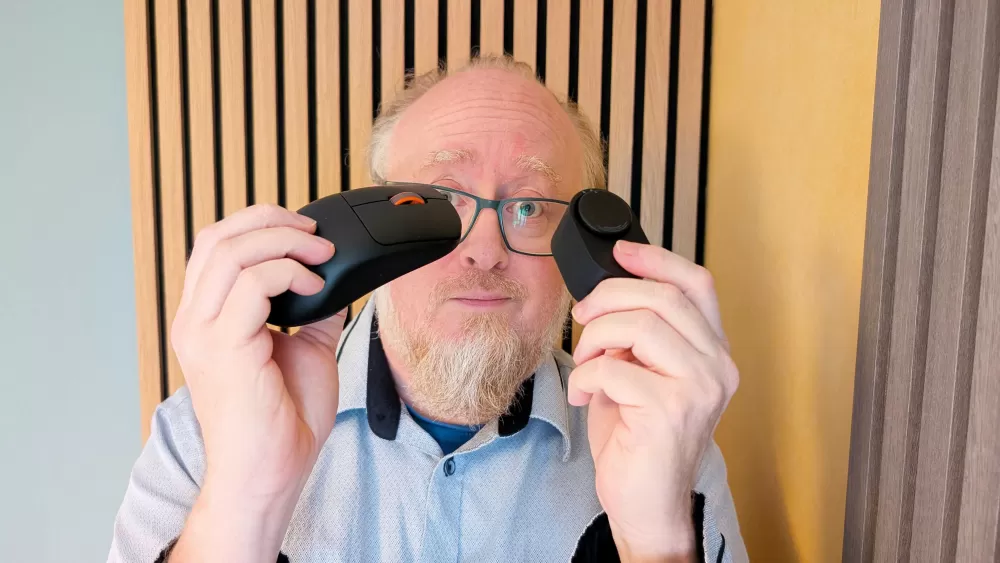
A clever mouse with a few flaws
The SteelSeries Sensei Pro dazzles with its swappable batteries, ultra‑wideband connectivity and a razor‑sharp sensor, but its click sound and step‑scroll feel a little dated.
When you look at wireless gaming mice these days, most of them still follow the same old template: a hidden rechargeable cell, a Bluetooth or 2.4 GHz radio, and a fairly ordinary shape that’s been copied a dozen times. The Sensei Pro tries to shake that routine up, and for the most part it succeeds.
First off, the power story is… different. Instead of a built‑in lithium pack you get two tiny, coin‑sized AA‑style cells that slide into a round well at the base. One powers the mouse while the other sits in a little docking station that charges it via USB. When the LED flashes, you just twist the dead cell out and pop the fresh one in. The whole swap takes less than a breath, and you can keep the mouse running almost indefinitely as long as you have a charger handy. It’s a bit of a habit change, sure, but it does mean you never have to yank a cable into the mouse itself.
Now, the wireless link is where the real novelty lives. SteelSeries ditched the familiar 2.4 GHz radio and Bluetooth in favor of Ultra Wideband (UWB). In practice this means the mouse talks to a tiny UWB receiver built into the same dock that charges the batteries. The link runs at around 6 GHz and offers a huge bandwidth, translating to an 8 kHz (and even 9 kHz “over‑polling”) polling rate with impressively low latency. For most gamers the difference is subtle, but in a crowded 2.4 GHz environment – think a room full of phones, keyboards, Wi‑Fi routers – UWB stays remarkably clean.
Physically, the Sensei Pro looks almost like a classic SteelSeries silhouette: symmetrical, low‑profile, and finished in either matte black or crisp white. The plastic feels smooth, and the mouse is surprisingly light, so it glides nicely on a good mousepad. I did find the shape a touch low for my hand, but that’s a personal thing – some folks will love that low‑rise feel, others might wish for a bit more height.
The button layout is familiar: left‑ and right‑click, a middle‑click wheel, plus two side buttons for back/forward. The clicks are solid, perhaps a tad louder than you’d want in a quiet office, and the scroll wheel is fixed‑step rather than free‑spin, which can feel a little old‑school for those who prefer smooth scrolling. Still, the tactile feedback is dependable for rapid clicking.
Under the hood lives PixArt’s PAW3955 sensor, the same high‑end chip you see in many esports‑grade mice. It tops out at 42,000 DPI, can track up to 800 IPS, and handles 70 G of acceleration. In other words, it’s more than capable of catching the smallest twitch of your hand. The SteelSeries GG software lets you fine‑tune DPI steps, set up custom profiles, and even assign a precise DPI value to each of the four preset slots – handy if you like to switch sensitivities on the fly.
Battery life is another talking point. In the 8 kHz mode the mouse will run roughly 16 hours before one cell needs a recharge, which is respectable given the high polling rate. Drop down to a modest 1 kHz, and you can squeeze out about 60 hours. Since you can hot‑swap the cells, you never really run out of juice unless you forget to charge the spare.
So, what’s the verdict? The Sensei Pro delivers a top‑notch sensor, innovative UWB connectivity and a clever swappable‑battery system that keeps you in the game without tethering. The trade‑offs are the somewhat noisy clicks, the step‑scroll wheel, and a shape that may not suit every hand. At its price point you might expect a bit more polish on ergonomics, but overall it feels like a mouse built for serious players who want every ounce of precision.
Editorial note: Nishadil may use AI assistance for news drafting and formatting. Readers can report issues from this page, and material corrections are reviewed under our editorial standards.