
Punjab's Grain Storage Nightmare: Overflowing Granaries Leave No Room for New Rice Harvest
- Nishadil
- February 27, 2026
- 0 Comments
- 3 minutes read
- 29 Views
- Save
- Follow Topic
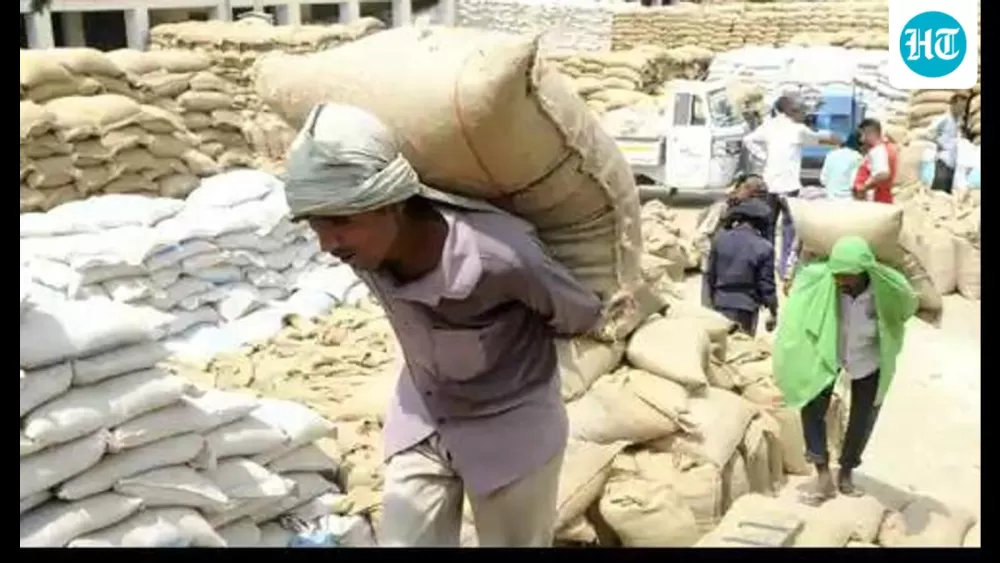
Full Granaries in Punjab Trigger Acute Storage Crisis for Freshly Milled Rice
Punjab, the 'breadbasket of India,' is facing an alarming storage crisis. Its granaries are brimming with custom milled rice from previous seasons, creating a critical bottleneck and leaving no space for the massive incoming harvest of new rice, putting immense pressure on millers and risking food quality.
You know, when we talk about Punjab, "breadbasket of India" instantly comes to mind. It's a place synonymous with agricultural abundance, with granaries often bursting at the seams. But right now, that very abundance is creating a rather sticky situation, a proper headache, if you will. We're talking about a genuine storage crisis, where the state simply has no more room to comfortably stash its freshly milled rice.
The heart of the problem, you see, isn't a lack of new harvest. Oh no, the fields have delivered as always. Instead, it's a lingering issue from seasons past. Large quantities of custom milled rice (CMR) from the 2021-22 Rabi season and the 2022-23 Kharif marketing season are still sitting there, taking up valuable space. The Food Corporation of India (FCI), which is meant to lift this rice, just hasn't been able to clear it out quickly enough. It's a backlog, plain and simple, and a hefty one at that, tallying up to an astonishing 21.24 lakh metric tonnes. That's a huge pile of rice just waiting to be moved!
Now, here's where it gets truly challenging. Punjab is right in the thick of its 2023-24 Kharif marketing season. The state's procured a massive 125 lakh metric tonnes of paddy, which, once milled, will translate into about 84 lakh metric tonnes of beautiful, freshly processed rice. But where on earth are they going to put it? With granaries already brimming to capacity with the old stock, the new harvest is essentially homeless.
This isn't just a logistical headache for government officials; it's a direct and immediate crisis for the rice millers. They've processed the paddy, done their part, but now they're stuck. Their mills and storage facilities are choked, unable to offload the new CMR because the older stock hasn't moved. Imagine the pressure, the financial strain! And frankly, this situation is a ticking time bomb for quality. Storing rice for extended periods, especially in less-than-ideal conditions, significantly increases the risk of damage, infestation, and overall degradation. Nobody wants to see good grain go to waste, certainly not in a country like ours.
The Punjab government, naturally, is acutely aware of the gravity of the situation. They've been persistently knocking on the FCI's door, urging them to accelerate the lifting of the old rice. They've even had to resort to a stop-gap measure, asking millers to utilize Covered and Plinth (CAP) storage. While CAP storage offers some temporary relief, it's far from ideal for long-term preservation. You're talking about rice bags covered by tarpaulins on raised platforms, exposed to the elements. What happens when the rains come? Or if humidity soars? The risk to the grain's quality, already a concern, only escalates further under such conditions.
So, what we have here is a classic supply chain bottleneck, but with very real implications for food security and the agricultural economy. It highlights the intricate dance between state procurement, central lifting mechanisms, and the delicate balance required to manage such vast quantities of a staple food. Punjab's granaries are full, yes, but it's a fullness that's causing anxiety rather than comfort. A swift, coordinated effort is desperately needed to clear the old stock and make way for the new, ensuring that the fruits of our farmers' labour don't spoil while awaiting a home. It's a complex puzzle, but one that absolutely demands an urgent solution.
Editorial note: Nishadil may use AI assistance for news drafting and formatting. Readers can report issues from this page, and material corrections are reviewed under our editorial standards.


