Peter Chan Rejects AI‑Generated Content, Defends the Future of Feature Films
- Nishadil
- October 23, 2026
- 0 Comments
- 5 minutes read
- 13 Views
- Save
- Follow Topic
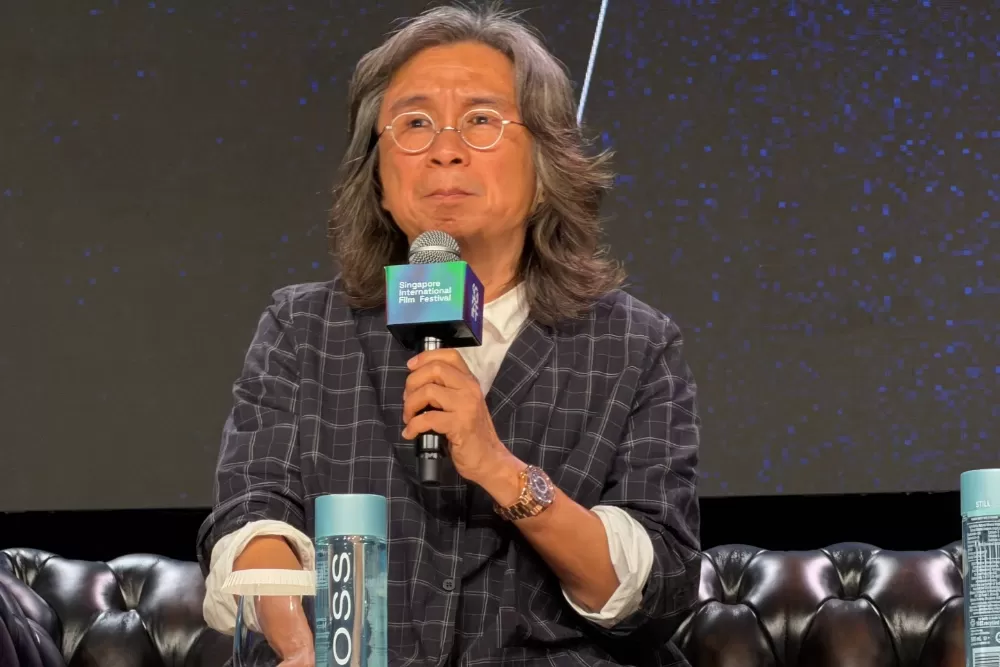
Veteran Asian director Peter Chan says he’ll use AI tools but draws the line at AI‑generated footage, insisting full‑length movies aren’t going anywhere
At the Singapore International Film Festival, Peter Chan explained why he’ll employ AI for technical help yet refuses to let machines write or create scenes, and he remains confident that two‑hour features will survive the rise of short‑form vertical dramas.
When the lights dimmed in the Grand Ballroom at Marina Bay Sands during the Singapore International Film Festival, the crowd buzzed with a question that feels almost inevitable these days: are we, the makers of movies, about to be replaced by algorithms?
Peter Chan Ho‑sun, the director best known for classics like Comrades: Almost a Love Story and the epic The Warlords, stepped up to the mic. He smiled, shuffled his notes, and gave an answer that was both practical and, oddly, comforting.
“I’m sure I’ll use AI as a technique,” he said, “the way we already use CGI and all the other special‑effects tools.” He went on to note that computer‑generated imagery has leaned on AI for years, even if nobody called it that. “Anything that helps me make movies, I welcome,” Chan added, his voice warm but firm.
What he won’t welcome, though, is AIGC – AI‑generated content. “We’re not handing over the storytelling to machines,” he declared. “Movies are still made by people.” There was a chuckle in the audience, but also a genuine sense of relief.
Later, when an audience member asked if Chan ever doubted his career choice, the veteran director’s reply was simple and heartfelt: “This is probably the toughest time for film, but do I believe the medium will disappear? No.” He spoke about the “shrinking attention spans” of younger viewers who flock to short, vertical dramas on phones, yet he also referenced the opposite pole – long‑form podcasts and the kind of purist filmmaking championed by Christopher Nolan for Oppenheimer. “Two completely opposite ends of the spectrum are thriving at the same time,” Chan said. “That tells me movies will be around for a long, long time.”
Chan’s confidence isn’t just theory; it’s backed by his own work. Earlier this year his new film, The Road Not Taken, premiered in Toronto to a modest but enthusiastic response. The drama follows a couple in the throes of divorce, where the wife suffers early‑onset Alzheimer’s and begins to drift back into memories of their youthful romance. Their 20‑year‑old daughter – the same age as Chan’s own daughter, an aspiring actress – also plays a pivotal role, adding layers of generational tension.
“It’s not just about Alzheimer’s,” Chan explained during the Q&A. “It’s about a broken family, about all the messy stuff that lives between people.” The English title borrows from Robert Frost’s poem, a line Chan has long called his life motto. The Chinese title, “Míng Tiān Huì Gèng Hǎo” (Tomorrow Will Be Better), hints at hope amid hardship.
To prepare, Chan visited an Alzheimer’s care facility in Chengdu, Sichuan, where he picked up an eight‑word Mandarin phrase that now sums up his approach to cinema: “go with the flow, and know when to stop.” He reflected on his early days in the 1990s, when he co‑founded United Filmmakers Organization (UFO) and rode the wave of romantic comedies while Hong Kong screens were dominated by gangster flicks and wuxia epics. “We weren’t exactly going with the flow, but we made the flow happen somehow,” he mused.
That same willingness to flow led Chan to the massive undertaking of The Warlords, a historical epic he never imagined making when he started out. “Never thought I’d direct a battle movie with Jet Li,” he laughed, recalling the surprise that still feels fresh.
2026 also marks the 30th anniversary of Comrades, a film Chan shot at 34 that captured Hong Kong between 1985 and 1995. Though it barely broke even financially, it resonated across Mainland China, South Korea and Southeast Asia. “That movie gave me a lease on movie life for the next 30 years,” Chan said, a modest grin spreading across his face. He noted that many people still remember him primarily for that single work, as if his later films were invisible.
Still, Chan is optimistic about the future. He believes that while vertical short‑form dramas will continue to dominate mobile screens, they won’t erase the appetite for a two‑hour narrative that lets audiences fully immerse themselves. “Feature films have a different rhythm, a different depth,” he said. “If we keep caring about the craft, the medium survives.”
In the end, Chan’s message was clear: AI can be a handy toolbox, but it will never replace the human heart that beats at the core of storytelling. As long as directors, writers, actors, and editors keep walking the tightrope between technology and emotion, the feature film will remain a vital, living art form.
Editorial note: Nishadil may use AI assistance for news drafting and formatting. Readers can report issues from this page, and material corrections are reviewed under our editorial standards.