Ladakh’s Quest for Greater Autonomy: Sonam Wangchuk Challenges the Centre
- Nishadil
- October 23, 2026
- 0 Comments
- 4 minutes read
- 10 Views
- Save
- Follow Topic
Sonam Wangchuk accuses Centre of reneging on promises, calls for Union Territory with a legislature
Activist Sonam Wangchuk lambasted the Ministry of Home Affairs for pulling back on earlier assurances of political autonomy for Ladakh, urging the creation of a Union Territory with a legislature.
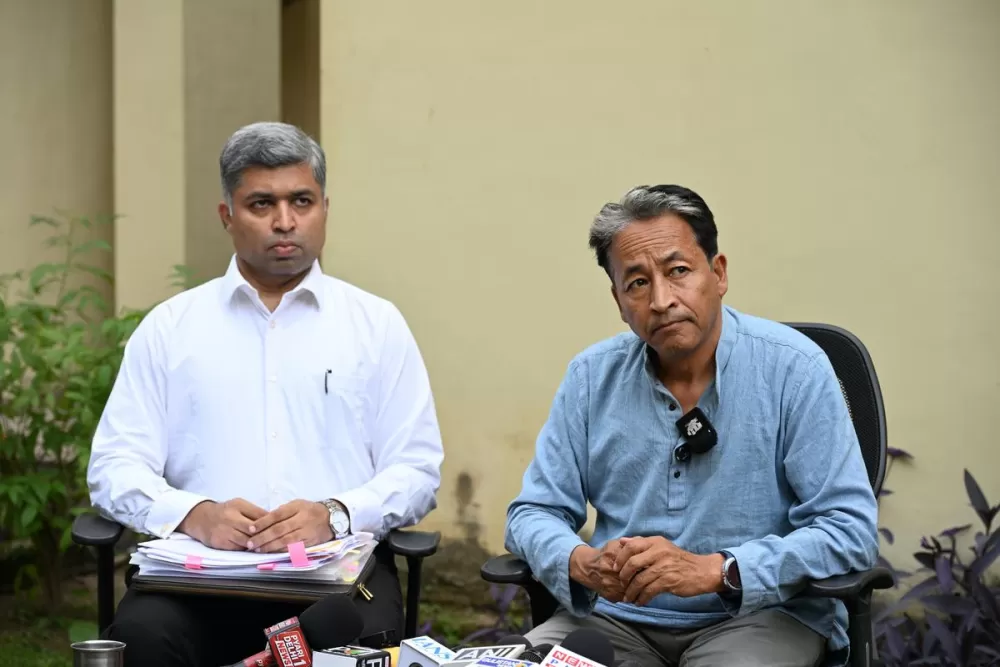
On Thursday, October 22, 2026, Sonam Wangchuk — a well‑known activist from Leh and a member of the Leh Apex Body — took to a press conference in New Delhi to air a grievance that has been simmering for months. He argued that the Centre, through the Ministry of Home Affairs, had back‑tracked on the very assurances it had given the people of Ladakh about granting them greater political autonomy and constitutional safeguards.
Wangchuk’s tone was a mixture of frustration and resolve. ‘The Centre never denied us statehood in any of the earlier talks,’ he said, his voice steady but edged with impatience. ‘They told us, unequivocally, that it would come eventually.’ Those words echo a sentiment that many Ladakhis have felt since the Union Territory was carved out of the former state of Jammu and Kashmir in 2019.
Earlier this month, Ladakh’s Chief Secretary, Ashish Kundra, had told representatives of the Leh Apex Body (LAB) and the Kargil Democratic Alliance (KDA) that neither statehood nor a Union Territory with a legislature was on the agenda. Instead, the government floated a “sui generis” arrangement under Article 371 of the Constitution — a model that, according to critics, would leave Ladakh with limited self‑rule while keeping the central government firmly in control.
The LAB and KDA are not new players in this debate. Both groups sit on a high‑level committee (HPC) that the Ministry set up in 2023 to safeguard Ladakh’s constitutional rights after the 2019 reorganisation. Their expectations were simple: a framework that acknowledges Ladakh’s strategic significance, its distinct cultural fabric, and the aspirations of its people.
Wangchuk, flanked by advocate Vikram Hegde — who has been advising the two civil‑society blocs during the negotiations — underscored a glaring inconsistency. ‘On the one hand, China is laying claim to parts of Ladakh. On the other, our own government is sidestepping our demands,’ he said. He reminded the audience that a similar strategic frontier, Arunachal Pradesh, was granted full statehood in 2017, despite also sharing a contested border with China.
According to Wangchuk, the turning point came in a meeting held on May 22, when the Centre had ostensibly agreed to extend protection under Article 371. Yet, what emerged later was a proposal for a council‑type body — a structure that many in Ladakh view as a cosmetic concession, lacking real legislative power.
“We want a Union Territory with a legislature, not just a token council,” Wangchuk asserted, his eyes scanning the room of journalists and officials. “Only then can we have laws that reflect our unique needs, from land ownership to cultural preservation.”
Vikram Hegde added that the gap between the government’s draft and the aspirations of Ladakh residents remains “substantial.” He warned that continued delays could fuel alienation, especially when national security concerns loom large along the northern frontiers.
In response, a spokesperson from the Ministry of Home Affairs declined to comment on the specifics of the draft, noting that discussions are ongoing and that any final decision will be taken after thorough consultation with all stakeholders.
The episode reflects a broader tension in Indian federalism: balancing the central government’s strategic imperatives with the genuine demands for local self‑governance. For Ladakh, the stakes are high, not just politically but also culturally and economically, as the region grapples with development challenges, climate change, and a fragile border situation.
As the dialogue continues, the people of Ladakh remain watchful, hoping that promises made in the corridors of power will eventually translate into a constitutionally enshrined, empowered form of autonomy.
Editorial note: Nishadil may use AI assistance for news drafting and formatting. Readers can report issues from this page, and material corrections are reviewed under our editorial standards.