Karnataka Rolls Out 1,000 MW Solar‑Plus‑Storage Project and Picks 23 Model Villages for PM Surya Ghar
- Nishadil
- October 22, 2026
- 0 Comments
- 5 minutes read
- 5 Views
- Save
- Follow Topic
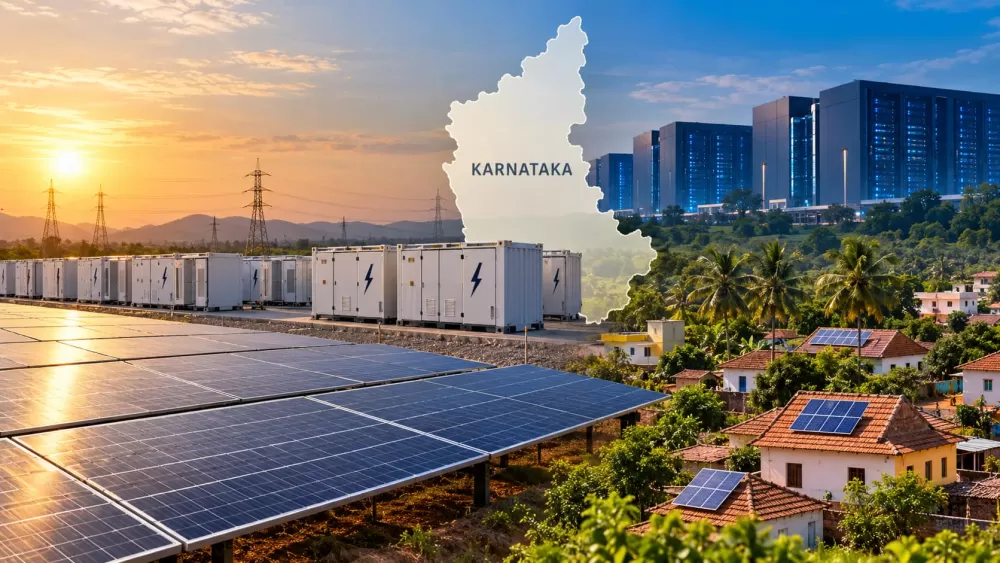
State launches a massive solar‑plus‑storage scheme while earmarking 23 villages for a flagship solar model under the central PM Surya Ghar programme
Karnataka aims to install 1,000 MW of ground‑mounted solar power with 2,000 MWh of battery storage, and has identified 23 villages across the state to become model solar communities under PM Surya Ghar.
Karnataka’s power planners are pulling out all the stops. As the state wrestles with soaring electricity demand – thanks in part to data‑centres, AI labs and a growing industrial base – the government has drafted a bold 1,000 MW ground‑mounted solar‑plus‑storage project. Think of it as a giant solar farm that can also stash its daylight energy in batteries, ready to be released when the lights go out after sunset.
The plan isn’t just about slapping panels on the ground. Karnataka Power Corporation Limited (KPCL) has opened a tender for a developer who will not only build the solar park but also take charge of a 2,000 MWh battery‑energy‑storage system (BESS). In plain language, the winner will have to hunt down suitable land, set up the photovoltaic array, hook up the storage, and keep the whole thing humming for years to come.
Why bother with the batteries? An official explained that storage lets the state shift surplus solar power from bright afternoons to the evening peak, when households are watching TV and factories are firing up. The exact impact on peak demand will, of course, depend on how the operator programmes the charge‑and‑discharge cycles – a detail that will be ironed out once the project goes live.
This isn’t Karnataka’s first flirtation with solar‑plus‑storage. Back in February 2026, the renewable arm Karnataka Renewable Energy Development Limited (KREDL) handed a contract to Pace Digitek for a 250 MW solar plant paired with a 250 MW/1,100 MWh battery system at the sprawling Pavagada Solar Park. The new 1,000 MW venture builds on that experience, promising even more clean power for the grid.
At the same time, the state is nudging rural Karnataka toward a greener future. KREDL has launched a separate bid to bring on a consultant who will draft detailed project reports (DPRs) for 23 villages selected under the central PM Surya Ghar – Muft Bijli Yojana. These villages stretch across Bengaluru Urban, Bengaluru Rural, Ramanagara, Chikkaballapura, Kolar, Tumakuru, Uttara Kannada, Shivamogga, Haveri, Vijayapura, Bagalkot, Dharwad, Belagavi, Kalaburagi, Raichur and Ballari.
Names like Singanayakanahalli, Sulibele, Kodihalli and Banavasi may be unfamiliar to most, but each will get a thorough assessment of its electricity needs. The consultant’s job will be to pinpoint opportunities for community solar arrays, rooftop panels on schools and panchayat offices, solar‑powered streetlights, and even solar‑driven water pumps for local farmers. In places where a full‑time renewable supply isn’t practical, the DPR will explore whether the village can still achieve a net‑zero electricity balance over the course of a year.
Each model village stands to receive a hefty central grant of ₹1 crore under the PM Surya Ghar scheme. The cash is meant to kick‑start the installations and, hopefully, spark a ripple effect – encouraging neighboring hamlets to follow suit.
Beyond solar, Karnataka is dabbling in another clean‑tech frontier. KREDL is eyeing a green‑hydrogen project at KPCL’s Ballari facility, where a 300 kW hydrogen plant will be designed, built and run for a decade. It’s a modest start, but it shows the state’s appetite for diversified renewable portfolios.
All of these moves come against a backdrop of water stress – the southwest monsoon has been weak, reservoirs are low, and groundwater is receding. By bolstering renewable generation and storage, Karnataka hopes to alleviate some pressure on its power grid without further draining its already‑fragile water resources.
In short, the state is betting big on sunshine and batteries, while giving its villages a taste of a self‑sufficient, clean‑energy future. If the projects stay on track, Karnataka could set a benchmark for other Indian states grappling with similar energy‑and‑water challenges.
Editorial note: Nishadil may use AI assistance for news drafting and formatting. Readers can report issues from this page, and material corrections are reviewed under our editorial standards.