India’s Defence Ministry signs ₹770 crore radar deal with BEL
- Nishadil
- October 22, 2026
- 0 Comments
- 2 minutes read
- 5 Views
- Save
- Follow Topic
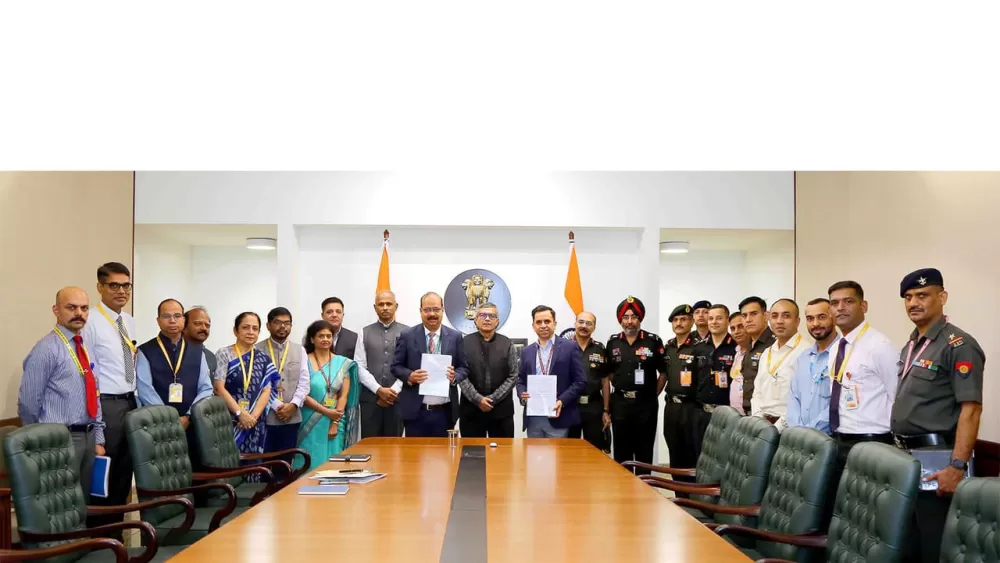
MOD inks contract for advanced LLLR‑I radars to counter drone threats
The Ministry of Defence has approved a ₹770 crore purchase of Improved Low‑Level Lightweight Radars (LLLR‑I) from Bharat Electronics Limited, boosting indigenous air‑defence capabilities.
The Ministry of Defence in New Delhi sealed a fresh contract on Wednesday, handing over roughly ₹770 crore to Bharat Electronics Limited (BEL) for a batch of Improved Low‑Level Lightweight Radars – the LLLR‑I. The signing, witnessed by Defence Secretary Rajesh Kumar Singh, is being hailed as a timely step to curb the rising menace of unmanned aerial systems.
What makes the LLLR‑I special? It can spot and track fighter‑sized aircraft as well as tiny mini‑ and micro‑drones, then prioritize the most threatening targets. In other words, the Indian Army will get a clearer picture of the sky and, hopefully, a quicker response when hostile drones appear.
Beyond the tech, the deal is a clear nod to the government’s ‘Viksit Bharat 2047’ vision – a push for home‑grown defence gear, stronger ties with micro, small and medium enterprises, and a more self‑reliant, globally competitive defence industry.
It isn’t the only procurement on the books. Just a week earlier, on 15 October, the MOD signed two other hefty agreements – a ₹2,563 crore contract with New Space India Limited for the GSAT‑7C communications satellite for the Air Force, and a ₹1,543 crore deal with Bharat Dynamics Limited for Varunastra heavyweight torpedoes for the Navy.
Both the satellite and the torpedo projects underline the same theme: indigenisation. The GSAT‑7C, designed and built in India, will give the Air Force a secure, resilient communications net, while the Varunastra, an indigenous anti‑submarine weapon, promises longer‑range strikes against underwater threats.
All three contracts were signed in the presence of Additional Secretary and Director‑General (Acquisition) A Anbarasu, underscoring the government’s commitment to the ‘Aatmanirbhar Bharat’ and ‘Make‑in‑India’ agendas. With these moves, India aims not just to arm its forces, but to nurture a thriving domestic defence ecosystem.
As the radar systems roll out, the Army expects a more robust air‑defence shield, especially against swarms of cheap drones that have become a favorite tool of adversaries worldwide. For now, the LLLR‑I deal stands as a testament to India’s drive to keep its skies safer – and its factories busier.
Editorial note: Nishadil may use AI assistance for news drafting and formatting. Readers can report issues from this page, and material corrections are reviewed under our editorial standards.