Conflicting Signals from the Trump White House on Ukraine’s Starshield Restrictions
- Nishadil
- October 23, 2026
- 0 Comments
- 3 minutes read
- 8 Views
- Save
- Follow Topic
Trump administration offers mixed messages on limits to Ukraine’s Starshield access
A sudden slowdown of the military‑grade Starshield satellite service sparked a blame‑game in Washington, with the president, his aides and Elon Musk each offering different explanations.
Last week Ukraine’s military suddenly found its high‑speed Starshield link—SpaceX’s hardened version of Starlink—capped at a crawl of about 100 mph (160 kph). Drones stalled, communications hiccuped, and Kyiv’s commanders warned that key missions were being jeopardized.
President Donald Trump, appearing on the campaign trail on Thursday, told reporters the service was now "back at full speed" and, for his part, insisted he never ordered the slowdown. "I don’t know if it was anybody, but it wasn’t me, and I don’t think it was Elon," he said, waving off speculation.
Yet a senior European official with eyes on the front lines said the cap remained unchanged. The official, speaking on condition of anonymity, said Ukraine still sees the same 100‑mph limit and has received no clear word from Washington about who pulled the plug.
The confusion has turned into a political flashpoint. Democratic Senator Richard Blumenthal announced a congressional inquiry into the episode, asking why a critical piece of Ukraine’s defense infrastructure was throttled without public justification.
Vice President JD Vance, speaking in Cincinnati, suggested the White House was coordinating with Elon Musk, but stressed that Musk’s private company shouldn’t be forced into a war between two sovereign states without clear U.S. direction. "It’s fundamentally a question of America’s policy toward Ukraine and Russia," he said.
Secretary of State Marco Rubio and Defense Secretary Pete Hegseth have both denied any involvement by the administration. Rubio told reporters in India that neither he nor the president ever requested changes to the system, and hinted that any decision would have come from SpaceX itself. "The president doesn’t run that company and can’t direct it," he emphasized.
Hegseth echoed that sentiment, adding that any throttling would be tied to Starlink’s terms of service—though he offered no details about what those terms might be for Ukraine.
Elon Musk, the billionaire founder of SpaceX and a noted Trump donor, pushed the responsibility back onto the U.S. government. In an X post on October 14 he wrote, "Starshield systems are owned and controlled by the US government. Any limits are decided by the US military and ultimately the POTUS." He also reminded that Starlink, the commercial arm, is barred from offensive military use.
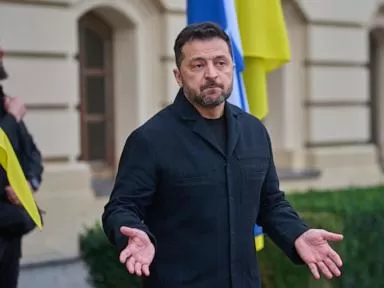
Ukrainian President Volodymyr Zelenskyy has warned that the speed caps appear only in Ukraine, not in EU member states that also use Starlink, calling the restriction a "planned operation." He repeated his concerns in a briefing with bipartisan U.S. lawmakers, noting that the limitations still hampered certain sectors of the front line.
At this point, the truth of who ordered the slowdown—whether it was a silent Pentagon directive, a corporate decision by SpaceX, or a miscommunication within the White House—remains murky. What is clear is that the episode has ignited a fresh round of scrutiny over how U.S. policy, private tech, and wartime needs intersect.
Editorial note: Nishadil may use AI assistance for news drafting and formatting. Readers can report issues from this page, and material corrections are reviewed under our editorial standards.