Chalo Yamuna: Massive Clean‑up and Multi‑billion‑Rupee Revitalisation Drive
- Nishadil
- October 20, 2026
- 0 Comments
- 3 minutes read
- 3 Views
- Save
- Follow Topic
Over 35,000 volunteers clear 76 tonnes of waste; Amit Shah to inaugurate ₹8,941 crore river‑revival projects
A huge community effort on Oct 18 removed more than 76 tonnes of garbage from the Yamuna, and Union Home Minister Amit Shah will launch nearly ₹9,000 crore of sewage‑treatment and infrastructure works to keep the river clean.
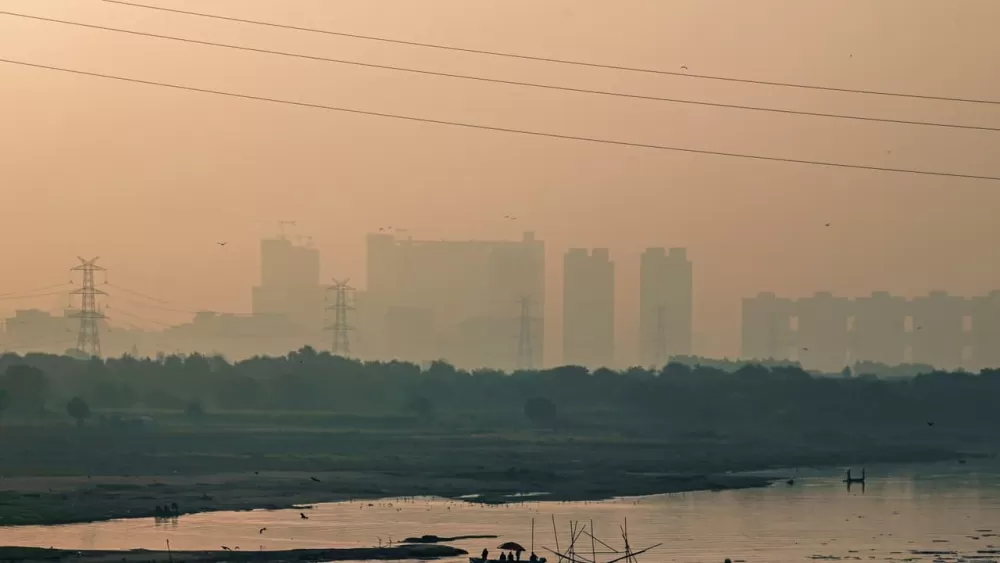
On the morning of 18 October, a sea of volunteers – more than 35,000 strong – gathered along a 30‑kilometre stretch of the Yamuna in Delhi. They scooped, bagged and hauled away a staggering 76,755 kg of rubbish, turning what looked like a floating carpet of foam into a cleaner riverbank.
The crowd was a true mix‑and‑match of Delhi’s civic spirit: roughly 20,000 ordinary citizens, families and residents’‑association members, 10,500 party workers, 2,500 eager students and another 2,000 volunteers from NGOs. Even the campus of Deshbandhu College sent a battalion of over 400 youngsters, joining peers from more than 25 other Delhi University colleges.
Logistics, as you might guess, were a nightmare‑turned‑smooth‑operation. The clean‑up fleet included 26 JCB excavators, 19 tractor‑trolleys, 24 boats, seven weed‑harvesters and a handful of trash skimmers. All of this was coordinated by a dozen government departments – from the Irrigation & Flood Control to the Public Works, the Municipal Corporation of Delhi, the Delhi Jal Board, the Delhi Urban Shelter Improvement Board, the police and the Delhi Development Authority. In total, 269 PWD maintenance vans and countless volunteers turned a daunting task into a coordinated success.
Specific hotspots like Usmanpur village alone yielded seven tonnes of waste, while Sonia Vihar contributed another 5.6 tonnes. The cleaned zones spanned from Soor Ghat in Wazirabad and the iconic Signature Bridge down to Yamuna Bazar, ITO, Nizamuddin, Sarai Kale Khan and Chilla.
While the clean‑up was a spectacular visual, officials stress that the real battle lies upstream – stopping sewage from ever reaching the Yamuna. Water Minister Parvesh Sahib Singh used the occasion to announce a suite of massive infrastructure projects that the Union Home Minister Amit Shah will formally launch on 22 October.
The package totals ₹8,941.22 crore and covers 43 Delhi Jal Board initiatives. Highlights include a brand‑new 124 million‑gallon‑per‑day (MGD) sewage‑treatment plant at Okhla, priced at ₹1,161 crore, and upgrades to eight existing plants worth ₹1,041 crore. Those upgrades will lift combined capacity from 78.2 MGD to 140.8 MGD, serving roughly 7.85 million residents.
Beyond the big plants, the plan adds 29 decentralised treatment units and pumping stations – a ₹3,113.67 crore investment aimed at 358 unauthorised colonies and 113 villages, home to about 3.63 million people. A 1,034‑km sewer network (₹1,691 crore) will stitch together these points, while a 477 MGD water‑treatment facility at Chandrawal (₹298.3 crore) replaces two aging plants from the 1930s and 1950s, delivering clean water to 2.2 million citizens.
In total, ten of the projects – worth ₹2,827.11 crore – will be inaugurated on the day, while foundation stones for the remaining 33 (₹6,114.11 crore) will be laid, signalling a long‑term commitment.
Minister Singh also hinted at a softer, community‑centric angle: a “Birthday with Yamuna” scheme where modest huts will pop up along the banks for people to celebrate their birthdays beside the water. He even pledged to celebrate his own birthday on 7 November by the river, inviting Delhiites to join the festivity and turn the clean‑up from a one‑off event into an enduring public movement.
In short, the Chalo Yamuna drive was more than a day of trash‑picking; it was a vivid showcase of what collective will, inter‑departmental coordination, and hefty financial backing can achieve when a city decides to give its river a fresh start.
Editorial note: Nishadil may use AI assistance for news drafting and formatting. Readers can report issues from this page, and material corrections are reviewed under our editorial standards.