
Bihar's Crisis: Gandak River Reaches Unprecedented Heights, Threatening Communities
- Nishadil
- September 29, 2026
- 0 Comments
- 3 minutes read
- 1 Views
- Save
- Follow Topic
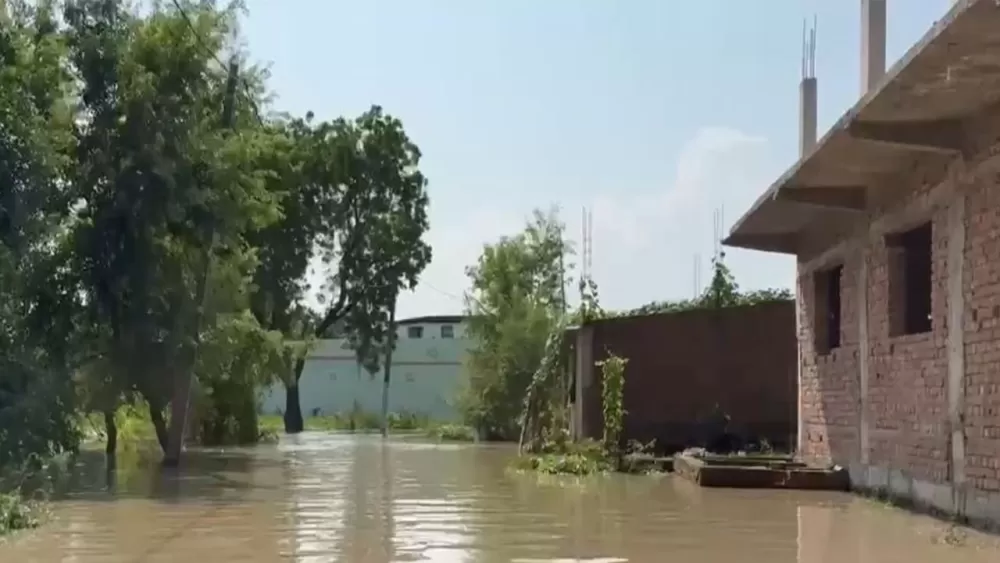
Gandak River Breaks All-Time Water Level Record at Bagaha Amid Bihar Flood Crisis
The Gandak River in Bihar has surged to an all-time high water level at Bagaha, surpassing previous records and causing widespread concern as heavy rains trigger severe flooding and embankment breaches across several districts.
It's a grim situation unfolding in Bihar, one that residents are watching with bated breath. The mighty Gandak River, a lifeline for many, has unfortunately become a formidable threat, registering an unprecedented all-time high water level at its Bagaha gauge site. You see, on the morning of September 28th, around 6 AM, the river swelled to a staggering 91.25 meters. Just to put that into perspective, it's 0.35 meters higher than its previous peak, which was recorded not too long ago in 2024 at 90.90 meters. It truly underscores the intensifying nature of these annual flood events.
So, what’s behind this sudden, dramatic surge? Well, it's a classic tale of relentless rainfall, both far-off and close to home. Significant downpours in Nepal’s river basin, coupled with exceptionally heavy rains on September 26th and 27th across Bihar’s border districts—think West Champaran, East Champaran, and Gopalganj—have essentially turned the Gandak into a raging torrent. Imagine all that water rushing down, pooling and pushing the river beyond its usual boundaries. It's a powerful, almost overwhelming force of nature at play.
The numbers truly tell a story here. At the Valmikinagar Gandak Barrage, an immense 5,43,500 cusecs of water were discharged that same morning on September 28th. What's even more concerning is that the discharge remained above a staggering 5 lakh cusecs for a good 13 hours straight, and above 4 lakh cusecs for an even longer 32-hour period. While interestingly, this peak discharge was slightly less than what we saw in 2024, the sheer volume sustained over time, combined with the other factors, still pushed the water level at Bagaha to this new, alarming record. It just goes to show how complex these hydrological events can be.
Naturally, such a powerful river at these levels doesn't just flow by harmlessly. The repercussions are already being felt keenly downstream, particularly across districts like West Champaran, East Champaran, Gopalganj, Saran, Muzaffarpur, and Vaishali. The structural integrity of vital infrastructure is always a major worry, and sadly, the Champaran embankment on the left bank in West Champaran has sustained damage. Specifically, areas near Village Khairatwa in Bagaha-1 Block and Village Fuliyakhad in Bairiya Block experienced breaches during the night of September 28th and 29th. And it's not just Bihar; even the embankment on the Gandak's right bank, over in Uttar Pradesh’s Kushinagar district, saw damage in one spot. It’s a cascading problem, truly.
Beyond outright breaches, the insidious threat of seepage and piping also looms large. Officials reported that a worrying 169 points were affected by these issues, requiring immediate and intensive remedial work to secure them. You can just picture the teams scrambling, working tirelessly through the night. Indeed, the Water Resources Department, along with the West Champaran district administration, has deployed teams on the ground. To bolster these efforts, four executive engineers from headquarters were dispatched to critical zones like Bagaha, Bettiah, Motihari, and Gopalganj during the crucial overnight hours. It’s an urgent race against time, with the safety and well-being of countless residents hanging in the balance.
Editorial note: Nishadil may use AI assistance for news drafting and formatting. Readers can report issues from this page, and material corrections are reviewed under our editorial standards.










