
When NATO Stood Still: A Candid Talk with U.S. Ambassador to NATO
- Nishadil
- July 07, 2026
- 0 Comments
- 4 minutes read
- 29 Views
- Save
- Follow Topic
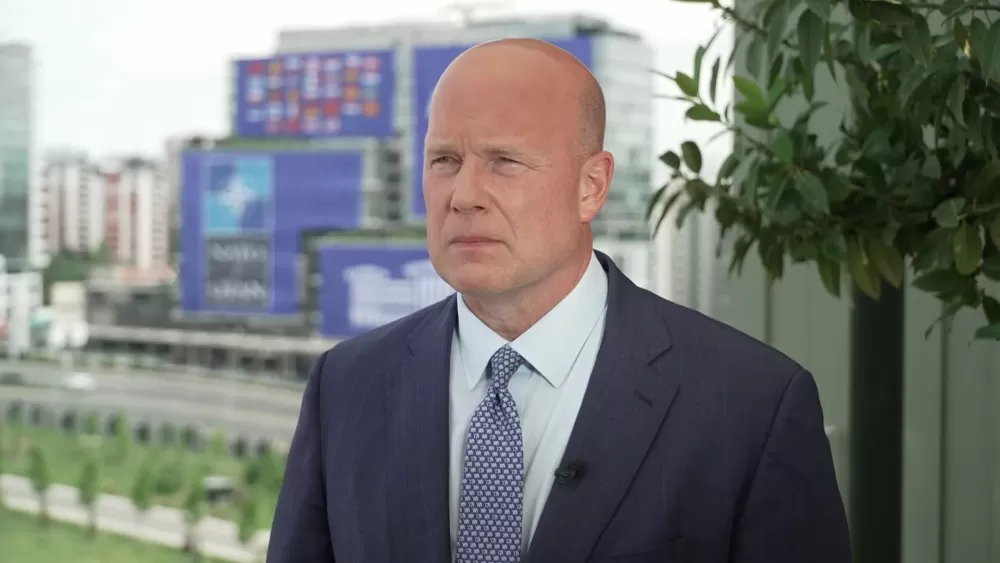
U.S. NATO Ambassador Warns That Allies Fell Asleep on Security Challenges
In a candid interview, the U.S. ambassador to NATO says the alliance and its partners have been complacent, urging a wake‑up call as new threats emerge across Europe and beyond.
Last week the U.S. ambassador to NATO, Bridget Brink, appeared on a CNBC segment and didn’t mince words: "NATO and our allies were asleep." The statement, delivered with a hint of frustration, sparked a flurry of commentary among policymakers, defense analysts, and the general public.
Brink’s remark was not a blanket accusation. Rather, it reflected her growing concern that the alliance, once hailed as the bedrock of trans‑Atlantic security, has been slipping into a comfortable lull. She pointed to several indicators: delayed defense spending reforms in Europe, a lackluster response to cyber‑attacks on critical infrastructure, and the uneasy silence surrounding the rising influence of Russia and China in Eastern Europe.
"We’ve been lucky for a while," she said, pausing as if choosing her words carefully. "But luck isn’t a strategy. When you rely on past victories, you risk missing the next battle." That sentiment resonated with many who have watched the Western security apparatus grapple with modern challenges that don’t fit neatly into Cold‑War era doctrines.
One of the core issues Brink highlighted was the uneven pace of the NATO 2% GDP defense spending target. While the United States continues to meet and exceed the benchmark, several European members remain stubbornly below it. "It’s not just about numbers," she emphasized. "It’s about the capabilities those numbers buy—modern air defenses, resilient cyber units, and rapid‑deployment forces that can deter aggression before it starts."
Brink also addressed the alliance’s response to cyber threats. She noted a series of high‑profile hacks on energy grids and governmental databases across the continent, suggesting that NATO’s current cyber‑defense posture is more reactive than proactive. "We can’t afford to wait for a breach to tell us what to do," she warned, adding that the alliance needs a unified, pre‑emptive cyber strategy, akin to its collective defense principle under Article 5.
Perhaps the most striking part of the interview was her take on the geopolitical tug‑of‑war with China. While most discussions focus on the Indo‑Pacific, Brink reminded listeners that Beijing’s Belt and Road Initiative has deepened economic ties with several NATO members, creating a subtle yet potent influence. "Economic dependence can translate into strategic vulnerability," she said, urging the alliance to diversify supply chains and reinforce resilience in critical sectors.
The ambassador didn’t just criticize; she offered a roadmap. First, she called for a revitalized political dialogue within NATO to reassess threat assessments every six months, not just annually. Second, she advocated for joint training exercises that incorporate cyber‑warfare and information operations, ensuring that troops are ready for the battles of tomorrow, not just the past.
Finally, Brink appealed to public sentiment. "Democracies thrive when citizens understand why we invest in defense," she said, almost as an after‑thought. Her message was clear: the alliance’s credibility hinges on both elite decision‑makers and ordinary people seeing the value of a robust security posture.
Reactions to Brink’s statements have been mixed. Some European officials have taken her comments as a constructive nudge, promising accelerated defense budgets and deeper cooperation on cyber initiatives. Others have pushed back, cautioning against a narrative that paints all allies with the same brush. Nonetheless, the underlying theme is unmistakable – the Atlantic community must wake up, recalibrate, and act before complacency becomes a costly liability.
In the weeks to come, all eyes will be on the upcoming NATO summit, where member states are expected to deliberate on these very points. Whether Brink’s wake‑up call translates into concrete policy shifts remains to be seen, but one thing is certain: the conversation about NATO’s future has finally left the bedroom and entered the living room of global security.
Editorial note: Nishadil may use AI assistance for news drafting and formatting. Readers can report issues from this page, and material corrections are reviewed under our editorial standards.









