When Mumbai Bled: The Political Storm that Swept Through the UPA Government After 26/11
- Nishadil
- December 13, 2025
- 0 Comments
- 2 minutes read
- 124 Views
- Save
- Follow Topic
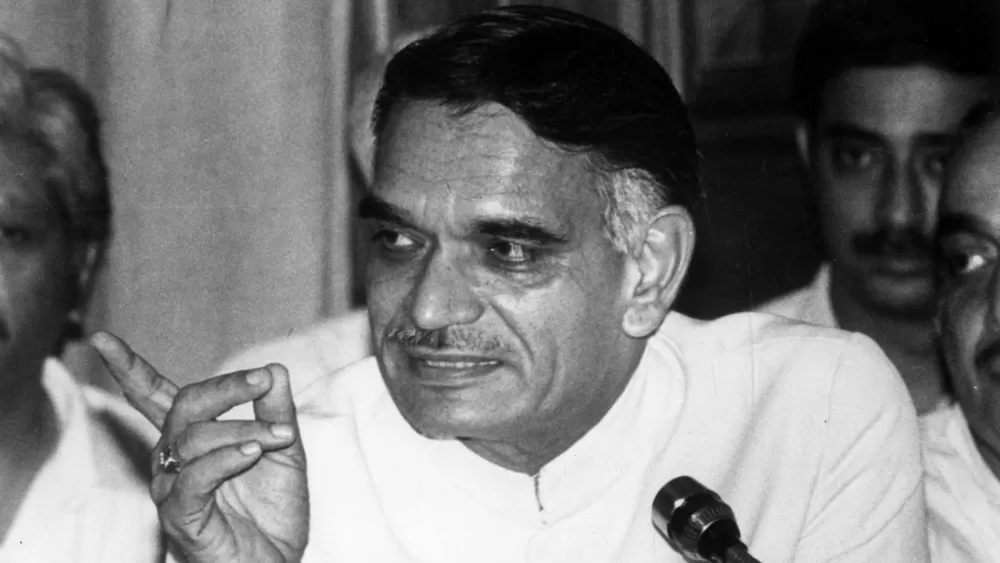
Remembering 26/11: Shivraj Patil's Turbulent Exit Amidst National Fury
The 2008 Mumbai terror attacks didn't just devastate a city; they rocked the very foundations of India's political landscape, putting Union Home Minister Shivraj Patil directly in the line of fire. His handling of the crisis, or at least the perception of it, ignited a national debate about accountability and leadership in times of extreme adversity. It's a chapter that offers crucial insights into political resilience and public expectation.
The memory of November 26, 2008, remains etched deeply in the collective consciousness of India, a dark day when Mumbai, its vibrant financial capital, bled under a coordinated terror assault. It was an unprecedented tragedy, one that brought a sprawling metropolis to its knees and, in its wake, triggered a seismic shift in the political landscape. You see, when a nation is struck so profoundly, the gaze inevitably turns to its leadership – especially to those entrusted with its safety and security.
In the immediate, chaotic aftermath of those horrific attacks, with the sheer audacity and brutality of the terrorists still raw, a fierce spotlight turned, quite naturally, towards the Union Home Minister, Shivraj Patil. He found himself squarely in the crosshairs of an enraged public and an equally scrutinizing media. Calls for accountability weren't whispers; they were roars, echoing from every corner of the country. People just wanted answers, and frankly, they wanted someone to take responsibility.
It’s a curious thing, isn't it, how certain moments in history just crystalize the public mood and redefine political careers? For Patil, a seasoned politician, this was undoubtedly one such moment. His tenure as Home Minister, already navigating the choppy waters of coalition politics within the UPA government, suddenly became a maelstrom. Every statement, every perceived delay, every decision – or lack thereof – was dissected under an unforgiving lens. There was a palpable sense that the government’s response, at least initially, hadn't quite matched the sheer scale of the national trauma.
One might argue that no single individual could have perfectly managed such an unfolding catastrophe, but public sentiment often operates on a different plane. The perception of an inadequate response, combined with a growing frustration over perceived security lapses, created an unsustainable environment. The government, already feeling the pressure from a vocal opposition and an increasingly demanding populace, simply had to act. Something, or someone, had to give.
Ultimately, the immense pressure became too much. Shivraj Patil, a man who had served in various capacities for years, found himself in an untenable position. His eventual resignation, though perhaps a formality given the public mood, marked a significant moment in the UPA government's turbulent journey. It wasn't just about one minister; it symbolized the intense scrutiny and the almost impossible expectations placed upon leaders during moments of profound national crisis. The incident serves as a stark reminder of how quickly political fortunes can turn when the security and emotional fabric of a nation are tested to their limits.
Editorial note: Nishadil may use AI assistance for news drafting and formatting. Readers can report issues from this page, and material corrections are reviewed under our editorial standards.