
When Local Laws Spark Cross-State Discontent: The Haryana Job Reservation Saga
- Nishadil
- April 15, 2026
- 0 Comments
- 4 minutes read
- 58 Views
- Save
- Follow Topic
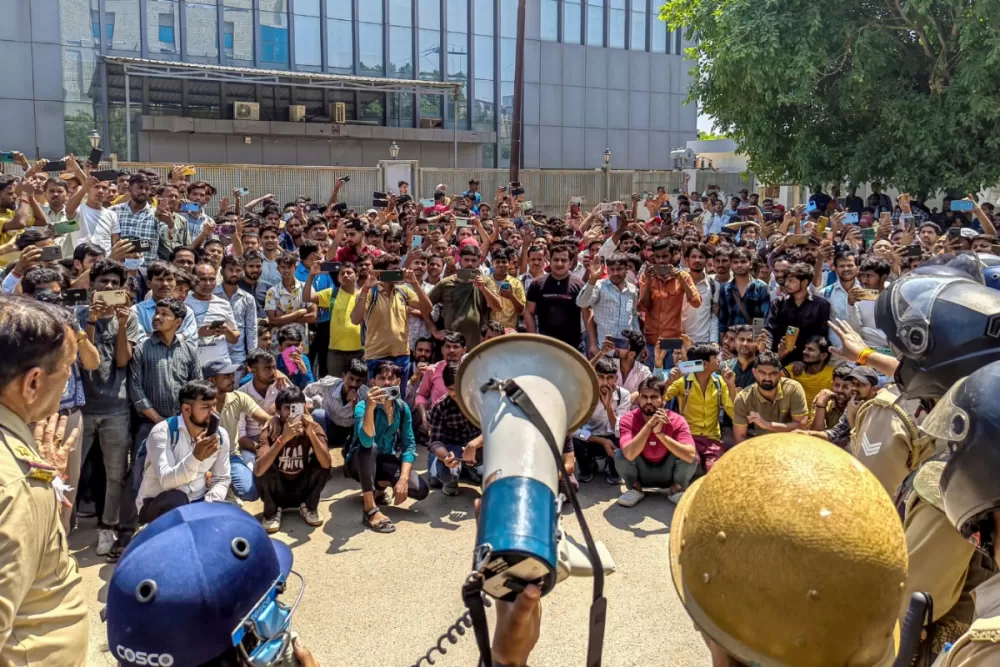
Haryana's 75% Job Quota Ignites Protests Beyond Its Borders
A new law reserving 75% of private sector jobs for locals in Haryana sparked widespread protests in neighboring states like Uttar Pradesh and Rajasthan, highlighting the complex impact of such policies on regional employment and labor mobility.
You know, sometimes a seemingly local policy can create waves far beyond its intended shores. That's precisely what we've witnessed recently with a particular piece of legislation in Haryana. A state law, initially designed to boost local employment, has inadvertently ignited a firestorm of protests and widespread concern, stretching all the way into neighboring states like Uttar Pradesh and Rajasthan. It’s a classic example of how interconnected our regions truly are.
At the heart of this unfolding drama is the Haryana State Employment of Local Candidates Act, 2020. Now, what does this mouthful of a law actually mean? Simply put, it mandates that 75% of all private sector jobs, specifically those with a gross monthly salary of up to Rs 30,000, must be reserved for residents of Haryana. This isn't just some abstract legal change; it hit people's livelihoods directly, coming into full effect from January 15, 2022. And almost immediately, the ripple effect began.
Picture this: you've built a life around working in a nearby industrial hub, maybe just across a state line, because that's where the opportunities are. Then, suddenly, those doors start closing. That's precisely the sentiment fueling the anger in places like Noida, just over the border in Uttar Pradesh, and Bhiwadi in Rajasthan. These aren't random spots; they're adjacent to Haryana's bustling industrial belts – think Gurugram, Faridabad, Rewari, Manesar, Bahadurgarh, Sonipat, and Panipat. For years, people from these neighboring areas have relied on jobs in Haryana, finding better prospects and often more consistent work there than closer to home.
Take, for instance, countless individuals who for years have commuted daily or relocated short distances for employment in Haryana’s factories and offices. Many of them invested in renting homes, educating their children, and simply living their lives, all centered around a job that's now suddenly prioritized for someone else. Their frustration is palpable, driven by a fear of unemployment and an uncertain future. They feel displaced, unrepresented, and quite frankly, a bit betrayed by a policy that essentially puts a wall between them and their established livelihoods.
But it's not just job seekers who are feeling the squeeze. Industries themselves are scratching their heads. Many businesses operating in Haryana have voiced significant concerns, arguing that finding skilled local labor for 75% of positions can be incredibly challenging. This law, they worry, could stifle competitiveness, increase operational burdens, and even prompt some companies to consider relocating their operations elsewhere – a move that would surely harm Haryana's economy in the long run. It’s a complex balancing act, trying to support local talent without crippling the very businesses that create jobs.
From the government's perspective, this law likely felt like a good, solid solution to a very real problem: youth unemployment right there in Haryana. It’s a populist move, often appealing to local sentiments and promising direct benefits to the state’s own citizens. While the intention might have been noble – to ensure Haryana's youth benefit from the state's industrial growth – the execution has certainly created some unforeseen complications and sparked a much broader debate about labor mobility across state lines.
Of course, a policy this significant was bound to face some legal pushback. The Punjab and Haryana High Court initially put a stay on the law, recognizing the profound questions it raised. However, the Supreme Court later lifted that stay, allowing the law to be implemented for now, sending the ball back to the High Court for a more thorough examination of its legality and constitutionality. So, while the protests continue, the legal battle is far from over, leaving a cloud of uncertainty hanging over many.
Ultimately, this whole episode truly highlights the delicate dance between state-level aspirations and the broader principles of a unified national market. It raises crucial questions about how states balance local interests with the fundamental rights of citizens to seek employment anywhere within the country. The saga of Haryana’s job quota is a stark reminder that policies, no matter how well-intentioned, can have far-reaching and often unexpected consequences, creating both hope and hardship in equal measure.
- India
- News
- Politics
- PoliticsNews
- YouthUnemployment
- IndustrialImpact
- EqualPayForEqualWork
- NoidaProtests
- IndustrialUnrestIndia
- HaryanaMinimumWageHike
- NoidaViolentProtests
- NoidaWageProtests
- UttarPradeshWageRevision
- BhiwadiWorkersProtest
- SuratIndustrialUnrest
- HaryanaJobReservation
- 75LocalQuota
- PrivateSectorEmployment
- BhiwadiUnemployment
- HaryanaEmploymentLaw
- InterStateLaborMobility
Editorial note: Nishadil may use AI assistance for news drafting and formatting. Readers can report issues from this page, and material corrections are reviewed under our editorial standards.


