US Voices Ring Loud at Munich: Rubio, Graham Chart Course for Transatlantic Security
- Nishadil
- February 15, 2026
- 0 Comments
- 3 minutes read
- 62 Views
- Save
- Follow Topic

Senatorial Duo Delivers Stark Warnings on Iran, Urges NATO Unity at Munich Security Conference
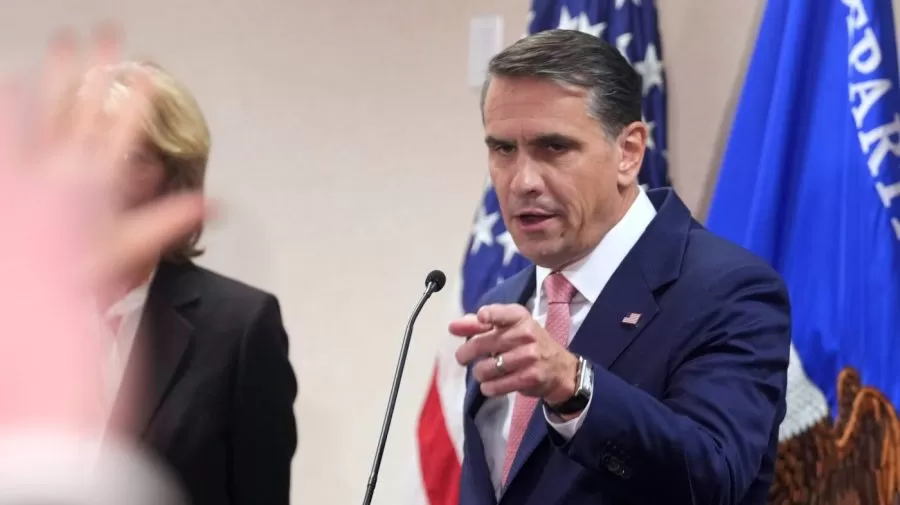
Two influential U.S. Senators, Marco Rubio and Lindsey Graham, made a significant splash at the Munich Security Conference, passionately advocating for a stronger, more unified transatlantic front. Their remarks, particularly on the escalating threat from Iran and the vital future of NATO, underscored a powerful American perspective on global security challenges.
The venerable halls of the Munich Security Conference, a gathering steeped in the gravitas of global affairs, recently played host to a particularly forceful American delegation. Among the usual suspects, two prominent Republican voices, Senators Marco Rubio and Lindsey Graham, truly commanded attention. It wasn't just their presence, mind you, but the very clear, unequivocal message they brought across the Atlantic: America, they seemed to say, is watching, and certain issues simply cannot wait.
You know, there's always a buzz when U.S. senators speak at these events, but the duo of Rubio and Graham often brings a certain… intensity. They’re known for their no-nonsense, sometimes quite hawkish, foreign policy views, and Munich was no exception. Their primary concern, it became abundantly clear, revolved around the persistent and escalating threat posed by Iran. Both senators painted a rather stark picture, urging European partners to recognize the urgency of the situation and adopt a more resolute stance against Tehran's nuclear ambitions and its destabilizing actions across the Middle East. It was, frankly, a call for much less equivocation and much more decisive action.
Graham, with his characteristic plain-spoken directness, and Rubio, often more measured but equally firm, didn't shy away from expressing a degree of frustration. They seemed to suggest that while dialogue is all well and good, it simply hasn't yielded the necessary results with Iran. The underlying message? Time is running out, and a united front is absolutely paramount if we're to prevent a more dangerous future. One couldn't help but notice the palpable concern in their voices, a worry that perhaps not everyone in the room fully grasped the immediate peril.
Beyond Iran, the conversation, as it always does at Munich, naturally drifted to the bedrock of transatlantic security: NATO. Here, the senators reiterated long-standing American positions, emphasizing the alliance's enduring importance while also pushing for greater burden-sharing. It’s not just about spending targets, though those are crucial, of course; it’s also about a shared understanding of threats and a collective will to meet them head-on. There was a sense that, for NATO to truly thrive in an increasingly complex world, every member needs to step up, not just rhetorically, but with tangible commitments.
Their remarks served as a powerful reminder, almost a wake-up call, for Europe. While acknowledging the continent's own unique challenges, Rubio and Graham underscored the interconnectedness of global security. Issues like energy independence, the rise of authoritarian regimes, and cyber threats – they're not isolated problems, you see. They demand a coordinated, transatlantic response. It was, in a way, an affirmation of American commitment, but one packaged with a clear expectation for reciprocal dedication from European allies.
In essence, what the senators brought to Munich was a potent blend of warning and encouragement. A warning about complacency in the face of very real dangers, particularly from Iran, and an encouragement for NATO to reinforce its foundations and adapt swiftly. Their presence certainly stirred the pot, sparking discussions and perhaps, just perhaps, nudging some toward a more unified and robust transatlantic strategy. Because, at the end of the day, when it comes to global security, we’re all in this together, aren't we?
Editorial note: Nishadil may use AI assistance for news drafting and formatting. Readers can report issues from this page, and material corrections are reviewed under our editorial standards.