Unlocking the Future: A Quantum Metasurface Supercharges Terahertz Technology
- Nishadil
- May 24, 2026
- 0 Comments
- 3 minutes read
- 30 Views
- Save
- Follow Topic

Breakthrough Metasurface Paves the Way for Next-Gen Imaging and Communications
Researchers have developed a novel quantum metasurface that dramatically enhances terahertz wave sensitivity, operating efficiently at room temperature. This groundbreaking innovation promises to revolutionize fields from advanced imaging and security screening to the very future of high-speed wireless communication, overcoming previous technological limitations.
There's a fascinating, often overlooked slice of the electromagnetic spectrum, nestled right between microwaves and infrared light. Scientists affectionately call it the "terahertz gap." This invisible realm holds incredible promise for everything from peering through opaque materials to powering the next generation of wireless communication. The catch? Harnessing these elusive terahertz waves has always been a bit of a challenge, mainly due to difficulties in detecting them with enough sensitivity, often requiring bulky, super-cold equipment. But what if we could change that, dramatically, and at room temperature?
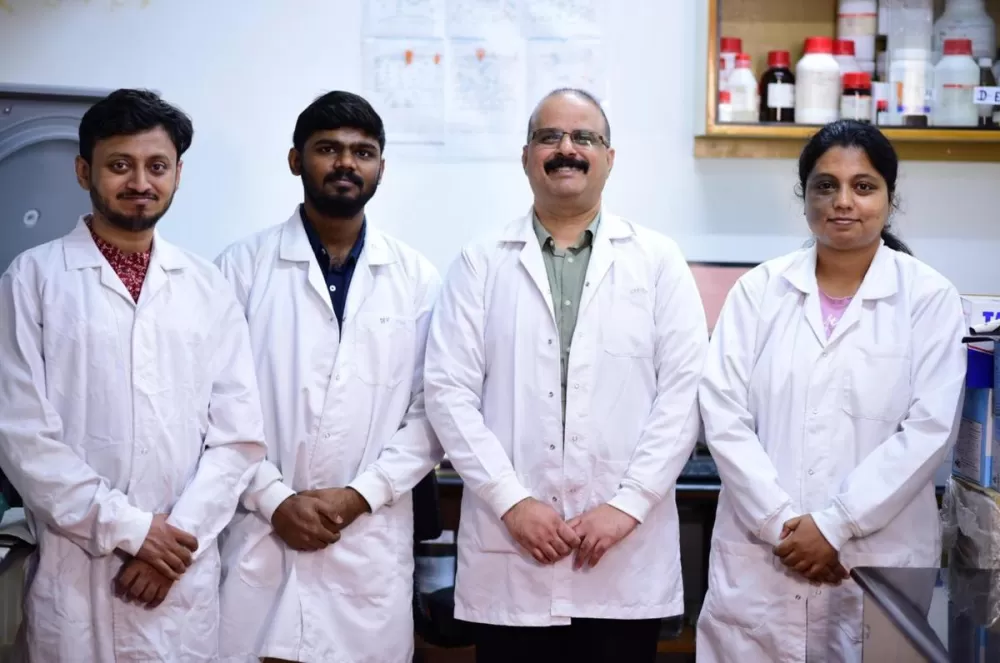
Well, a team of ingenious researchers from Zhejiang University in China seems to have done just that. They've unveiled a groundbreaking quantum metasurface designed to supercharge the sensitivity of terahertz detection. Think of it as a finely tuned optical "magnifying glass" for these particular light waves, capable of picking up signals that would otherwise be far too faint to register. This isn't just a minor improvement; it's a significant leap forward that could truly open the floodgates for countless applications we've only dreamed of.
So, how exactly does this clever piece of engineering work its magic? At its heart lies a phenomenon known as plasmon-induced transparency (PIT). Now, that sounds rather technical, doesn't it? But essentially, the metasurface is meticulously engineered to create a unique "dark state" for terahertz waves. Picture it like this: the structure is designed to absorb terahertz light in a very specific, powerful way, creating an incredibly sharp and strong resonance. When a quantum material, say a tiny sliver of graphene or another 2D material, is introduced into this resonating environment, its optical properties are dramatically enhanced. It's almost as if the metasurface acts as an amplifier, making the faint signals from these quantum materials much easier to observe.
The real kicker here, and a massive advantage over many existing terahertz technologies, is that this entire process works beautifully at room temperature. No need for complex, energy-intensive cryogenic cooling systems. This alone makes the technology far more practical, portable, and accessible for real-world deployment. The result? A stunning boost in sensitivity, allowing for the detection of terahertz signals that were previously just whispers in the noise.
The implications of such a breakthrough are truly vast and wonderfully exciting. Imagine enhanced security screening that can detect hidden objects with unprecedented clarity and speed, without harmful ionizing radiation. Envision next-generation medical imaging, capable of spotting early signs of disease in skin or soft tissues with pinpoint accuracy. Consider industrial quality control systems that can instantly analyze materials for flaws or inconsistencies. And, looking further into the future, this technology could be a cornerstone for ultra-fast, high-capacity wireless communication – think 6G and beyond – enabling data transfer rates we can barely conceive of today.
Of course, this is just the beginning. The Zhejiang University team is already looking ahead, exploring how to integrate this metasurface with an even wider array of quantum materials, potentially unlocking even more astounding capabilities. It’s a vivid reminder that the "invisible" parts of our world often hold the keys to truly transformative advancements, and with clever human ingenuity, those keys are slowly but surely being turned.
- UnitedStatesOfAmerica
- News
- Technology
- Australia
- UnitedKingdom
- Singapore
- Science
- ScienceNews
- TechnologyNews
- Physics
- MaterialScience
- MedicalDiagnostics
- Materials
- SecurityTechnology
- AdvancedImaging
- 6gCommunication
- RoomTemperatureDetection
- TerahertzWaves
- NanoTech
- PhysicsNews
- QuantumMetasurface
- ThzSensitivity
Editorial note: Nishadil may use AI assistance for news drafting and formatting. Readers can report issues from this page, and material corrections are reviewed under our editorial standards.