
Unlocking AI's Future: Why Girls Who Code Trusts Teenage Girls' Critical Judgment
- Nishadil
- October 01, 2026
- 0 Comments
- 4 minutes read
- 3 Views
- Save
- Follow Topic
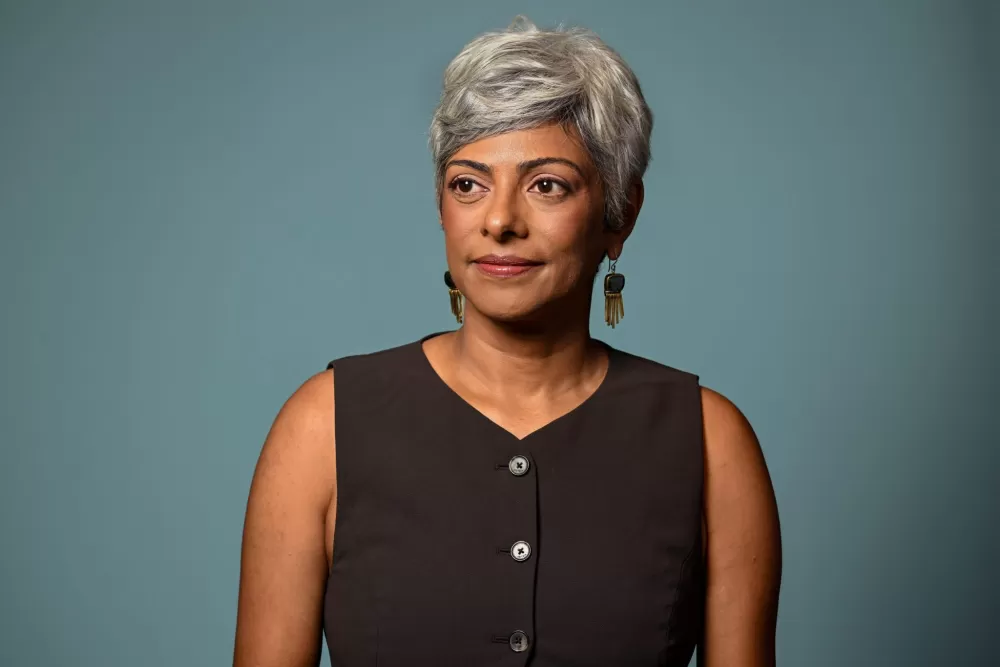
The Next Generation's Skepticism: Why Girls Who Code Believes Young Women Will Build Better AI
Girls Who Code, under new CEO Susan Gouijnstook, continues its mission to close the gender gap in tech, advocating for critical AI literacy and empowering teenage girls to shape the future of artificial intelligence with their unique, often skeptical, insights.
In an era increasingly defined by artificial intelligence, there’s a quiet revolution brewing, led not by seasoned tech giants, but by the very generation that will inherit this new world: teenage girls. Girls Who Code, a pioneering organization committed to closing the gender gap in technology, firmly believes these young women, with their inherent skepticism and sharp critical thinking, are precisely who we need to steer AI towards a more ethical and equitable future.
It’s a powerful stance, especially with a new leader at the helm. As of September 15, 2026, Susan Gouijnstook stepped in as the third CEO of Girls Who Code, following the incredible legacies of founder Reshma Saujani and the outgoing Tarika Barrett. Gouijnstook, echoing the organization's enduring mission since its 2012 launch, emphasizes that teaching girls to code isn't just about syntax and algorithms; it’s about cultivating problem-solving and critical thinking skills. And here's the crucial bit: she believes this next generation needs "the confidence to interrogate those models" – to truly question, analyze, and ultimately decide where AI fits into their lives and the world at large.
Her predecessor, Tarika Barrett, often spoke passionately about fostering a human-centered approach to AI, envisioning it as a tool for solving grand challenges like climate change or advancing DNA sequencing. Barrett famously suggested that the very skepticism young women exhibit towards AI – their keen awareness of its errors, ethical dilemmas, environmental costs, and the unsettling concentration of power it can bring – isn't a weakness, but a profound strength. It’s this cautious, questioning mindset, she argued, that could very well lead to the development of superior, more responsible AI systems.
This isn't just anecdotal observation; it's backed by research. Girls Who Code released an impactful report, "Agency in the Age of AI," which surveyed over 2,300 young people. The findings were illuminating, introducing the concept of "AI agency" – essentially, how much control a young person feels they have over how AI is used. What emerged was fascinating: girls with a high sense of AI agency don't shy away from the technology; in fact, they use it more frequently, are more adept at spotting its flaws, and are better at recognizing its true potential.
It seems common sense, perhaps, but it's a vital distinction. Gouijnstook rightly points out that middle school is a pivotal age where girls often start losing confidence in STEM subjects. This is precisely why fostering AI literacy, as Girls Who Code champions, is so incredibly important. And by literacy, they mean something far beyond just knowing how to use an AI chatbot. We’re talking about the ability to critically assess AI, identify inherent system biases, recognize those sometimes-silly "hallucinations," understand data limitations, and even grasp the underlying business incentives driving AI development. It’s about being an informed, empowered user and, more importantly, a discerning creator.
The urgency of this mission is underscored by the stark realities of the current tech landscape. Women account for a mere 26% of AI hires in the U.S. and a truly disheartening 13% of global AI leadership roles. There's a noticeable gender gap in AI usage too, with women often showing a disproportionate reluctance to embrace the technology, precisely because of those valid concerns about errors, energy demands, and the increasing influence of tech billionaires. By equipping girls with agency and critical literacy, Girls Who Code isn't just preparing them for the future; they're actively shaping it, ensuring diverse voices are at the table where AI is designed, developed, and deployed. Because ultimately, better AI means a better world for everyone.
Editorial note: Nishadil may use AI assistance for news drafting and formatting. Readers can report issues from this page, and material corrections are reviewed under our editorial standards.










