
Turning Metal Mixes into Masterpieces: 3D‑Printed High‑Entropy Alloys
- Nishadil
- July 07, 2026
- 0 Comments
- 3 minutes read
- 80 Views
- Save
- Follow Topic
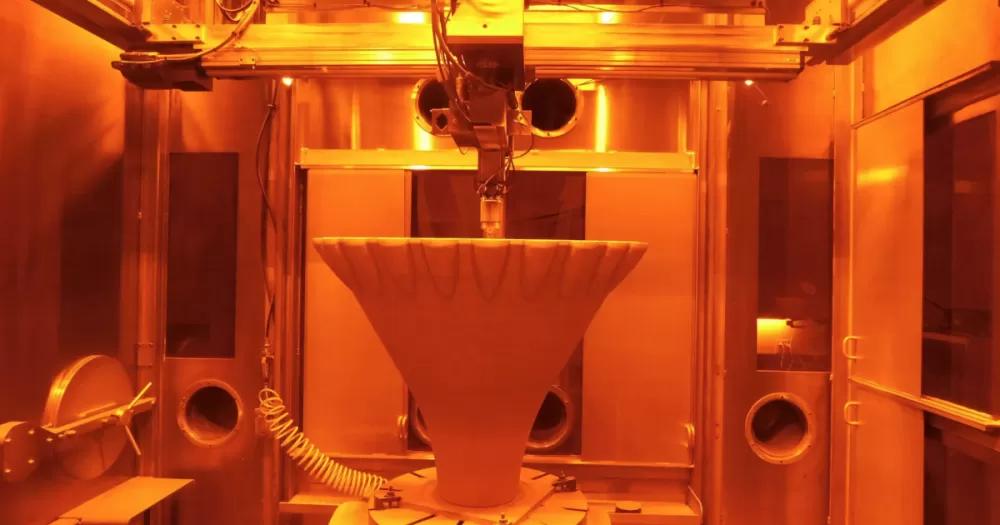
Researchers unveil a novel 3D‑printing route that builds high‑entropy alloys layer by layer, sidestepping the usual casting headaches.
A new additive‑manufacturing technique lets engineers print high‑entropy alloys directly from elemental powders, offering cheaper, more flexible production of these ultra‑strong metals.
High‑entropy alloys have been the talk of the materials world for the past decade. Imagine a metal that isn’t dominated by one element but instead boasts a cocktail of five or more, each in almost equal proportion. The result? Unusual strength, excellent corrosion resistance and a knack for keeping its shape at blistering temperatures. Sounds perfect for aerospace or next‑gen turbines, right?
But there’s a catch. Traditional routes—melting, casting, then hot‑rolling—tend to shuffle the elements around, leading to segregation, cracks and, frankly, a lot of waste. Getting a clean, homogenous HEA piece often feels like coaxing a wild horse into a stable.
Enter the new 3D‑printing method that’s turning that horse into a well‑trained stallion. Instead of starting with a pre‑alloyed powder, the researchers feed a blend of elemental powders straight into a laser‑powder‑bed fusion (LPBF) system. The laser fuses each tiny grain in place, layer after layer, while the machine’s software tweaks the composition on the fly. In other words, the alloy is born right there, right then, as the part is being built.
What’s clever about this approach is its simplicity. No extra steps to create a master alloy powder, no extra cost of shipping bulk pre‑alloyed material, and—perhaps most importantly—no surprise segregation because the laser’s rapid melting and solidification keep everything nicely mixed. The team demonstrated this by printing a classic Cr‑Mn‑Fe‑Co‑Ni alloy (the textbook HEA) into a complex lattice structure that would have been a nightmare to cast.
Mechanical testing showed the printed samples were not just acceptable; they were impressive. Tensile strength topped 1.2 GPa, and ductility held up around 12 %, figures that sit comfortably alongside traditionally processed HEAs. Even more encouraging, the microstructure remained fine‑grained, a direct result of the rapid cooling rates inherent to LPBF.
Beyond the lab bench, the implications are exciting. Engineers could now tailor the chemistry locally—think a turbine blade that’s tougher at the tip and more ductile at the root—without ever having to swap out a furnace. Cost‑wise, using off‑the‑shelf elemental powders means lower material spend and less inventory management. And the design freedom of additive manufacturing means you can create internal channels, lattice supports or other geometry‑driven optimisations that were previously off‑limits.
That said, the method isn’t a silver bullet. Laser parameters need careful calibration for each new powder mix, and the powder‑handling system must prevent cross‑contamination. Still, the early results suggest a viable pathway from “exotic alloy” to “everyday engineering material”.
Looking ahead, the researchers envision scaling the process for larger components, integrating in‑situ monitoring to catch defects instantly, and exploring even more complex multi‑element systems. If they pull it off, we might soon see airplanes, rockets and even consumer gadgets sporting parts made from these ultra‑robust, laser‑crafted high‑entropy alloys.
- UnitedStatesOfAmerica
- News
- Science
- ScienceNews
- AdditiveManufacturing
- 3dPrinting
- Metals
- AdvancedMaterials
- Nist
- Alloy
- AerospaceAlloys
- HighEntropyAlloy
- LaserPowderBedFusion
- 3dPrintingAdvancedMaterials
- HighEntropyAlloys3dPrinting
- LaserPathControlAlloys
- NistLaserStirringTechnology
- AtomicLevelMetalBlending
- CustomizableAlloyComposition
- New3dPrintingTechnique
- LaserPowderBedFusionInnovation
- CreatingComplexAlloys
- DifficultToMixMetals
- AerospaceEnergyApplications
- FutureOfMetal3dPrinting
- RefractoryTitaniumAlloyMixing
- Metal3dPrinting
- HeaPrinting
- MetalAlloyTechnology
Editorial note: Nishadil may use AI assistance for news drafting and formatting. Readers can report issues from this page, and material corrections are reviewed under our editorial standards.













