Trump, Iran, and the Looming Shadow Over Global Oil Markets
- Nishadil
- February 07, 2026
- 0 Comments
- 4 minutes read
- 53 Views
- Save
- Follow Topic

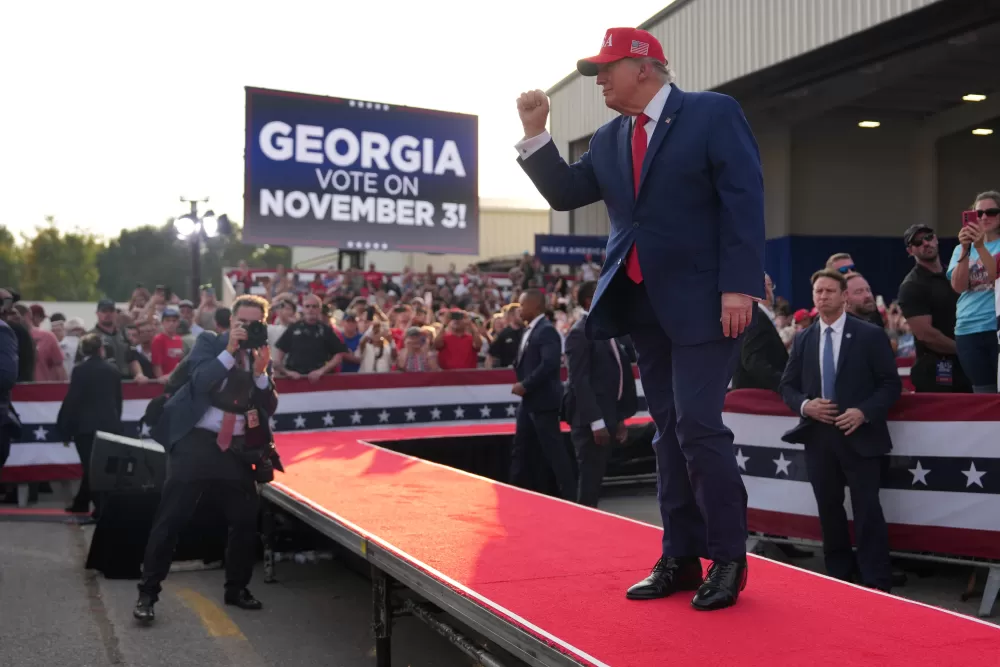
A Second Trump Term: What His Iran Policy Could Mean for Oil Prices
Analysts are weighing in on how a potential return of Donald Trump to the White House could dramatically reshape global oil dynamics, particularly through his approach to Iran and its crude exports, signaling potential volatility ahead.
As the political winds shift and the possibility of a second Donald Trump presidency becomes a very real talking point, global energy markets are, quite frankly, holding their breath. It’s not just about broad economic policy; much of the conversation, the real deep dives, are centering on one critical variable: Iran. Because, let’s be honest, his past approach to Tehran significantly rocked the oil boat, and there’s every indication it could happen again.
Rewind a bit, and you’ll recall the "maximum pressure" campaign from his previous term. It wasn't just a catchy phrase; it meant a serious crackdown on Iranian oil exports, aiming to choke off a vital revenue stream. And it worked, to a degree. Iranian crude shipments plummeted, taking millions of barrels off the global market and, naturally, sending prices climbing. It created a palpable tension, a feeling that things could escalate quickly, and that feeling, you see, directly translates into a risk premium on crude oil.
So, what if history, or something very much like it, repeats? Analysts across the board are sketching out scenarios, and many suggest a renewed, perhaps even more stringent, push against Iran's oil sector. We're talking about an administration that could very well double down on sanctions, aggressively targeting any country or entity seen as circumventing those restrictions. Imagine more robust enforcement, a tightening of the screws that goes beyond what we've seen recently. That's the real worry for market watchers.
The immediate fallout? A potential significant reduction in Iranian oil reaching the international market. Iran currently manages to export a decent amount of crude, often finding creative ways around existing sanctions. But if a new Trump administration comes in with a fresh, determined mandate to cut those exports dramatically, we could be looking at a substantial supply shock. And when supply tightens, especially in a world always hungry for energy, prices tend to, well, shoot up. It’s basic economics, really, but with geopolitical fireworks attached.
Beyond the direct supply impact, there's the ever-present specter of heightened geopolitical tensions. A more aggressive stance toward Iran could easily lead to increased instability in the Middle East, a region that's already incredibly volatile. Think about the critical shipping lanes, like the Strait of Hormuz; any perceived threat there can send oil futures soaring almost instantaneously. It's not just about the oil that might be lost from Iran, but the fear of wider disruption that keeps traders up at night.
Of course, there’s always OPEC+ to consider. Could the broader group of oil-producing nations, led by Saudi Arabia and Russia, step in to stabilize the market if Iranian oil disappears? They certainly have some spare capacity, but whether they’d choose to deploy it fully, and how quickly, remains a big question mark. Their decisions are often complex, driven by their own political and economic agendas, not just global market stability. It’s a delicate balancing act, and sometimes, frankly, they choose not to act as the world might hope.
For the average person, this all boils down to one thing: higher prices at the pump. More expensive gasoline impacts everything, from daily commutes to the cost of goods transported across the globe. It's a hidden tax on everyone, and it can dampen economic growth pretty quickly. So, while the discussions might seem abstract to some, their real-world consequences are anything but.
Ultimately, the defining characteristic of any potential second Trump term, especially regarding Iran, is unpredictability. While analysts can draw parallels to the past, the exact contours of future policy and its execution remain a wild card. It's this very uncertainty that adds a significant premium to oil prices, even before any concrete actions are taken. Markets, after all, loathe uncertainty.
So, as we look ahead, the interplay between U.S. foreign policy, Iranian crude, and global oil markets promises to be one of the most compelling and potentially disruptive narratives of the coming years. It’s a high-stakes game, and everyone from energy traders to everyday drivers will be watching very, very closely.
- UnitedStatesOfAmerica
- Business
- News
- BusinessNews
- DonaldTrump
- Energy
- Markets
- Iran
- Articles
- UnitedStates
- Sanctions
- Cnbc
- BreakingNewsMarkets
- SourceTagnameCnbcUsSource
- Opec
- EnergyMarkets
- GeopoliticalRisk
- GasolinePrices
- MiddleEastStability
- NicolasMaduro
- GlobalOilPrices
- WtiCrudeSep25
- TrumpIranOil
- IranianOilExports
- SupplyShock
Editorial note: Nishadil may use AI assistance for news drafting and formatting. Readers can report issues from this page, and material corrections are reviewed under our editorial standards.