
The Week's Wild Ride: Trump's Papal Jab and an AI Jesus Controversy
- Nishadil
- April 14, 2026
- 0 Comments
- 4 minutes read
- 39 Views
- Save
- Follow Topic
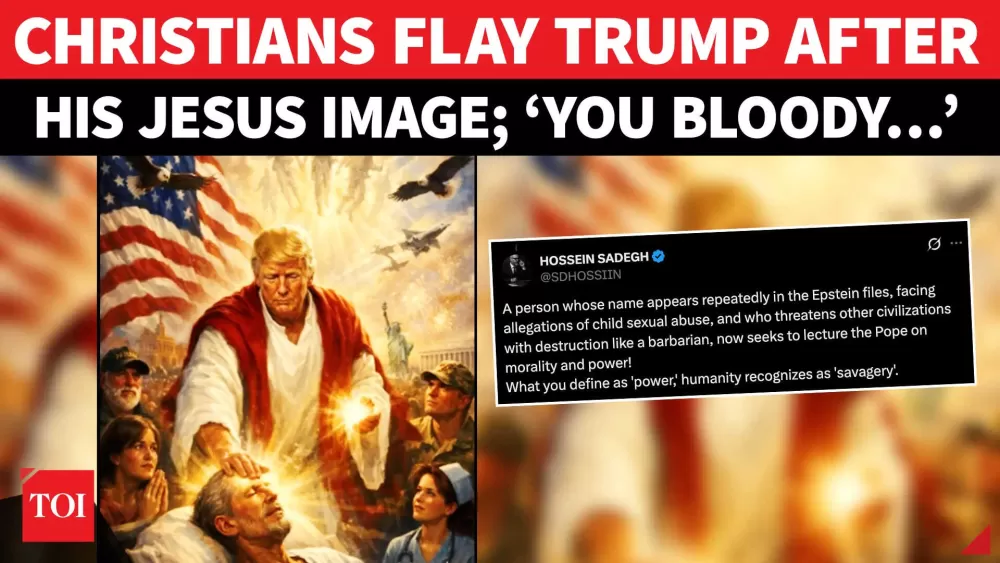
From Presidential Jabs at the Pontiff to an AI-Generated Jesus Igniting Online Debate: A Week of Viral Moments
Donald Trump's provocative comments about the Pope's stance on crime sparked immediate backlash, while simultaneously, an individual named Leo sent the internet into a frenzy by sharing a controversial AI-generated image of Jesus, highlighting the unpredictable nature of online discourse.
Well, isn't the internet just a constant swirl of the unexpected? This past week offered a prime example, serving up two distinctly different, yet equally captivating, stories that absolutely lit up our feeds. On one hand, we had former President Donald Trump delivering a classic, no-holds-barred commentary, this time taking aim at none other than the Pope. And then, completely separate but equally buzz-worthy, a figure named Leo found themselves at the heart of an online maelstrom after sharing an AI-generated image of Jesus that truly got everyone talking.
Let's dive into the political side first, shall we? It was during a recent appearance, in typical Trump fashion, that the former President leveled a rather pointed criticism at the Holy See. "He is weak on crime," Trump reportedly declared, a remark that immediately reverberated across news channels and social media. Now, for anyone familiar with his rhetoric, this isn't exactly uncharted territory. Trump often uses such bold pronouncements to frame his own 'tough on crime' stance, and in this instance, he seemingly aimed to position the Pontiff's approach as lacking the necessary sternness he believes is required.
Of course, such a statement, particularly directed at a global religious leader, wasn't going to pass quietly. It instantly fueled debate, with supporters nodding in agreement and critics quickly condemning it as disrespectful, or perhaps even inappropriate for a political figure to comment on a spiritual leader's perceived stance on secular issues. It was a classic Trump moment, sparking precisely the kind of passionate arguments and head-shaking reactions that often accompany his public remarks.
Now, let's pivot dramatically from geopolitics to digital divinity. While the political world was busy dissecting presidential jabs, an individual known as Leo inadvertently (or perhaps intentionally, who's to say?) became a central figure in a fascinating online discussion. What caused the stir? A seemingly simple act: sharing an AI-generated image of Jesus. But, oh boy, did that image ever "ignite the internet"!
The reaction was, predictably, a mixed bag. On one side, you had those fascinated by the technological marvel – the sheer ability of artificial intelligence to render such a recognizable and often revered figure with such detail. It opened conversations about the evolving landscape of digital art and its potential in religious contexts. Yet, on the other, a strong wave of criticism emerged. For many, the idea of an AI creating an image of Jesus felt, at best, a bit jarring, and at worst, deeply irreverent or even sacrilegious. Questions abounded: Does it diminish the spiritual significance? Is it an appropriate use of technology when depicting sacred figures?
Leo's post quickly went viral, pulling in comments from every corner of the ideological and spiritual spectrum. It really shone a light on how rapidly technology is intertwining with areas traditionally considered untouchable, sparking vital dialogues about faith, art, authenticity, and the very boundaries of digital creation. In a world where AI is becoming increasingly sophisticated, this incident served as a potent reminder that the intersection of technology and belief is fertile ground for both wonder and profound controversy.
So there you have it: two wildly different stories, one concerning sharp political commentary and the other touching on the delicate intersection of faith and cutting-edge technology. Both, in their own ways, captured the collective attention of the internet, proving once again that our digital public square is a vibrant, unpredictable, and sometimes truly wild place where traditional boundaries are constantly being tested and redefined. What a week, eh?
Editorial note: Nishadil may use AI assistance for news drafting and formatting. Readers can report issues from this page, and material corrections are reviewed under our editorial standards.













