The Unthinkable Fixture: When Geopolitics Graces the World Cup Stage
- Nishadil
- April 20, 2026
- 0 Comments
- 3 minutes read
- 41 Views
- Save
- Follow Topic
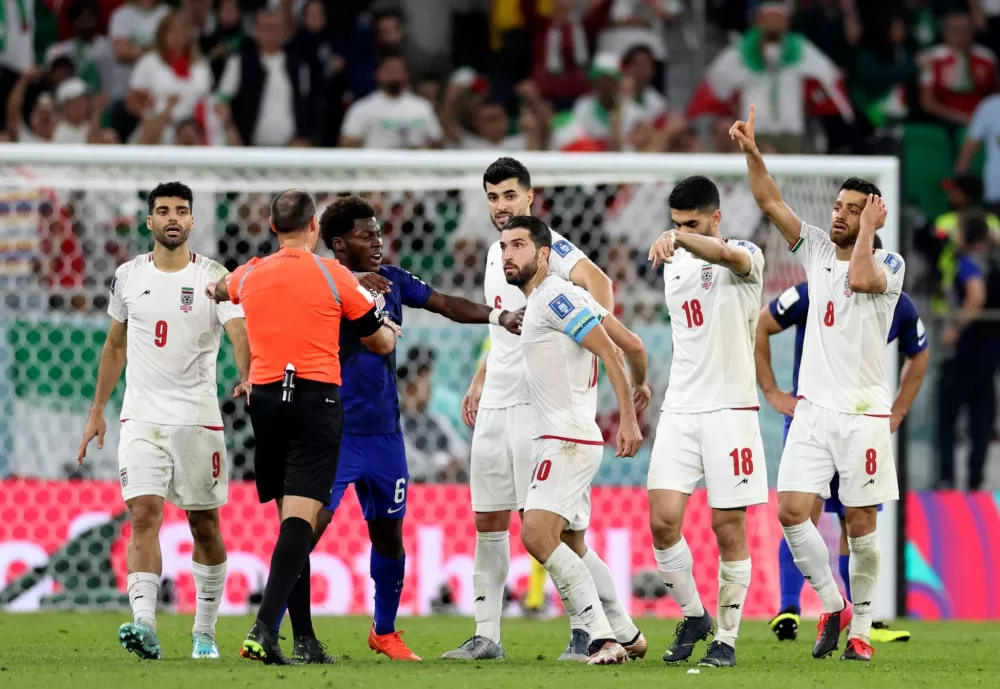
USA vs. Iran: The 2026 World Cup Clash that Could Transcend Football
As the 2026 World Cup approaches, a hypothetical match between the United States and Iran looms as a potent symbol of global tensions, prompting reflection on sport's role amidst international complexities.
Picture this: The year is 2026. The roar of the crowd is deafening as the FIFA World Cup descends upon North America, a vibrant spectacle co-hosted by the United States, Mexico, and Canada. The excitement is palpable, a truly global festival of football – or soccer, as we often call it here. But amidst the thrilling goals and dramatic upsets, there’s a fixture, a hypothetical one for now, that could carry a weight far heavier than any championship trophy: the United States pitted against Iran.
Now, this isn’t just about the beautiful game, is it? We’ve seen it before, countless times, how sports can become a microcosm of the world's larger geopolitical struggles. And when you talk about the U.S. and Iran, well, let’s just say their relationship has been, to put it mildly, complicated for decades. Imagine such a match unfolding against a backdrop of ongoing international tensions, perhaps even whispers of conflict – it's a scenario that keeps diplomats and football strategists alike awake at night.
For many, football is an escape, a pure contest of skill and spirit. But history teaches us that certain matches simply transcend the pitch. Think back to the 1998 World Cup in France, where the USA and Iran met for the first time. Despite profound political differences, the players exchanged gifts and posed for a joint team photo – a poignant, albeit brief, moment of shared humanity. It was dubbed the "Mother of All Games" and, for a fleeting ninety minutes, offered a glimpse of what could be, if only the world could settle its disputes with a ball at its feet. Fast forward to 2022, they met again, with the US emerging victorious, but the underlying narrative of deep-seated geopolitical rivalries remained, a quiet hum beneath the stadium’s din.
So, what happens if this potential 2026 clash isn't just a sporting rivalry but takes place amid a more volatile international climate? The pressure on everyone involved – the players, the coaches, the referees, even FIFA itself – would be immense, almost unbearable. Would it be an opportunity for a brief, symbolic truce, a demonstration that even the most estranged nations can find common ground, however temporary, on the field of play? Or would it risk becoming another stage for simmering resentments, an amplified echo chamber for the world's divisions?
FIFA, as an organization, consistently preaches its commitment to keeping politics out of sport. And frankly, who can blame them? It’s a noble, perhaps even idealistic, ambition. Yet, in reality, sport and politics are often inextricably linked, particularly on a stage as grand as the World Cup. A match between the USA and Iran isn't merely a game of strategy and athleticism; it's a global event, watched by billions, scrutinized by governments, and imbued with meaning far beyond the final score.
Ultimately, one hopes that if this highly anticipated, albeit hypothetical, fixture does come to pass, it would be a testament to the unifying power of sport. A chance, perhaps, for two nations with a troubled past to compete fiercely, fairly, and with mutual respect, reminding us all that even in our deepest disagreements, there’s always room for a shared passion, a moment of connection, and yes, a really good game of football. Dare we dream that such a moment could, even in the smallest way, inspire a broader dialogue off the pitch?
Editorial note: Nishadil may use AI assistance for news drafting and formatting. Readers can report issues from this page, and material corrections are reviewed under our editorial standards.