
The Trump Strait and the Looming Shadow of Conflict in the Persian Gulf
- Nishadil
- September 28, 2026
- 0 Comments
- 4 minutes read
- 3 Views
- Save
- Follow Topic
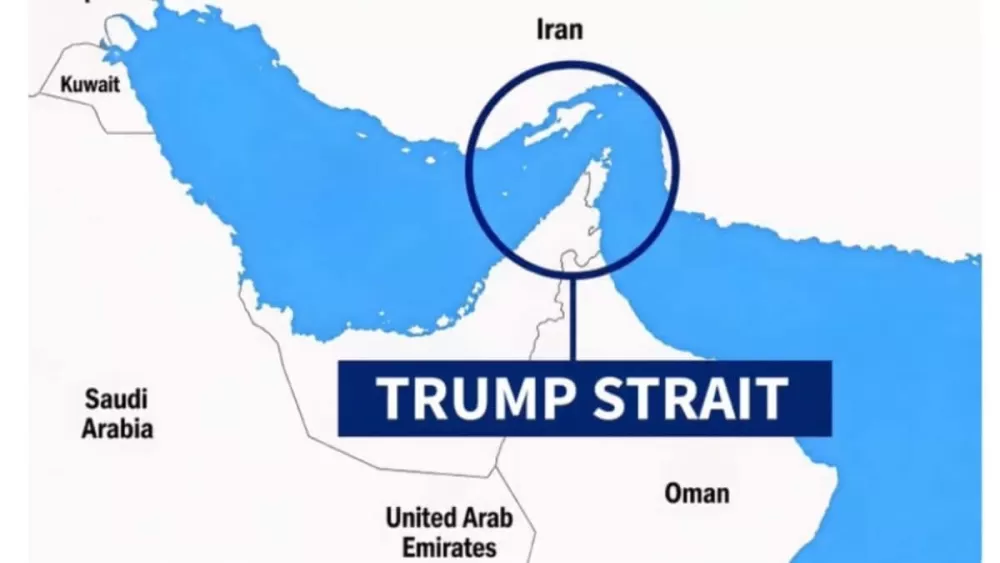
Strait of Hormuz Renamed, Diplomacy Falters as Trump Hints at Pre-Midterm Strikes
Tensions in the Persian Gulf have reached a fever pitch after former President Donald Trump unilaterally renamed the Strait of Hormuz and hinted at possible military action, all while rejecting a complex Iranian peace proposal. It's a deeply concerning situation, blending aggressive rhetoric with a fragile hope for dialogue.
Well, here we are again, watching the geopolitical chess game play out in the Middle East, specifically around the crucial Strait of Hormuz. In a move that's certainly raising eyebrows and ratcheting up an already tense situation, former US President Donald Trump recently took to TruthSocial to declare the vital waterway as the "Trump Strait." This rather audacious renaming came hot on the heels of his rejection of a multi-faceted Iranian proposal, a development that truly underscores the deep impasse between Washington and Tehran.
Now, what exactly was this Iranian offer? It was pretty comprehensive, actually. Tehran put forward a plan that included a seven-day ceasefire, coupled with the reopening of the Strait of Hormuz – a choke point for global oil shipments – in exchange for the lifting of US blockades on Iranian ports and, crucially, a resumption of those ever-elusive nuclear talks. On paper, it sounds like a framework for de-escalation, doesn't it? But, as we’ve seen, things are rarely that simple when it comes to international relations, especially in this particular region.
Trump's response was swift and unequivocal: a flat-out rejection. He framed his decision, at least in part, by expressing an expectation that the conflict with Iran would conclude "very soon," a prediction he curiously linked to a fall in global oil prices. It's really quite something, the way these threads of foreign policy, economic impact, and domestic political timing can all intertwine. Ultimately, the core American objective remains unchanged: preventing Iran from ever acquiring a nuclear weapon, a concern that continues to drive much of the US stance.
Meanwhile, on the Iranian side, Foreign Minister Abbas Araghchi hasn't been mincing words. He's publicly stated that while Tehran is indeed prepared for a "doomsday war," they are, paradoxically, still very much open to diplomacy. It’s a classic balancing act of strength and openness, trying to keep options on the table even amidst escalating rhetoric. What's particularly fascinating here is Araghchi's claim that Trump's public dismissal of their proposal hasn't actually been formally communicated to Iran through official diplomatic channels. If true, that just adds another layer of confusion and mistrust to an already murky situation.
And then there's the question of military action. Trump, never one to shy away from hinting at possibilities, wouldn't outright dismiss the idea of US military strikes resuming before the November midterm elections. When pressed, he offered a rather characteristic non-answer: "I don't want to say that. I don't want to say that. I mean, it's possible, but I just don't want to say that." It leaves everyone guessing, doesn't it? That kind of deliberate ambiguity keeps adversaries on edge, but also, one might argue, fuels uncertainty for everyone else.
It's worth remembering that this isn't the first time attempts at de-escalation have fizzled out. Araghchi himself alluded to a memorandum of understanding signed back in June for a temporary ceasefire, which, regrettably, also collapsed. For Iran, the reopening of the Strait of Hormuz isn't just about appearances; it's intrinsically tied to their desperate need to access frozen assets and resume crucial oil sales, both vital lifelines for their economy. It's a complex web of demands, security concerns, and economic pressures.
So, where does this leave us? With a crucial global chokepoint unilaterally rebranded, a peace offer rejected, and the possibility of military action still very much in the air, the US-Iran relationship remains fraught with danger. Both sides are talking tough, but Iran is still holding out a diplomatic olive branch, albeit one wrapped in a warning of readiness for conflict. It's a precarious balance, to say the least, and one that demands careful, considered attention from the international community.
Editorial note: Nishadil may use AI assistance for news drafting and formatting. Readers can report issues from this page, and material corrections are reviewed under our editorial standards.










